
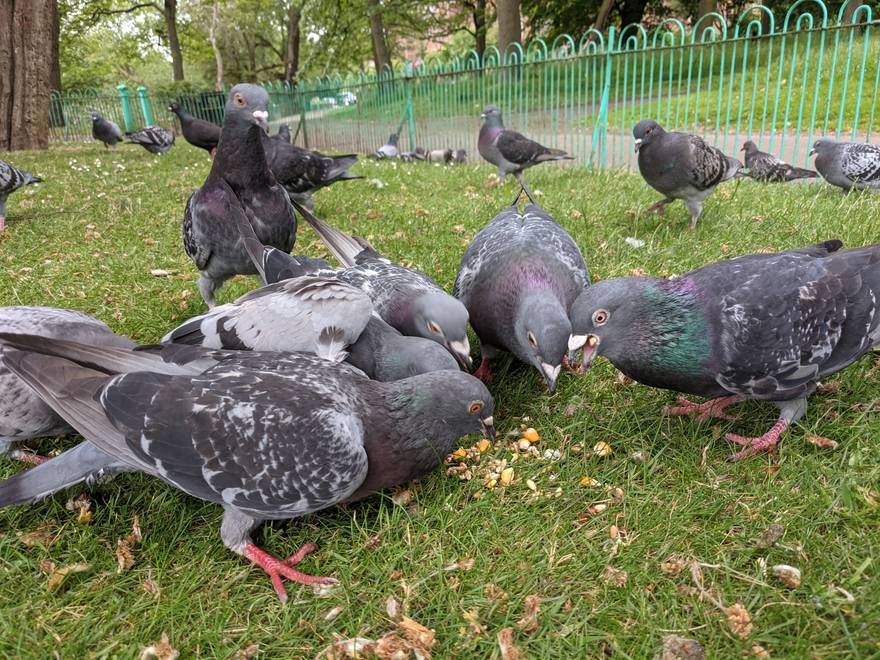
This page covers the foods people most often ask about feeding pigeons, whether that is a pet pigeon, a racing loft or the birds in the local park. For what pigeons eat naturally, see what do pigeons eat. For a full feeding plan for kept birds, see best pigeon food.
A pigeon’s diet should be built on a good seed and grain mix, with grit and clean water always available. Everything below is an occasional extra unless it says otherwise. Pigeons swallow food whole and have no teeth, so anything you offer should be small enough to swallow or soft enough to peck apart.
Quick reference
| Food | Safe? | Notes |
|---|---|---|
| Bananas | Yes, in small amounts | Soft and easy to eat. Treat food, not a staple. |
| Bread | Only occasionally | Fills them up with little nutrition. Never as a main food. |
| Chocolate | No | Contains theobromine and caffeine, both toxic to birds. |
| Corn | Yes | A normal part of most pigeon mixes. Cracked corn suits smaller birds. |
| Fruit | Yes, small soft fruit | Berries, grapes and small pieces of apple or pear. Remove apple seeds. |
| Lentils | Yes, as part of a mix | Many commercial mixes include pulses. Plain and unseasoned only. |
| Oats | Yes, in moderation | Fine as a small share of a grain mix. |
| Peanuts | Yes, unsalted | Plain and unsalted, broken into small pieces. High in fat. |
| Popcorn | Plain only | No salt, butter or sugar. Treat food only. |
| Rice | Yes | Cooked or uncooked. The “exploding bird” story is a myth. |
| Sunflower seeds | Yes | Popular with pigeons. High in fat, so part of a mix rather than the whole diet. |
| Tomatoes | Ripe fruit in small amounts | Keep birds away from the leaves and stems. |
| Vegetables | Yes, chopped | Leafy greens and brassicas are good choices. |
Can pigeons eat bread?
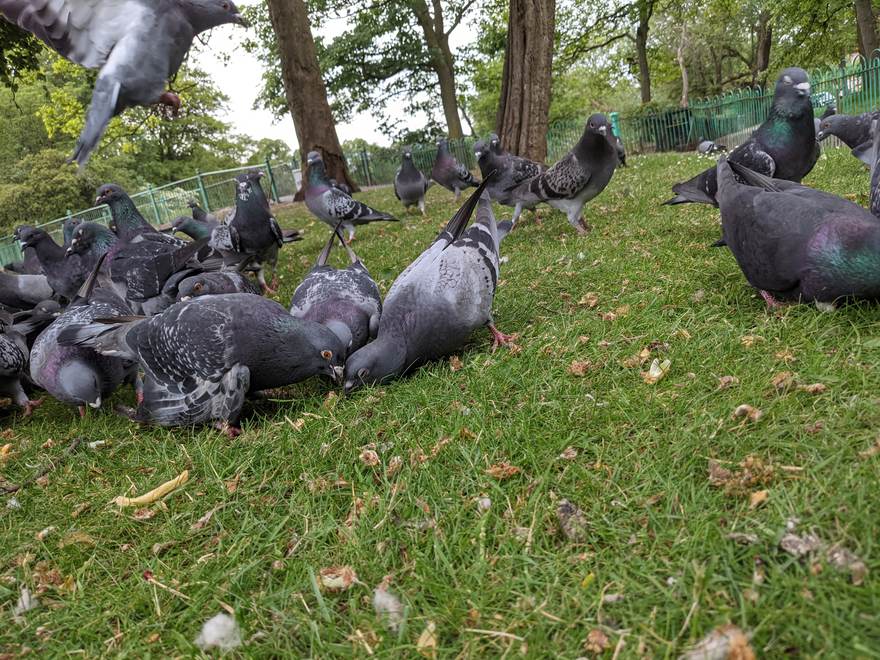
Pigeons will eat bread, and an occasional piece does no harm. The problem is a diet that is mostly bread. It fills the bird up without supplying the protein, minerals and vitamins found in seeds and grains, so pigeons fed bread every day can become malnourished. Birds that learn a person will hand out bread also stop foraging for better food. If you want to feed park pigeons, a wild bird seed mix or a pigeon mix from a pet shop is a much better choice.
Can pigeons eat chocolate?
No. Chocolate contains theobromine and caffeine. Birds process theobromine slowly, so it builds up and can affect the heart and nervous system. Signs of poisoning include hyperactivity, tremors, a fast heart rate and seizures, and a large dose can kill. Dark chocolate contains far more theobromine than milk chocolate. If a pigeon has eaten chocolate, call a vet.
Can pigeons eat rice?
Yes. The idea that rice swells in a bird’s stomach and makes it burst started as a 1980s newspaper story and has been rejected by ornithologists and bird charities, including the RSPB. Birds eat wild rice and other grains without trouble. Plain cooked rice is also fine in small amounts.
Do pigeons eat bananas?
Yes. Banana is soft enough for a pigeon’s beak and contains potassium and vitamins. Offer small pieces as a treat. Too much fruit can upset the balance of a seed-based diet.
Do pigeons eat corn?
Yes, and it is a standard part of most pigeon mixes. Maize is a good energy source but is high in carbohydrate, so a mix that is mostly corn can make birds overweight. Large kernels can be hard for small breeds, so use cracked corn for them.
Do pigeons eat fruit?
Most pigeons will eat small, soft fruit such as berries, grapes, blueberries and pieces of apple or pear. Some wild species live mainly on fruit, including the fruit doves of the Pacific, the pink-necked green pigeon and the kererū. Feral and domestic pigeons are seed eaters first, so fruit should be an extra. Remove apple seeds and stones from stone fruit, and do not offer avocado, which is toxic to birds.
Can pigeons eat lentils?
Yes. Lentils and other pulses such as peas and beans are a normal ingredient in many commercial pigeon mixes because they supply protein. Offer them dry and plain, as part of a mix, never seasoned or cooked with salt or onion.
Do pigeons eat oats?
Yes. Oats are a grain and many mixes contain a small share of them. Some pigeons pick them out and leave them, so you may see oats left in the feeder. They work best as a minor part of a mixed diet.
Do pigeons eat peanuts?
Yes. Plain, unsalted peanuts are a good source of protein and fat. Break them into pieces so they can be swallowed safely, and never offer salted, roasted-with-flavour or mouldy nuts. Mouldy peanuts can carry aflatoxins, which are harmful to birds. Because they are rich, keep peanuts to a small share of the diet.
Can pigeons eat popcorn?
Plain popcorn with nothing added is safe as an occasional treat. Salted, buttered, caramel or microwave popcorn is not, because of the salt, fat and sugar. Unpopped kernels are a form of corn and large pigeons can swallow them.
Do pigeons eat sunflower seeds?
Yes, and most pigeons like them. Black oil and striped sunflower seeds both work, and hulled sunflower hearts are easier for smaller birds. They are high in fat, which is useful in cold weather or for racing birds, but a diet of sunflower seeds alone is unbalanced.
Can pigeons eat tomatoes?
Pigeons will peck at ripe tomatoes, and a little ripe fruit is fine. The leaves, stems and green fruit of the tomato plant contain compounds that can upset birds, so do not offer those. If you want to stop pigeons eating your crop, see how to keep pigeons out of your garden.
Do pigeons eat vegetables?
Yes. Wild pigeons graze on leaves, and feral pigeons are fond of brassicas such as cabbage, kale and broccoli. For kept birds, finely chopped leafy greens are a useful addition to the seed mix. Avoid onion, garlic in large amounts, and anything cooked with salt.
Foods to avoid
- Chocolate and anything containing caffeine
- Avocado
- Salty snacks, crisps and salted nuts
- Mouldy or stale food
- Milk and dairy, since birds cannot digest lactose well
- Alcohol
- Fruit seeds and stones
Last updated 21 October 2026 · Nutrition