

Pigeons moult once a year, slowly replacing their feathers over several months. In feral pigeons in the northern hemisphere, a study in the Journal of Avian Biology found the main moult ran from about May to October, with the first flight feather dropped around late July and the last in late November. Because they lose only a few feathers at a time, a healthy moulting pigeon can still fly. Bald patches, broken feathers or a moult at an odd time of year can point to a health problem.
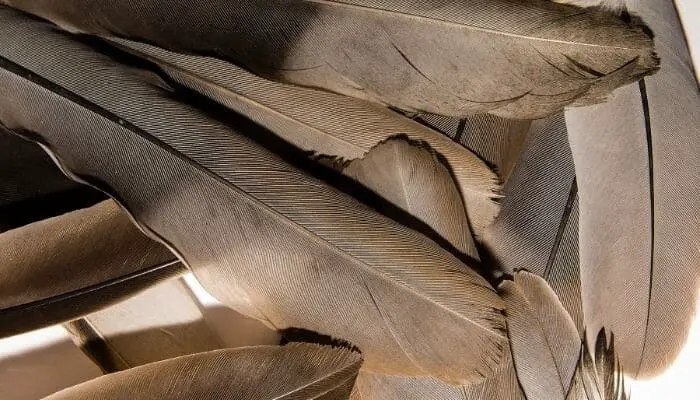
The moult sequence
- Moult starts with the innermost primary (P1) and works outwards to P10.
- Secondary and tail feathers usually start about halfway through the primary moult.
- Body feathers are replaced gradually, most heavily in September and October in the study above.
A study of captive pigeons in Brazil found a new primary showed two or three days after the old one fell out and took 21 to 37 days to grow, with the outer, larger feathers taking longest. Not every bird followed a perfect inside-to-outside order.
Moult and breeding
Pigeons can breed and moult at the same time, which researchers link to their long, slow moult. Many fanciers stop breeding during the moult so birds can put their energy into new feathers.
Young pigeons
Young birds go through a moult in their first year as their juvenile feathers are replaced. See what does a baby pigeon look like.
How to help a moulting pigeon
- Feed a good seed mix with plenty of protein. Feathers are mostly protein.
- Offer a bath. Most pigeons love bathing during the moult.
- Keep them dry and out of draughts.
- Keep stress low. See stressed pigeon.
What is not normal
- Bald patches, or skin showing
- Feathers that are broken, chewed or have holes (possible mites or lice)
- Horizontal lines across feathers (stress bars), which often show a period of illness or poor feeding while the feather grew
- Losing many flight feathers at once, so the bird cannot fly
- Fluffing up, weight loss or other signs of illness during the moult
When to see an avian vet or contact a rescue
See a vet if feather loss is patchy, the skin is red or scabby, the bird is losing weight, or it has other signs of illness. See sick pigeon symptoms and common pigeon diseases.
FAQ
Can pigeons fly while moulting?
Yes. They lose one or two flight feathers on each wing at a time.
This guide is general information. If a bird is injured or seriously ill, contact an avian vet or a wildlife rescue as soon as you can.
Sources
- Grooming time parallels molt intensity in wild-caught feral rock pigeons (Journal of Avian Biology) (opens in new tab)
- Replacement and growth of primary feathers in captive rock pigeons (Zoologia, 2012) (opens in new tab)
Last reviewed: 21 October 2026
Last updated 21 October 2026 · Health