

If you have found a baby pigeon, the most useful things you can do are keep it warm, keep it in a dark and quiet box, and get it to a vet or pigeon rescue as soon as you can. Do not give it food or water until someone experienced has told you how. Baby pigeons need a specialist diet and feeding method, and the wrong food or forced water is a common cause of death in found squabs.
Please note: this article is general information and is not a substitute for advice from an avian vet or a licensed wildlife rehabilitator. If you have found an injured or sick bird, contact a vet or your local rescue (see our list of pigeon-friendly rescue centres).
Step 1: Decide whether it needs rescuing
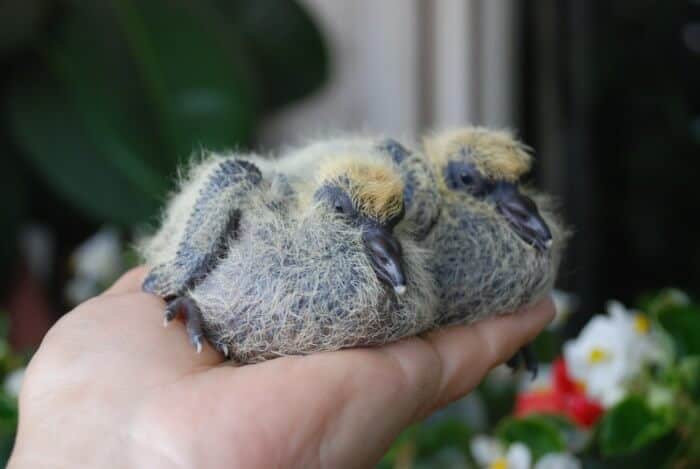
Look at how developed it is (see what does a baby pigeon look like).
- Fully feathered and hopping: this is a fledgling. Leave it, keep pets away and check again after an hour or two. Its parents are probably nearby.
- Bare skin, yellow fluff or pin feathers: this is a nestling or hatchling and it should not be on the ground. It needs help.
- Any age that is injured, cold, weak or has been caught by a cat: it needs help now.
The RSPCA says many fledglings picked up each spring and summer did not need rescuing, so watching first matters.
Step 2: Pick it up safely
Wash your hands before and after. Cup the bird gently in both hands or scoop it onto a towel. The RSPCA suggests gloves and minimal handling, and avoiding contact with sick or dead birds during bird flu outbreaks.
Step 3: Keep it warm, dark and quiet
- Line a cardboard box with a soft towel. Make a few air holes and close the lid.
- Add gentle heat. Toronto Wildlife Centre suggests a sock filled with uncooked rice warmed in the microwave for about a minute, or a bottle of hot tap water wrapped in a tea towel. Place it under or beside part of the towel so the bird can move away if it gets too warm.
- Put the box somewhere quiet, away from pets, children and noise.

Step 4: Do not feed or give water yet
This is the hardest instruction to follow. Rehabilitators give these reasons:
- A cold or weak bird cannot digest food, and feeding can make it worse.
- Liquid dripped into a squab’s beak can go into its airway and cause pneumonia.
- Bread, milk and worms are wrong for squabs. Pigeons do not feed their young on insects, and birds cannot digest milk.
If a rescue or vet asks you to feed the bird, they will tell you what and how. Specialist squab care usually involves a commercial hand-rearing formula or soaked seed given in small amounts.
Step 5: Get help
In the UK:
- Phone a local vet. Many will see wildlife free of charge.
- Find a pigeon-friendly rescue on the Help Wildlife directory (opens in new tab) (UK) or the Wildlife Rescue Directory (opens in new tab).
- If you cannot reach a vet or rescue, or the bird is somewhere dangerous, call the RSPCA (England and Wales) on 0300 123 8960.
Outside the UK: in the US, search Animal Help Now (opens in new tab) by ZIP code for wildlife rehabilitators near you, and ask whether they take feral pigeons, as some only treat native species. In Canada, call a vet or a wildlife rehabilitation centre in your province. In Australia, wildlife groups such as WIRES (opens in new tab) (NSW, 1300 094 737) help native pigeons and doves but do not rehabilitate feral pigeons, so take a feral pigeon to a vet. In New Zealand, contact your local SPCA (opens in new tab) or a wildlife rehabilitator, as the Department of Conservation only deals with native birds. In Ireland, ask a vet, the NSPCA (opens in new tab) or a rehabilitator on the Irish Wildlife Matters list (opens in new tab).
Outside the UK, look for a local wildlife rehabilitator or pigeon rescue. See pigeon-friendly rescue centres.

If you are asked to keep it overnight
- Keep it warm. Hatchlings need more heat than older squabs. The Canadian Council on Animal Care guide gives 32°C as a starting temperature for orphaned newly hatched squabs.
- Check it every few hours without lifting it in and out more than you need to.
- Keep a note of droppings. Firm droppings mean it has been fed recently. See the pigeon droppings guide.
What not to do
- Do not try to raise a squab alone without advice. Hand-rearing takes several weeks and skill.
- Do not put a nestling back in a nest you have found. The RSPCA advises against it, as it can disturb other chicks and the nest site.
- Do not release a hand-reared pigeon without guidance. It needs to learn to feed and fly first.
When to see an avian vet or contact a rescue
Contact someone straight away if the baby pigeon:
- is bleeding, has a wound or has been in a cat’s or dog’s mouth
- is cold to the touch, lying on its side or gasping
- has flies or maggots on it
- has a leg sticking out sideways (see splayed leg)
- has a lump or yellow cheesy patches in the mouth, which can be canker (see canker in pigeons)
Did this help you help a pigeon? Pigeonpedia is free, with no paywall. If it got you through a stressful moment, £2 for a bag of bird seed keeps the guides coming.
FAQ
Can I give a baby pigeon water?
Not until a rescuer or vet has told you to. Dripping water into the beak can cause choking.
Can I feed a baby pigeon bread?
No. Bread has little nutritional value for any pigeon and is unsuitable for squabs. See what can pigeons eat.
Can I keep the baby pigeon?
Feral pigeons are wild birds and are best raised by a rescue and released with others. See can you keep a wild pigeon as a pet.
Sources
- RSPCA: Injured pigeon, what to do and how to help (opens in new tab)
- Toronto Wildlife Centre: Temporary care for a baby pigeon or dove (opens in new tab)
- Toronto Wildlife Centre: I found a baby pigeon or dove (opens in new tab)
- Canadian Council on Animal Care: Pigeons and doves (care guide)
- Help Wildlife: When to help baby feral pigeons (opens in new tab)
Last reviewed: 21 October 2026
Last updated 1 November 2026 · Baby Pigeons