
In the UK, feral pigeons and other wild pigeons are protected wild birds, so you cannot simply catch a healthy one and keep it. The law does allow you to take in a sick or injured wild bird to look after it, as long as you intend to release it once it has recovered. If a rescued pigeon can never be released, for example because it cannot fly, a rescue can advise whether it can live on as a pet.
What the law says (UK)
- Wild birds, including feral pigeons, are protected under the Wildlife and Countryside Act 1981. The Crown Prosecution Service’s guidance explains that it is an offence to intentionally kill, injure or take them, or to damage their nests or eggs, without lawful authority.
- Section 4(2)(a) of the Act gives a defence for taking a wild bird that was already disabled, other than by your own unlawful act, solely so you can tend it and release it when it is no longer disabled.
- Separate licences cover people who keep certain listed (Schedule 4) wild birds for rehabilitation.
Outside the UK: in the US, feral pigeons (rock pigeons) and Eurasian collared doves are not protected by the federal Migratory Bird Treaty Act, but native species such as mourning doves are, along with their nests and eggs. State and city rules and animal cruelty laws still apply. In Canada, the Migratory Birds Convention Act covers mourning doves but not rock pigeons, and provincial rules also apply. In Australia, feral pigeons are an introduced species, while native pigeons are protected under state law. In New Zealand, rock pigeons and Streptopelia doves are unprotected under the Wildlife Act 1953, but native birds such as the kererū are protected. In Ireland, wild birds are protected under the Wildlife Acts, and pigeons may only be controlled under the annual ministerial declarations published by the National Parks and Wildlife Service. Rules change and vary by state or region, so check with your local wildlife agency before you act.
Other countries have different rules, so check local law if you are outside the UK.
Feral pigeon or domestic pigeon?
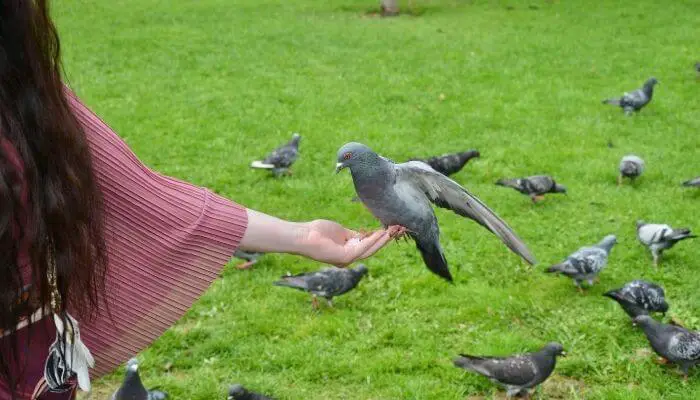
Feral pigeons are descended from domestic pigeons and are the same species. Many “wild” pigeons that walk up to people are actually lost domestic or racing birds, which US rescue Palomacy calls self-rescue. Check for a leg ring (see what to do if you find a racing pigeon). A domestic breed with unusual feathers, an all-white “wedding dove” or a bird that is very tame may not survive outside and is better suited to life as a pet (see pigeons as pets).
Rehabilitating a wild pigeon
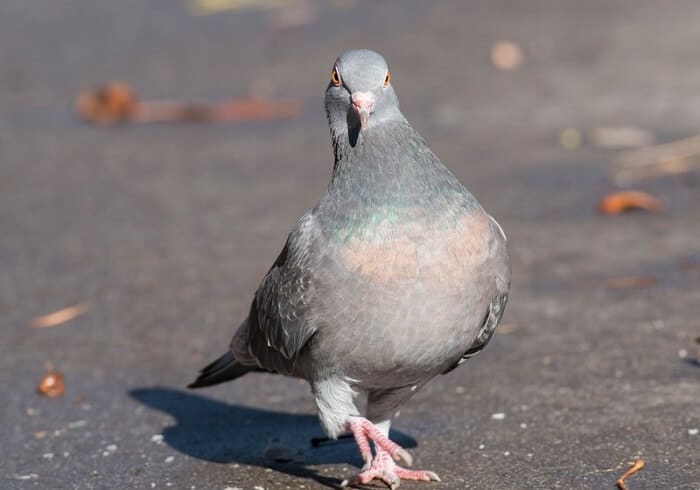
If you take in an injured pigeon: 1. Get it checked by a vet or rescue (see what to do if you find an injured pigeon). 2. Keep it in a quiet, warm space away from pets, with a seed mix, grit and water once it is eating. 3. Handle it as little as possible so it stays wary of people. 4. Release it where you found it once it can fly strongly. The RSPCA’s rehabilitation protocol stresses returning adults to the place they were found.
Baby pigeons raised by people can become tame and imprint on them, which makes release harder. Rescues often raise them alongside other pigeons for that reason. See how to take care of a baby pigeon.
If it cannot be released
A pigeon that will never fly well, or has lost a foot or eye, may not survive in the wild. Talk to a rescue. Some rescues rehome non-releasable pigeons as pets, and some will take the bird into a sanctuary flock.
Do feral pigeons make good pets?
Many rescued feral pigeons settle well indoors and become affectionate. They need the same care as any pet pigeon: a large cage or aviary, company, a seed mix and vet care. See pigeons as pets.
When to see an avian vet or contact a rescue
Before deciding to keep any pigeon, have it checked by a vet or rescue. See a vet straight away if it is injured, fluffed up, not eating or has abnormal droppings.
FAQ
Can I keep a baby pigeon I found?
You can raise it with the aim of releasing it. A rescue is the best place for it. See what does a baby pigeon look like.
Can I keep a woodpigeon or collared dove?
The same law applies. They are wild birds and should be released after rehabilitation.
Sources
- Wildlife and Countryside Act 1981, section 4 (legislation.gov.uk) (opens in new tab)
- Crown Prosecution Service: Wildlife offences (opens in new tab)
- GOV.UK: Licence to keep disabled Schedule 4 wild birds for rehabilitation (GL07) (opens in new tab)
- Palomacy: How to care for a rescued pet pigeon (opens in new tab)
- RSPCA Wildlife Rehabilitation Protocol: Pigeons (2013, PDF) (opens in new tab)
Last reviewed: 21 October 2026
Last updated 30 October 2026 · Keeping