

Omega-3 is as beneficial to pigeons as it is to humans and most other creatures.
Please note: this article is general information and is not a substitute for advice from an avian vet or a licensed wildlife rehabilitator. If you have found an injured or sick bird, contact a vet or your local rescue (see our list of pigeon-friendly rescue centres).
Some links on this page go to Amazon. If you buy through them we may earn a small commission, at no extra cost to you. As an Amazon Associate I earn from qualifying purchases.
The easiest way to ensure a healthy omega-3 supplement to their diet is to spray cod liver oil (opens in new tab) onto their usual food.
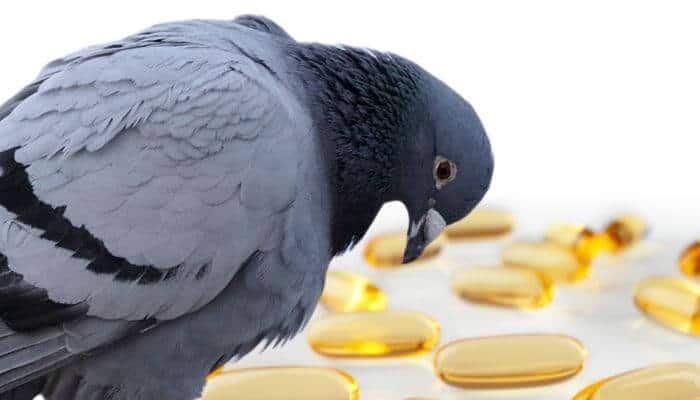
This beneficial oil supports various physiobiological functions including energy production, boosts immunity and heart health, and contributes to skin and feathers condition.
What is Omega-3?
Omega-3 is a type of polyunsaturated fatty acid essential for the health of many living creatures, particularly for mammals and birds.
It is called essential because bodies cannot make the basic omega-3, ALA – it has to come from the diet.
There are three types of omega-3:
- Alpha-linolenic acid (ALA)
- Docosahexaenoic acid (DHA)
- Eicosapentaenoic acid (EPA)
Plants are the major source of ALA while DHA and EPA are found mainly in animal foods and algae.
Foods high in omega-3 fatty acids include fatty fish, fish oils, flax seeds, chia seeds, flaxseed oil, and walnuts.
The most common way to supplement omega-3 is via cod liver oil.
The Science Of Omega-3
Omega-3 is one type of polyunsaturated fatty acid. The other type is omega-6.
There’s also a difference between short-chain and long-chain fatty acids.
In order for short-chain omega-3 to be used by the body to reap the benefits, it has to be converted to long-chain.
Plant-derived omega-3 (ALA) has to be converted to DHA and EPA to be utilized.
This is very relevant because a pigeon’s diet is plant-based.
Most proprietary pigeon feeds are designed to meet the broad spectrum of the bird’s nutrition and are typically higher in omega-6 because they contain cereal grains, corn, and seeds.
Most feeds are therefore potentially deficient in omega-3.
The natural process in the body to convert natural dietary-derived ALA to DHA and EPA is inefficient, so much of the ALA is never converted.
A high ratio of omega-6 to omega-3 is thought to favour inflammatory processes.
Extra omega-3 helps redress the omega 6:3 ratio.
What is Cod Liver Oil?
A natural product, the majority of cod liver oil is extracted from the liver of Atlantic cod although cod liver can also be ingested directly.
As well as being a prime source of omega-3, it is also rich in vitamins A and D.
How to Give Cod Liver Oil to Pigeons
You can boost your pigeons’ intake of omega-3 with any of a large number of cod liver products on the market.
The usual method is to mist a cod liver oil spray (opens in new tab) over your bird feeders at a recommended dose in the recommended frequency.
Cod Liver Oil Spray
Check price on Amazon (opens in new tab)It is important to follow the directions because if you provide a healthy diet with all the vitamins a pigeon needs, the additional vitamins provided by the cod liver oil can result in an overdose.
Vitamin A is particularly tricky.
Some birds can suffer from a vitamin A deficiency but equally, over-supplementation of vitamin A has the potential to be toxic to the liver.
Preferably choose a purified cod liver oil tested for contaminants such as mercury.
Some fanciers and feed suppliers suggest there are certain times when omega-3 supplementation is more beneficial than others.
These times are:
- For at least a week after mating but up until the second egg is laid.
- 2 to 3 days before basketing for a race
- First months of a young bird’s life after fledging.
Benefits of Omega-3 for Pigeons
Overall, omega-3 positively affects health, fertility, and general condition.
Energy: A pigeon (and any other living creature) requires biological energy for growth and performance. Omega-3 supports energy production.
Immunity: Omega-3 supports a pigeon’s natural defenses.
Omega-3 is well known for its anti-inflammatory properties.
Early in a bird’s life, it may help build resilience against common pigeon diseases, building immunity.
Condition: Omega-3 is essential for the maintenance of good feather health as well as keeping them shiny.
Strength: Omega-3 may help support bone strength and density.
Cod liver oil is a great source of vitamin D and this is required to help the body absorb calcium so providing omega-3 via cod liver oil is an excellent idea.
Fertility: Along with selenium and vitamin E, omega-3 plays a role in the fertility of pigeons as well as supporting early development.
Cod Liver Oil Is A Great Way To Add Omega-3 To Your Pigeon’s Diet
Omega-3 is essential for pigeon health. This is applicable to pigeons of all ages and to fancy and racing pigeons.
Cod liver oil is an easy way to administer omega-3 as a dietary supplement.
This guide is general information. If a bird is injured or seriously ill, contact an avian vet or a wildlife rescue as soon as you can.
Sources:
- Omega-3 and Omega-6 Fatty Acids in Poultry Nutrition: Effect on Production Performance and Health (opens in new tab)
- Effect of different fat sources in parental diets on growth performance, villus morphology, digestive enzymes and colorectal microbiota in pigeon squabs (opens in new tab)
Last updated 1 November 2026 · Health