

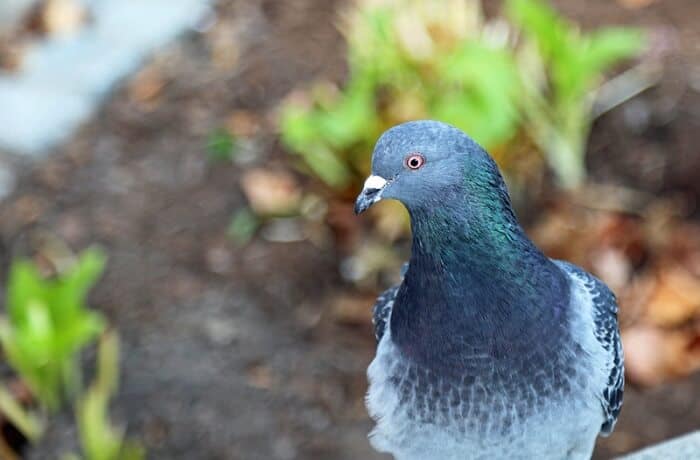
Pigeons can make good pets. They are calm, quick to learn routines and often bond closely with their people. What they need is a large indoor cage with daily time out, or a predator-proof aviary shared with other pigeons, a good seed mix, clean water, a bath, company for most of the day, and access to a vet who treats birds. Domestic pigeons from a rescue are usually the best choice, as many are surrendered or found lost every year.
Is a pigeon the right pet for you?
Consider these points before you take one on:
- Lifespan. Kept pigeons often live 15 years or more (see how long do pigeons live).
- Company. Pigeons are flock birds. US rescue Palomacy says a single pigeon living alone outside is lonely and stressed. Indoors, a single bird treats its people as its flock, so it needs you around.
- Mess. Pigeons produce plenty of droppings. Healthy droppings are fairly dry and do not smell much, and some owners use pigeon pants indoors.
- Dust. Pigeons shed a fine feather powder. People with asthma or bird allergies should take this seriously (see bird fancier’s lung).
- Vet care. Find a vet who sees birds before you need one.
Where to get a pet pigeon
- A pigeon rescue. Many rescues rehome domestic pigeons that cannot survive outdoors, such as fancy breeds and released “wedding doves”. See pigeon-friendly rescue centres.
- A breeder, if you want a particular breed. See where to buy pigeons.
- If you would rather have a small dove than a pigeon, see our diamond dove care guide.
Feral pigeons that have been rescued can sometimes stay as pets if they cannot be released. See can you keep a wild pigeon as a pet.
Housing indoors
Palomacy gives this guidance for an indoor cage:
- At least 42 x 27 x 30 inches (about 107 x 69 x 76 cm) for one or two compatible birds. Width matters more than height, as pigeons walk rather than climb.
- A flat, easy-to-clean floor such as vinyl or paper liners. Pigeons should never stand on a wire floor.
- Shelves rather than perches, a nest box or basket, and heavy flat-bottomed food and water dishes.
- Narrow bar spacing (about 1.25 cm or less) if you have cats or dogs.
- Daily supervised time out of the cage, in a room with windows covered and no open flames, ceiling fans or toxic plants.

Housing outdoors
Outdoors, pigeons need a proper loft or aviary, never a cage. Palomacy recommends:
- A minimum of 5 x 6 x 6 feet (about 1.5 x 1.8 x 1.8 m) for a small group
- Mesh with openings no larger than about 1.25 cm to keep out rats and predators
- Other pigeons for company
- A nest box for each pair, a dry floor and shelter from wind and rain
See how to build a pigeon coop.

Setting up an outdoor loft
If you plan to keep a few birds outside, start small and put the loft where it has room to grow, because pairs breed often. A converted garden shed is a common starting point.
The loft should be waterproof, light and well ventilated without draughts, with nest boxes or shelves off the floor and some perches. Attach an aviary that is meshed on every side and over the top, so the birds can sit outside safe from cats and hawks. Keep a small separate cage for quarantining new or sick birds.
Pigeons drink by sucking with the beak under water, so use a drinker at least 2.5 cm (1 inch) deep. An adult pigeon eats roughly 35 to 50 g of food a day, which helps when you work out how much feed to buy.
Feeding
Some links on this page go to Pharma Pigeon Products. If you buy through them we may earn a small commission, at no extra cost to you.
- A pigeon seed mix should be the main food. Palomacy suggests starting at about two tablespoons per bird per day and adjusting so the bowl is empty by evening.
- A vitamin and mineral supplement made for birds (opens in new tab).
- A little grit or crushed oyster shell for calcium. Palomacy warns that too much grit can cause problems (see do pigeons need grit).
- Small amounts of chopped greens.
- Fresh water every day.
See best pigeon food and what can pigeons eat.
Bathing and grooming
Pigeons love to bathe. Offer a large, shallow dish of water a few times a week, or leave one out. See how to bathe a pigeon.
Breeding
Pairs will lay eggs every few weeks. Rescues ask adopters to swap eggs for dummy eggs to prevent unwanted chicks. A hen that lays too often also needs extra calcium.
Daily and weekly care
- Daily: food, water, check droppings (see pigeon droppings guide), time out or company.
- Weekly: clean the cage floor and dishes, offer a bath.
- Yearly: health check with an avian vet.
Protecting your own health in the loft
In some people, dust from feathers and dried droppings causes an allergic lung condition. It is known as bird fancier’s lung or pigeon fancier’s lung, and the medical name is hypersensitivity pneumonitis. Anyone who spends a lot of time with pigeons can be affected, so take a few precautions:
- Wear a well-fitted FFP2 or FFP3 mask when you clean the loft or cage.
- Keep the loft well ventilated.
- Damp down droppings with a light spray of water before you scrape them, so less dust gets into the air.
- Clean often, so droppings don’t build up.
- Wash your hands after handling the birds or cleaning.
See your GP or doctor if you get a cough, breathlessness, fever or tiredness that won’t go away, and tell them you keep pigeons. Asthma + Lung UK (opens in new tab) has more information on hypersensitivity pneumonitis.
When to see an avian vet or contact a rescue
Book a vet visit if your pigeon:
- is fluffed up or sleepy for more than a few hours
- stops eating, or its droppings change for more than a day
- has a lump, a swelling or trouble breathing
- loses balance or twists its neck
See sick pigeon symptoms.
FAQ
Do pet pigeons need to fly?
They enjoy it and it keeps them fit, so safe indoor flying time is valuable. Rescues advise against letting pet pigeons fly free outdoors, where hawks and getting lost are real risks.
Can a pigeon live with cats or dogs?
Palomacy says pigeons can live with other pets if they are always kept safe from them. Never leave them together unsupervised.
Can you house-train a pigeon?
Partly. Some owners use pigeon pants or keep the pigeon in rooms with easy-clean floors.
 (opens in new tab)
New to pigeon keeping?
Our eBook is a short beginner’s guide. It covers:
- Suitable breeds
- Raising pigeons from eggs
- Looking after baby pigeons
- Handling
- Cleaning
- Feeding
- Breeding
- Nesting
Sources
- Palomacy: How to welcome pigeons into your life (opens in new tab)
- Palomacy: Pigeons as pets, outside or indoors (opens in new tab)
- Palomacy: How to care for a rescued pet pigeon (opens in new tab)
- Washington Department of Fish and Wildlife: Domestic pigeons (rock doves) (opens in new tab)
- VCA Animal Hospitals: Feeding pigeons and doves (opens in new tab)
Last reviewed: 21 October 2026
See also: 5 Toys for Pigeons To Keep Them Stimulated & Active
Last updated 3 November 2026 · Keeping