
What can pigeons eat starts with seed and grain: wheat, maize, peas, millet and sunflower, plus grit and clean water. Soft fruit, leafy greens and unsalted nuts are fine as small extras. Bread is poor everyday food. Chocolate, avocado, onion, garlic, salt, caffeine, alcohol and mouldy scraps are toxic or harmful. Birds cannot digest lactose well.
Please note: this article is general information and is not a substitute for advice from an avian vet or a licensed wildlife rehabilitator. If you have found an injured or sick bird, contact a vet or your local rescue (see our list of pigeon-friendly rescue centres).
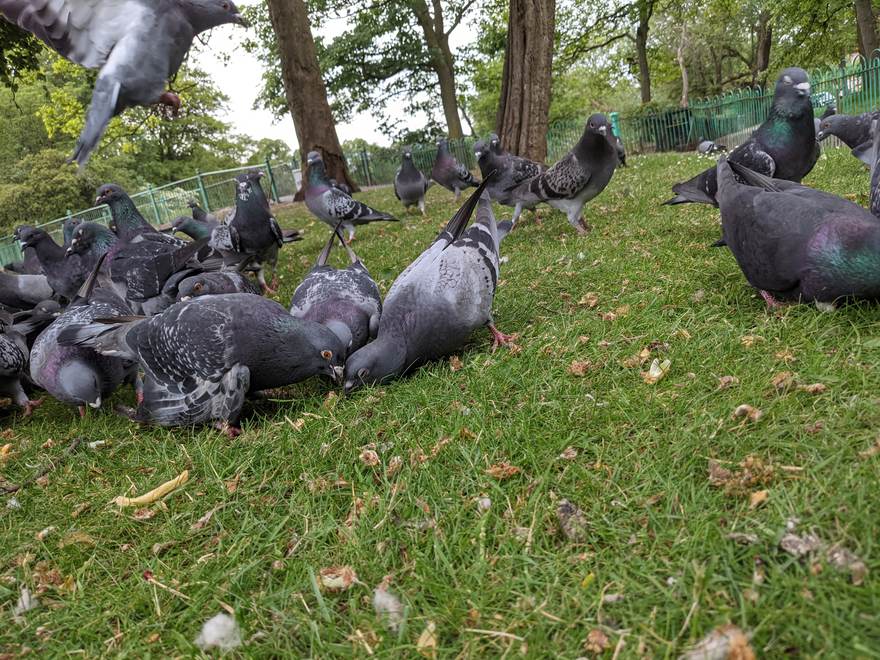
Safe, treat and toxic foods at a glance
Use this traffic-light guide before you offer scraps. Staple foods belong in a proper pigeon mix; treats are occasional; red items should never be given. For the natural diet of wild and feral birds, see what pigeons eat in the wild. For a kept-bird feeding plan, see best pigeon food.
A-Z quick reference
| Food | Safe? | Notes |
|---|---|---|
| Avocado | No | Persin can cause heart and breathing problems in birds (MSD Veterinary Manual). |
| Banana | Yes, small amounts | Soft treat. Not a staple. |
| Bread | Only occasionally | Fills them up with little nutrition (RSPCA). |
| Caffeine / coffee / tea | No | Stimulants harm birds’ hearts. |
| Chocolate | No | Theobromine and caffeine; dark chocolate is worst (MSD). |
| Corn / maize | Yes | Standard mix ingredient; cracked for small birds. |
| Dairy / milk / cheese | No / avoid | Birds digest lactose poorly (RSPCA, VCA). |
| Fruit (soft) | Yes, small pieces | Berries, grapes, apple or pear without seeds. |
| Garlic / onion | No | Even small amounts can be fatal (RSPCA). |
| Lentils / peas | Yes, in a mix | See lentils for pigeons. Plain and unseasoned. |
| Nuts (unsalted) | Yes, chopped | Peanuts, walnuts and similar; never whole for small birds. |
| Oats | Yes, in moderation | Fine share of a grain mix. |
| Popcorn | Plain only | No salt, butter, sugar or flavourings. |
| Rice | Yes | Cooked or uncooked; see whether rice or baking soda makes pigeons explode. |
| Salt / crisps | No | Can cause dehydration and organ failure. |
| Sunflower seeds | Yes | High fat; part of a mix, not the whole diet. |
| Tomato (ripe fruit) | Small amounts | Avoid leaves, stems and green fruit. |
| Vegetables | Yes, chopped | Leafy greens and brassicas; no onion family. |
What should make up most of a pigeon’s diet?
RSPCA advice for garden pigeons puts seeds and grains first: oats, sunflower seeds, wheat and millet make up most of a healthy diet, with berries, chopped apple or pear, unsalted chopped nuts and leafy greens as extras, plus clean water changed daily. VCA’s feeding guide for pigeons and doves adds that pellets can form about half of a kept bird’s diet, with seed and fresh produce making up the rest, and that pale iceberg lettuce and celery add little nutrition.
Pigeons have no teeth and swallow food whole, so pieces must be small enough to swallow or soft enough to peck apart. Grit helps them grind seed in the gizzard; see whether pigeons need grit. Racing and loft keepers often use timed feeds rather than free-choice trays; see racing pigeon feeding systems.
Can pigeons eat bread?
Pigeons will eat bread, and an occasional piece does little harm. RSPCA lists bread under foods not to feed because it lacks the nutrients pigeons need. A diet that is mostly bread fills the crop without protein, minerals and vitamins from seed and grain, and birds that learn to wait for handouts stop foraging for better food. If you feed park pigeons, a plain wild-bird or pigeon seed mix is a better choice.
Can pigeons eat rice?
Yes. The story that dry rice swells in a bird’s stomach and makes it burst was spread by a newspaper column in the 1980s and has been rejected by bird charities for decades. Birds eat wild rice and other grains without trouble. Plain cooked rice is also fine in small amounts. For baking soda and similar myths, see whether rice or baking soda makes pigeons explode.
Fruit, vegetables and nuts
Most rock pigeons and feral pigeons are seed eaters first. Soft fruit such as berries, grapes, blueberries and small pieces of apple or pear are useful extras. Remove apple seeds and stone-fruit pits. Some wild fruit-dove species live mainly on fruit, including the pink-necked green pigeon and the kererū, but that does not mean fruit should replace grain for a city pigeon or a loft bird.
Wood pigeons graze leaves, and feral pigeons often take brassicas such as cabbage, kale and broccoli. Finely chopped leafy greens are a good addition for kept birds. Offer unsalted peanuts and other nuts chopped into tiny pieces; RSPCA warns that whole peanuts can choke birds and their young. Keep high-fat nuts to a small share of the diet, and never offer salted, flavoured or mouldy nuts.
Dairy, salt, popcorn and other scraps
RSPCA and VCA both note that most birds are lactose intolerant, so milk, cheese and similar dairy foods are a poor idea. Salty snacks, crisps and salted nuts can lead to dehydration and organ failure. Plain popcorn with nothing added is safe as an occasional treat; buttered, salted, caramel or microwave popcorn is not. Alcohol depresses organ systems and can kill; keep it away from birds.
Foods that are toxic or dangerous
These foods should never be offered:
- Chocolate and anything with caffeine – theobromine and caffeine build up and can affect the heart and nervous system (MSD Veterinary Manual; RSPCA)
- Avocado (fruit, leaves, stems, seed) – persin can damage heart muscle and cause breathing trouble (MSD; RSPCA; VCA)
- Onion and garlic – even small amounts can be fatal (RSPCA)
- Mouldy or stale food – risk of illness, including aflatoxins on mouldy peanuts
- Fruit pits and some seeds – toxic compounds; apple seeds should be removed
- Desiccated coconut – can upset the gut and, in some cases, be fatal (RSPCA)
If a pigeon has eaten chocolate, avocado or another listed toxin, contact a vet or a pigeon-friendly rescue straight away. Do not wait to see if signs appear.
Feeding park and garden pigeons
RSPCA suggests feeding seed, grain and nuts mainly from November to April, when natural food is scarcer, and avoiding a seed-only handout that makes birds rely on people. Do not put food out in ways that spread disease: keep quantities modest, clear uneaten scraps, and refresh water daily. If pigeons are stripping a vegetable patch, removing easy food is more effective than most deterrents; see how to keep pigeons out of gardens.
Frequently asked questions
What can pigeons eat?
A seed and grain mix (wheat, maize, peas, millet, sunflower and similar), with grit and clean water. Soft fruit, leafy greens and unsalted chopped nuts are fine as extras. Avoid chocolate, avocado, onion, garlic, salt, caffeine, alcohol, dairy and mouldy food.
Can pigeons eat bread?
Occasionally. Bread is filling but low in nutrients. RSPCA advises against it as a regular food. Seed mix is better for park birds.
Can pigeons eat rice?
Yes. Cooked or uncooked plain rice is fine. The idea that rice makes birds explode is a myth.
Can pigeons eat chocolate?
No. Chocolate contains theobromine and caffeine, which are toxic to birds. Call a vet if a bird has eaten some.
Can pigeons eat avocado?
No. Avocado contains persin, which can damage a bird’s heart and cause breathing problems.
Can pigeons eat dairy?
Avoid it. Most birds are lactose intolerant, so milk and cheese are poor choices.
What should I feed wild pigeons in the park?
A plain pigeon or wild-bird seed mix in modest amounts, plus clean water. Skip bread as the main offering.
Sources
We checked each source on 5 November 2026.
- RSPCA: Pigeons nesting in gardens and balconies – what to feed / what not to feed (opens in new tab)
- RSPCA: Pigeons in the UK – diet and myths (opens in new tab)
- VCA Animal Hospitals: Feeding pigeons and doves (opens in new tab)
- MSD Veterinary Manual: Chocolate toxicosis in animals (opens in new tab)
- MSD Veterinary Manual: Avocado (Persea spp) toxicosis in animals (opens in new tab)
- RSPB: Safe food for birds (opens in new tab)
Last updated 5 November 2026 · Nutrition