
Feral and domestic pigeons do not migrate. Some wild species do: the European turtle dove flies to Africa for the winter, and many wood pigeons from northern and eastern Europe move south-west in autumn.
Feral pigeons stay close to where they hatched, and homing pigeons learn to treat their loft as home when they are young. Pigeons also cope well with cold weather, so they have less need to migrate than many other birds.
Why Don’t Pigeons Migrate?
Although no one knows for certain why they don’t migrate, we can make educated guesses.
Here are some of the most likely reasons:
1. Their Breeding Cycle
One thing that keeps feral pigeons in one place is their breeding cycle. Unlike many bird species, they don’t have one fixed breeding season.
Feral pigeons can breed at any time of year, with more nests in spring and summer.

Migrating birds time their journeys around a single breeding season, which doesn’t fit a bird that may raise several broods a year.
Domestic pigeons kept in lofts also breed all year round if they are allowed to.
2. Predators
Pigeons face all types of dangers when it comes to predators.
They can be attacked by aerial birds of prey, like falcons, owls, and sparrowhawks.

On the ground, predators may be dogs, ferrets, foxes, and snakes, depending on where they dwell.
Then there are climbing predators such as cats and rats, which raid nests. Migrating birds face different kinds of predators along their flight and at their destination.
In the case of pigeons, it may be better the devil you know than the one you don’t.
3. Pigeons Deal With Cold Weather Well
Pigeons have developed ways to deal with cold and harsh conditions.

It may not seem like it, but their plumage is thick and acts as a good insulation against cold conditions.
They also tend to roost together. This isn’t just for protection against predators, but also to share body warmth.
4. Food Sources
Probably the most important reason is food sources.
Obviously, pigeons can find enough food to sustain themselves in their natural environments, even during the breeding seasons, when they have to provide for their young.
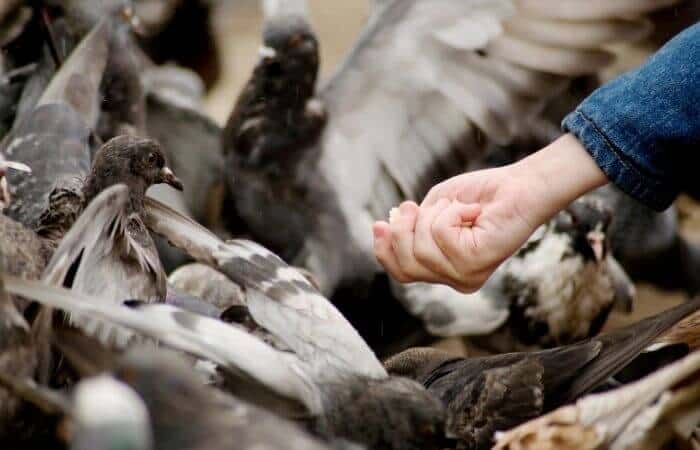
For their first few days, pigeon chicks are fed only crop milk.
Both parents produce this nutritious liquid in their crop and feed it to the chicks, then gradually mix in softened seeds and other food they have eaten.
As long as these birds can feed themselves and produce crop-milk for their youngsters, there’s no need to migrate.
Those that have adapted to living beside humans obviously have found an abundance of food resources.
Conclusion
Pigeons don’t migrate because they don’t need to.
They have learned to deal with harsh weather conditions where they live.
A year-round breeding cycle fits better with staying put.
They can find enough food resources to keep them in one place all year round.
Given the success of their reproduction rate and expanding numbers, they seem to have got it right.
Last updated 31 October 2026 · Behavior