
The mourning dove, one of the most commonly seen birds in North America, carries a lot of symbolism, much of it tied to the mournful call that gives it its name. It is also the main quarry of dove hunting, with an estimated 10 to 20 million shot each year in the United States.
In various legends, stories and belief systems, a mourning dove visiting you is said to be a symbol of:
- Peace
- Hope
- Love and protection
- Loved ones
- Long life
- Good fortune
- Repentance
- Romantic love
- Sadness
1. Symbol of Peace
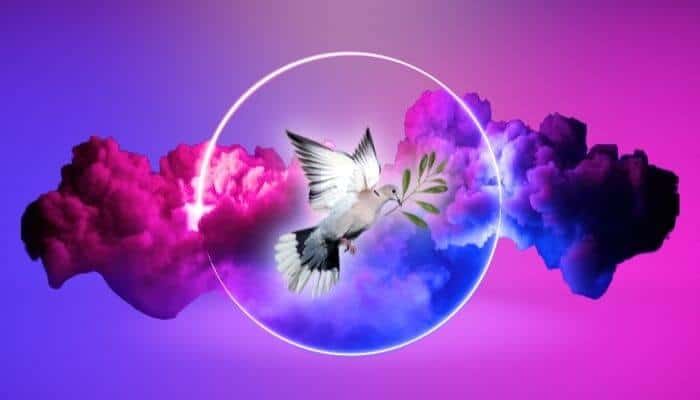
Although the notion of peace is more classically assigned to the white dove, it applies equally to the mourning dove. This message is commonly conveyed by the image of a dove with an olive branch in its beak or talons.

This image is widely recognised around the world.
By the middle of the 20th century, the dove had become so symbolic of peace that ”The Dove of Peace (opens in new tab)”, a picture by Picasso was chosen to be the logo for the World Peace Congress in Paris in 1949.
2. Symbol of Hope
The dove is a symbol of hope, particularly to those who hold Christian faith and beliefs.
The Bible has two mentions that specifically present the dove in connection to help and hope.
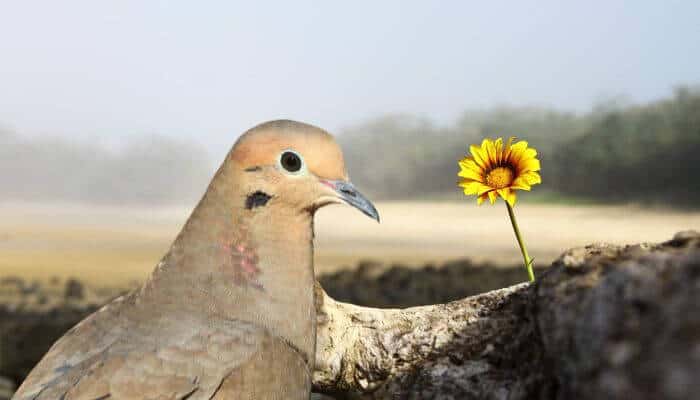
The first of these, and arguably the most famous, is the story of Noah and the great flood.
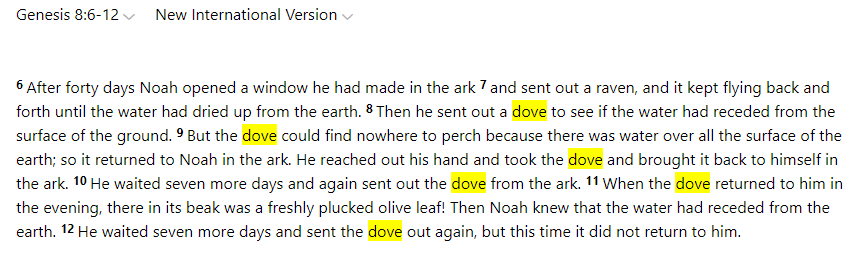
After 40 days and 40 nights on the ark with no sign of land, Noah sent out a dove and it finally returned with an olive branch in its beak (opens in new tab), signaling that land was nearby and therefore that hope had been restored.
The dove and the olive branch are each seen as a symbol of peace, so together they make a strong one.
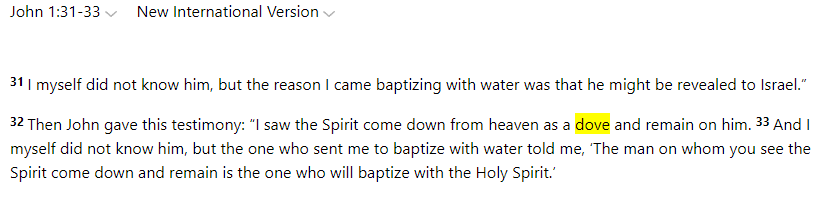
The second reference is in the story of the baptism of Jesus, where it is stated that the Holy Spirit descended on Jesus ‘like a dove’ (opens in new tab). The dove represents the spirit of God.
These references were adopted by early Christians and the dove and olive branch symbol of peace was used to portray the act of baptism as well as being used as imagery on their sepulchers (tombs).
3. Symbol of Love And Protection
Mourning doves usually keep the same partner for at least a breeding season, often longer, and this monogamy has led to them being seen as a sign of lasting love and protection in some Native American cultures.

Some sources say the Aztecs and other peoples of Mexico associated the dove with Xochiquetzal, their goddess of love and fertility, which links to both romantic love and the protection of a growing child. The dove image is said to have been used on decorations for wedding ceremonies and celebrations.
According to some accounts, the Blackfeet also saw the mourning dove as a symbol of protection, and warriors wore dove feathers into battle as a talisman for a safe return.
4. Symbol of Loved Ones
Many people believe that the sighting or presence of a mourning dove can symbolize a visit or message from a deceased loved one, or more simply, that the sight of the dove serves as a timely reminder of somebody whose presence you miss in your life.

The way a dove arrives and leaves can remind people of how loved ones come into our lives and sometimes leave sooner than we would like.
5. Symbol of Long Life
In China, doves have long been linked with long life and fidelity. (The mourning dove itself is an American bird; the symbolism belongs to doves in general.)

Doves appear in Chinese art and decoration, and some people use them in feng shui and home design.
A dove in Chinese design often expresses wishes for a long and prosperous life.
6. Symbol of Good Fortune
In some folk tales told in Africa, the dove is a symbol of good fortune.
In one tale, a woman and her child are captured and held by an ogre. Although starving, the woman feeds a dove with seeds every day. After the woman requests the dove to find her husband, it locates him. The husband saves his wife and child by killing the ogre.
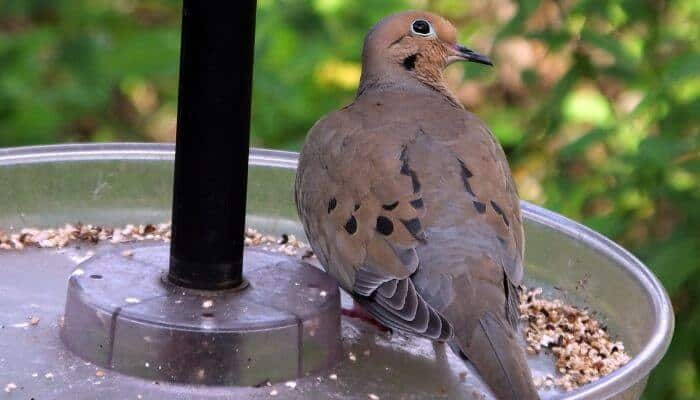
This gives the dove two meanings. One is good fortune, because the fate of the woman and child was changed. The other is reciprocity: one good turn deserves another.
7. Symbol of Repentance
In Ancient Israel, Hebrews used to practice a kind of ritual sacrifice that was seen as a sign of outward repentance for any sin or wrongdoing.
Wealthier families sacrificed larger animals such as cattle and sheep, while poorer families could offer two doves or young pigeons instead.
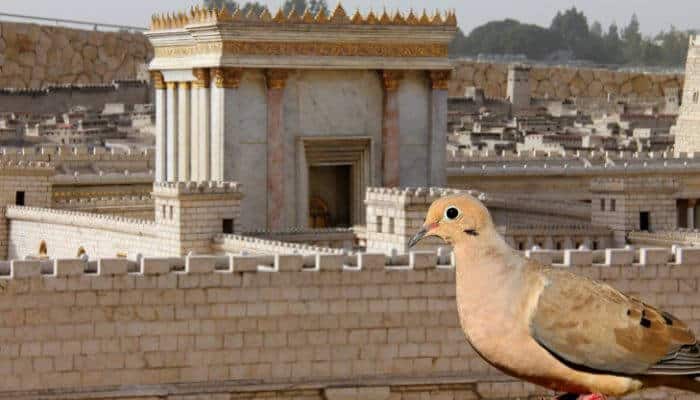
This practice continued for generations, until the temple in Jerusalem was destroyed in 70 AD. Some archaeologists believe that dovecotes found around Jerusalem supplied doves for these sacrifices.
It is easy to see from this old tradition why the dove became linked with repentance and atonement in Jewish tradition.
8. Symbol of Romantic Love
In Greek mythology, Aphrodite, the goddess of love, was often shown surrounded by doves in temple decorations and on pottery.
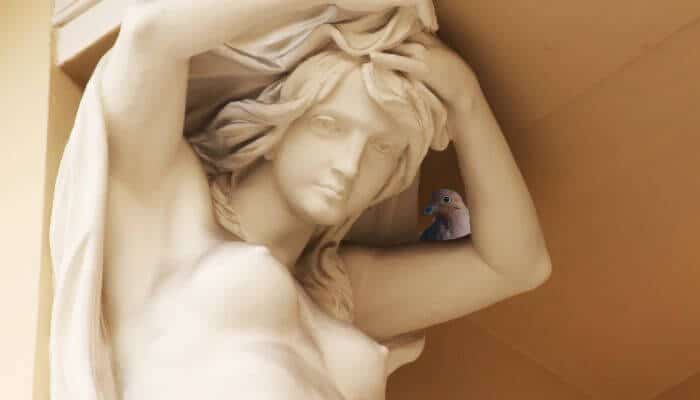
Similar images can also be found of Venus, the Roman goddess of love, and this connection with doves and romance stayed strong all the way into the Middle Ages when doves started to become a popular symbol for expressions of love.
They have now become a standard piece of imagery for modern Western celebrations like Valentine’s Day.
The link between doves and romance is so strong that it is probably where the colloquial phrase ‘lovey-dovey’ comes from, used to describe people who are besotted with each other.
9. Symbol of Sadness
As you can probably guess from its name, the mourning dove is known for its mournful, melancholy cooing. Because of this distinctive cry, the dove also stands for sadness, including in the Bible.
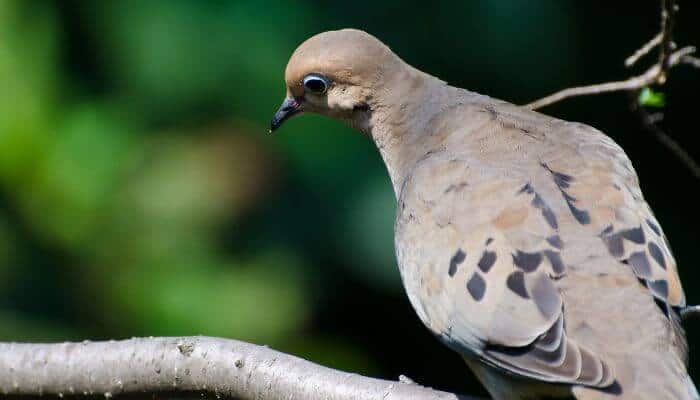
In the book of Isaiah, somebody is described as mourning like a dove, and in the book of Ezekiel, a similar passage is written that hints at the same metaphor. With direct quotes like this, it is easy to see why the sound and sight of the dove became so heavily associated with mourning and sorrow.
The dove’s association with sadness makes it a common symbol on sympathy cards.
What we find most interesting is that, even though mourning is in its name, the mourning dove is more often a symbol of positive feelings like hope and love than of sorrow.
Last updated 31 October 2026 · Types