
Tumbler pigeons tumble because it is a genetic trait.
Tumbling is not seen in wild rock pigeons: it appeared in domestic pigeons, probably as a mutation that breeders then selected for.
Breeders kept and paired the birds that tumbled, so the trait was passed down and strengthened over many generations.
Tumbler Trait Breeding
Unfortunately, down through the years, many pigeon breeders have seized on this trait and have bred pairs to exhibit in pigeon shows and other types of exhibitions.
In many cases, this ability has been so inbred in some breeds that it has become an abnormality. (opens in new tab)
If a tumbler is paired with a non-tumbling pigeon, the trait can still show up in later generations, not necessarily in the very next one.
Selective breeding of tumblers with others of the same kind can interfere with a pigeon’s ability to actually fly.
Dangers Of The Tumbling Trait
Some tumblers are called ‘rollers’ because of their tendency to execute several backward somersaults in a row.
In extreme cases this tumbling has become an involuntary action.
Somersaults are triggered as soon as they take wing.
Flight has always been the pigeon’s immediate response to danger.
Anything to impede that will endanger the pigeon.
There is not only that to take into consideration, but actual physical harm to the bird without the agency of a predator.
If a pigeon takes flight and immediately goes into a tumble after just leaving the ground they can crash and frequently do.
It is the same if they launch themselves from a perch.
The involuntary tumbling action can cause them to crash into objects that during normal flight they would have avoided.
Impact Of Tumbling On Pigeon Health
Considerable harm is done to a pigeon’s health and welfare when its natural ability to soar into the skies is curtailed by an involuntary tumbling trait.
Pigeons can suffer from stress, which in turn will lead to illness.
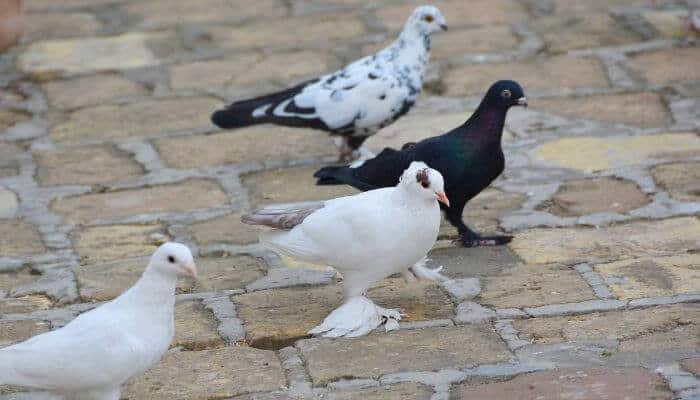
There are many breeds of tumblers and rollers, so you can imagine the damage done to these birds by this kind of selective breeding.
Sometimes the ability to fly normally has been completely bred out of them.
Not every high-flying breed tumbles. Tippler fanciers selected their birds for long, steady flights instead, and the tumbling is thought to have been bred out. See our guide to tippler pigeons.
Summary
In flying tumblers and rollers, a controlled tumble is a feat of aerial acrobatics that fanciers admire.
Problems start when the trait is bred to such an extreme that the bird can no longer fly safely.
In those cases, breeding for tumbling has done these wonderful birds a great disservice.
Many people consider breeding birds that cannot fly normally to be a welfare problem, and responsible breeders avoid it.
Last updated 30 October 2026 · Types