
The Rodrigues solitaire was a large, flightless pigeon that lived only on Rodrigues, in the Mascarene Islands. It is extinct. The IOC World Bird List (version 15.2) gives it the scientific name Pezophaps solitaria (Gmelin, 1789) and the English name Rodrigues Solitaire. It belonged to the pigeon family, Columbidae, in its own genus, Pezophaps.
It was the sister species of the dodo (Raphus cucullatus) of Mauritius, about 538 km to the west. Among living birds, its closest relative is the Nicobar pigeon (Caloenas nicobarica), a finding from mitochondrial DNA work published in 2002.
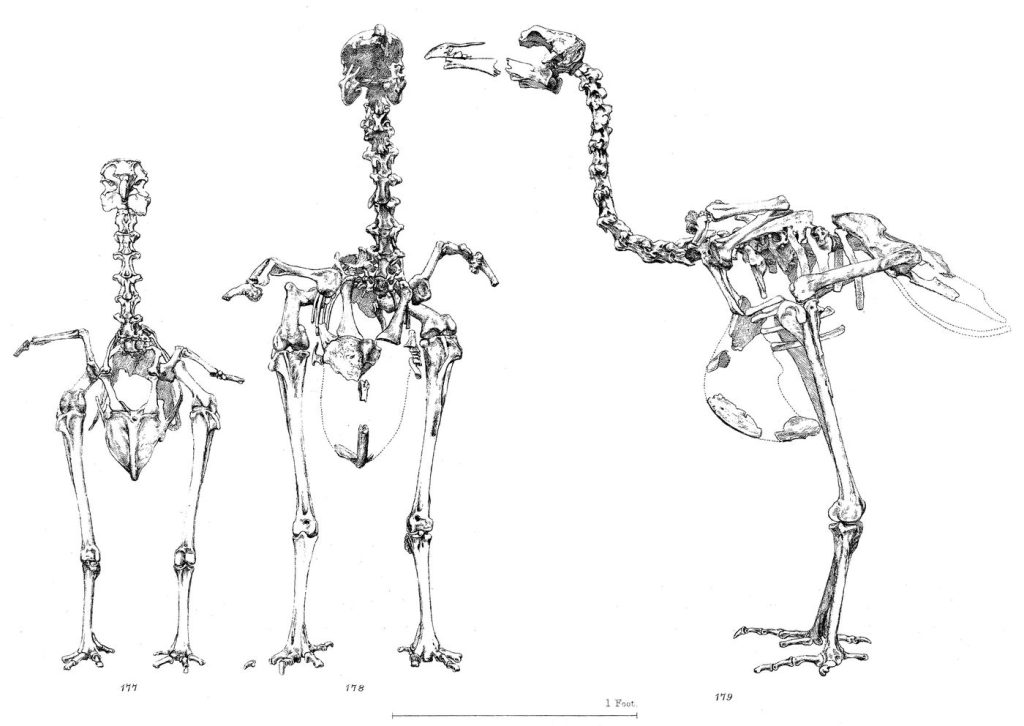
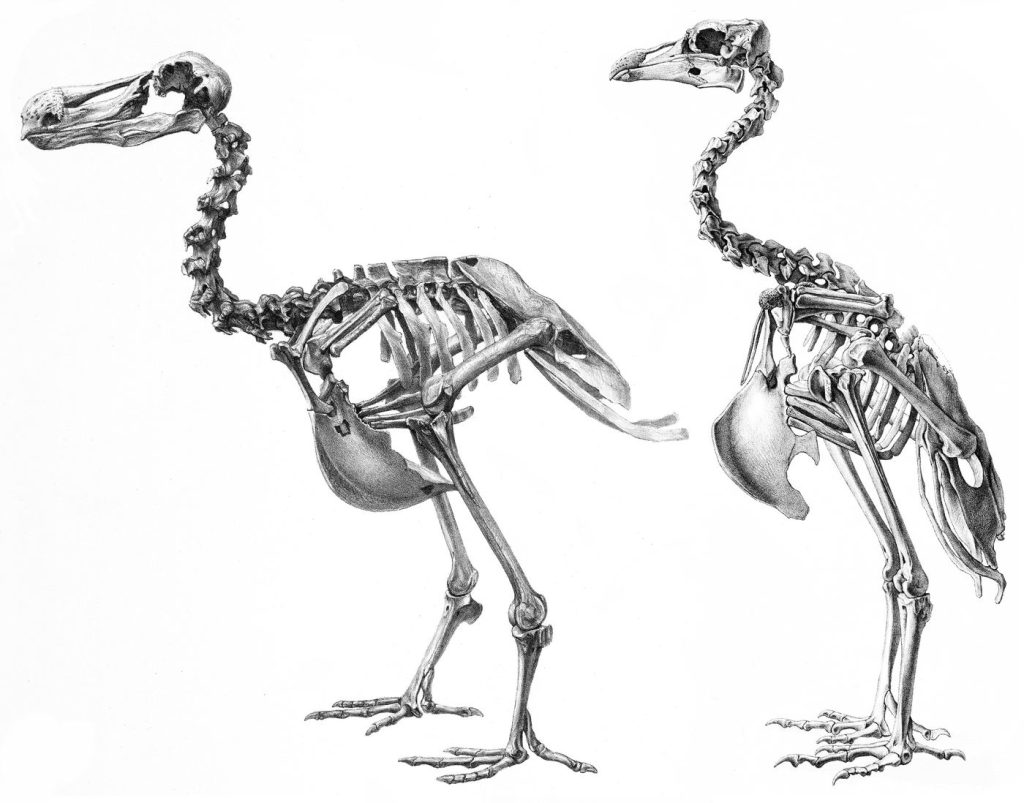
No skin of a Rodrigues solitaire is known to have left the Mascarene Islands. What we have are contemporary descriptions, one drawing made from life, a map, and thousands of subfossil bones from caves on Rodrigues.
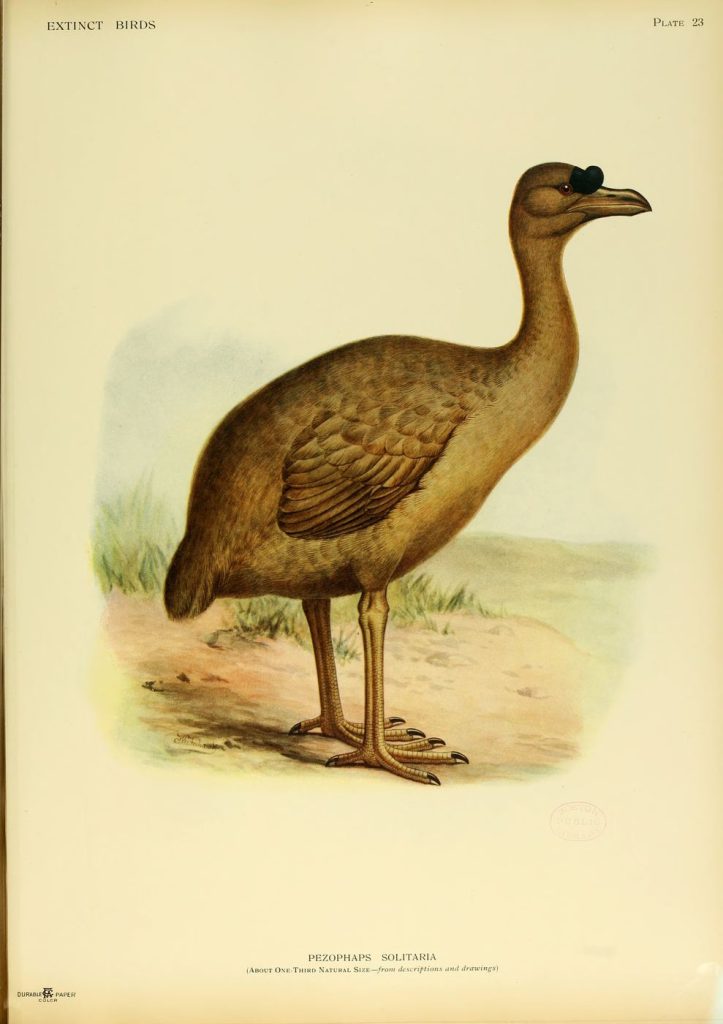
Rodrigues solitaire at a glance
| Feature | Rodrigues solitaire |
|---|---|
| Scientific name | Pezophaps solitaria (Gmelin, 1789) |
| Family | Pigeons and doves (Columbidae) |
| Range | Rodrigues only (now part of the Republic of Mauritius) |
| Status | Extinct. IUCN assessment of 8 July 2024 |
| Last records | Still thought common in 1733; rare and confined to isolated parts of the island in 1761; likely gone in the 1760s |
| Closest living relative | Nicobar pigeon (Caloenas nicobarica) |
| Closest extinct relative | Dodo (Raphus cucullatus) of Mauritius |
| What remains | Subfossil bones; no complete skin is known |
How it looked
The only picture drawn from a living bird is the 1708 engraving in François Leguat’s voyage. Leguat, a Huguenot, lived on Rodrigues in 1691-93. In the 1891 English edition of his book, the males have brown-grey feathers, a black, lively eye, and a head without a comb or crest. The beak and feet, he wrote, were like a turkey’s, but a little more crooked. The birds were taller than turkeys, with a straight neck, almost no tail, and a rounded rump. They could not fly. Their wings were too small to lift the body.
He found the females striking. Some were “fair”, by which he meant the colour of fair hair, and some were brown. They had a dun, peak-shaped mark on the breast, “like a Widow’s cap”, and two paler swellings on the crop.
From March to September, he wrote, the birds grew extremely fat. “Some of the Males weigh forty five Pound.” That figure comes from his account, in this English translation, and it describes birds in their fat season. It is not a modern mean weight taken from bones. A later osteological study, cited by Hume and Steel (2013), estimated that females averaged about 60% of the weight of a mature bird of the larger morph. Writers have long treated the larger morph as the male, as Leguat’s text suggests, but Hume and Steel note that the bones themselves have not been sexed by molecular methods.
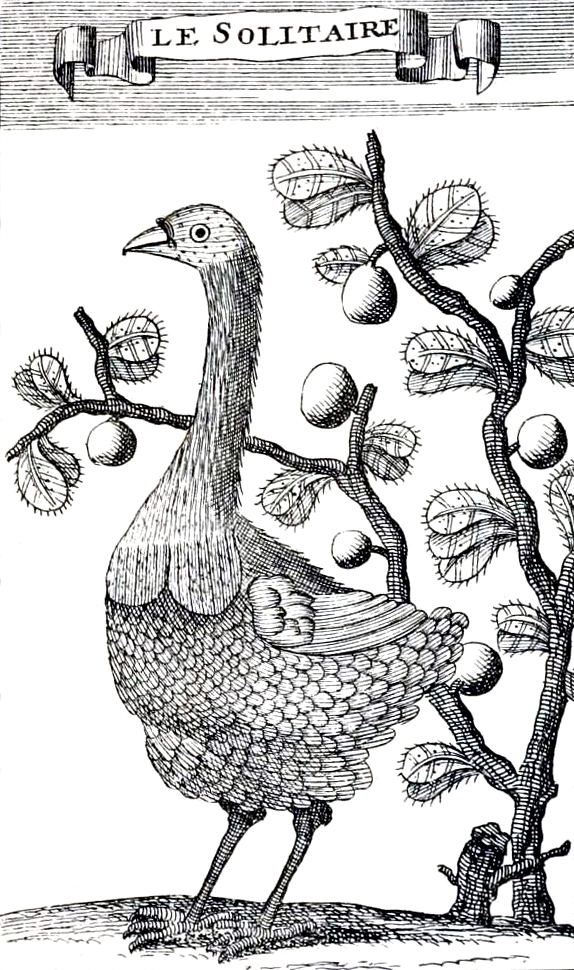
The musket ball on the wing
Leguat described a hard, rounded mass under the feathers at the end of the wing bone, “as big as a Musket Ball”. He said the bird used that knob, and its beak, as its chief defence. The wings were also rattled in display. The birds would whirl twenty or thirty times the same way for four or five minutes, and the sound, like a rattle, could be heard two hundred paces off.
Julien Tafforet, marooned on Rodrigues in 1725-26, left a similar account of a “bullet” at the end of a short wing, used in defence, and of a loud wing-clap when the bird was angry. He had a copy of Leguat’s book with him, so his text is not a wholly independent source, but it does repeat the same structures from a second stay on the island.
Hume and Steel (2013) examined subfossil wing bones and showed that this “carpal knob” is an outgrowth of the extensor process of the carpometacarpus. It formed after the skeleton was already mature, and it reached its greatest size in the largest adult birds treated as males. The largest knob they measured was 32.9 mm across at its widest, on a base only 14 mm wide. They found no exact match for the structure in other birds, and they argue that it is unique in Aves. A thicker cartilaginous or horn covering may once have made it larger still, as nineteenth-century anatomists suggested. There is no record of the dodo growing a bony knob of this kind.
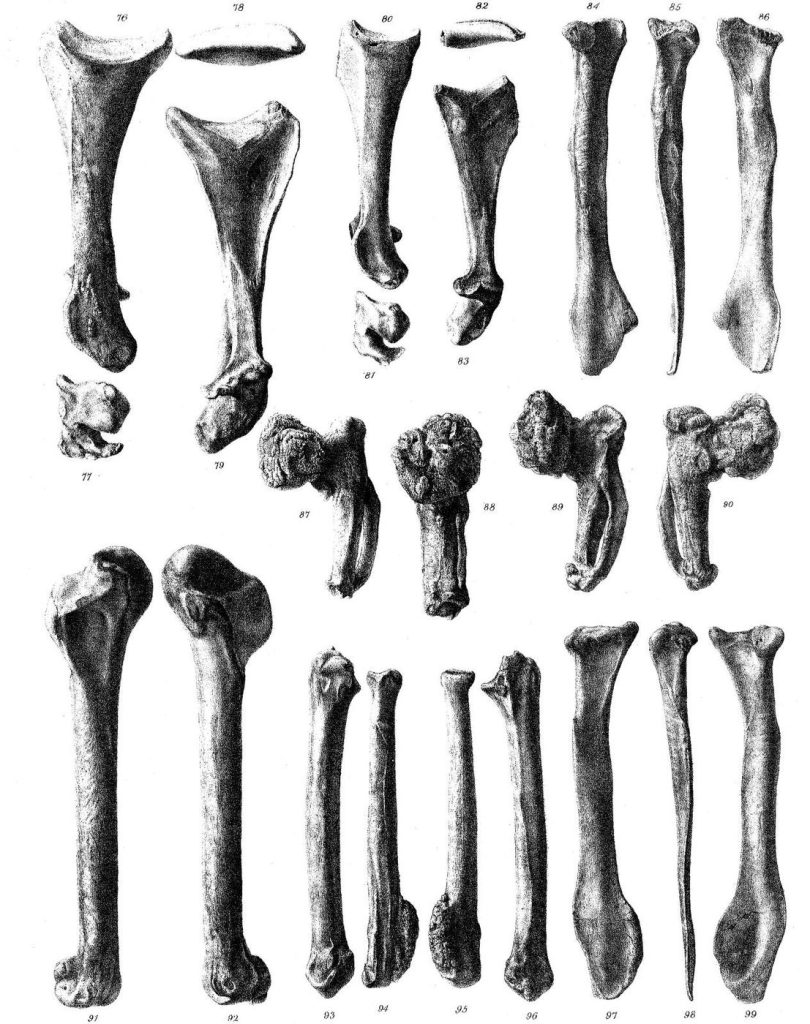
Nest, egg and territory
Leguat watched pairs at the nest. They chose a clean spot, heaped palm leaves about a foot and a half high, and laid a single egg, “much bigger than that of a Goose”. Male and female sat in turn. The young did not hatch until seven weeks, and could not fend for itself for several months. While they were sitting or raising that young bird, they would not allow another solitaire within two hundred yards. The male drove off other males; the female drove off other females, after her mate had signalled with his wings.
He also described pairs staying together after the young had left, and a gathering of thirty or forty birds that brought a second young bird to a newly fledged one, which he called a marriage. Hume and Steel find no support in these first-hand accounts for a later suggestion that the species was polygynous.
In the gizzard of both sexes, even in young birds, Leguat found a single brown stone about the size of a hen’s egg, rough, flat on one side and rounded on the other. He believed the bird hatched with it, because the passage from the crop looked too narrow to have swallowed a stone of that size. Pigeons commonly swallow grit to grind hard food, so his inference is not taken as fact here. The finding of the stone itself is part of his account.
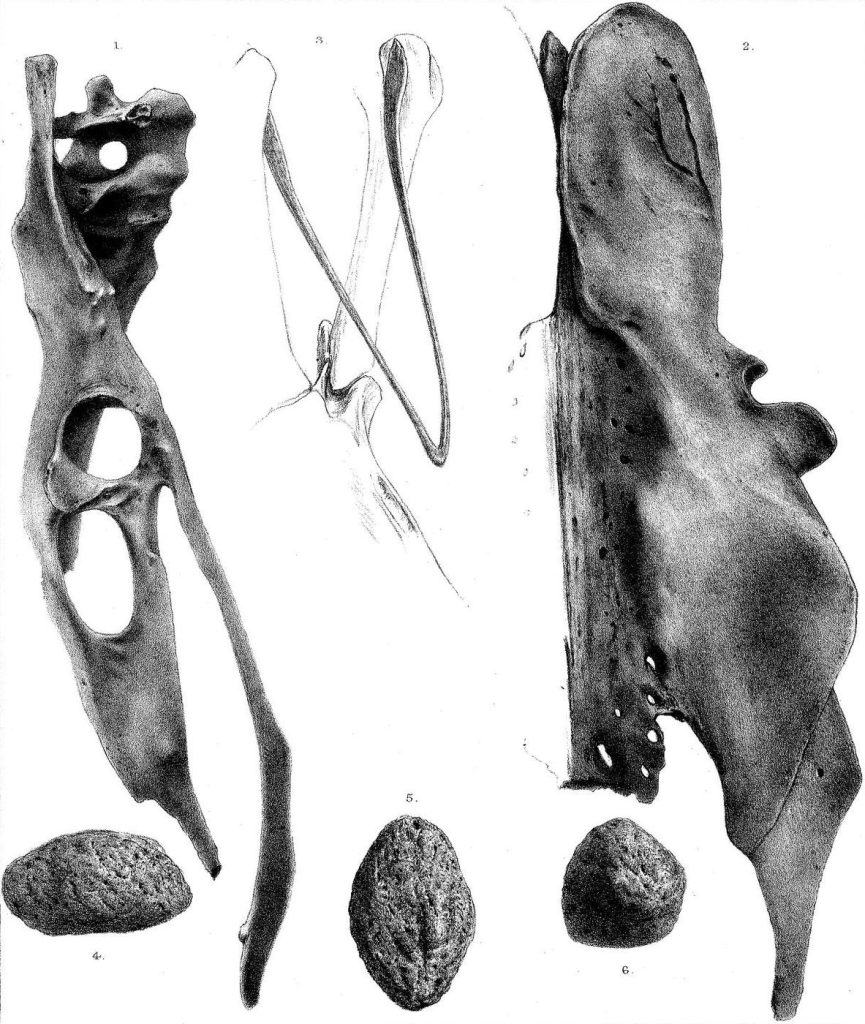
Relatives
Shapiro and colleagues (2002) placed the solitaire and the dodo as sister species, nested inside the pigeon family rather than in a family of their own. The closest living species in that analysis is the Nicobar pigeon. The crowned pigeons (Goura) of New Guinea sit next to that group. Their molecular clock put the split between dodo and solitaire in the late Oligocene, older than the present islands of Mauritius and Rodrigues, and they suggested earlier land in the Mascarene chain as stepping stones. Those dates depend on the clock used in that paper.
Among other pigeons that have disappeared in historical time, the passenger pigeon of North America is the best-known. The Choiseul pigeon is another island species that is gone. The solitaire’s story is the Mascarene one: a large, flightless island pigeon, close to the dodo, that did not survive the eighteenth century on Rodrigues.
Where it lived
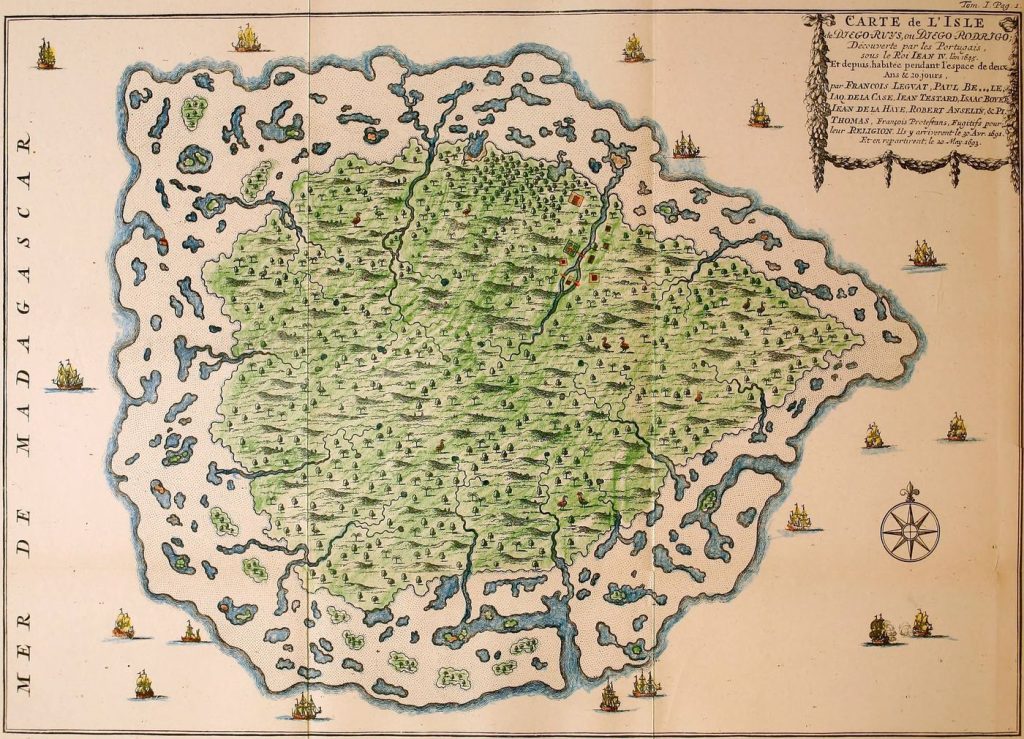
Rodrigues is the easternmost and smallest of the three main Mascarene islands. The IOC list gives the breeding range simply as Rodrigues. BirdLife’s 2024 IUCN assessment (opens in new tab) describes the species as endemic to the island of Rodrigues, Mauritius, meaning the island that now belongs to the Republic of Mauritius, not the main island of Mauritius, which was the dodo’s home.
The assessment says the bird is likely to have lived in dry forest, and perhaps in scrub. Its diet, following Hume (2017), is reported as hard seeds, and fallen fruit and leaves. It was not a migrant. The generation length given in the assessment is 3.83 years.
When it disappeared
The IUCN Red List category is Extinct. The current assessment was made on 8 July 2024 by BirdLife International.
- 1691-93: Leguat is on Rodrigues and later publishes the main first-hand description (1708).
- 1725-26: Tafforet is marooned on the island and describes the wing “bullet”.
- After 1726: goats and cats are introduced, and are thought to have added to the decline, through competition, disturbance, or predation (Hume 2017, cited in the IUCN account).
- 1733: the species is still considered common (Gennes de la Chancelière, published 1735).
- 1761: it is rare, and said to persist only in isolated parts of the island. Hume (2017), cited by IUCN, puts this as “most of the birds gone”.
- 1760s: the species is thought to have died out in this decade.
Ships came for the island’s giant tortoises, which were taken as food for Réunion and for the hospital on Mauritius. Those visitors almost certainly ate solitaires as well. Hunting, and the animals people brought with them, are the threats listed in the assessment.
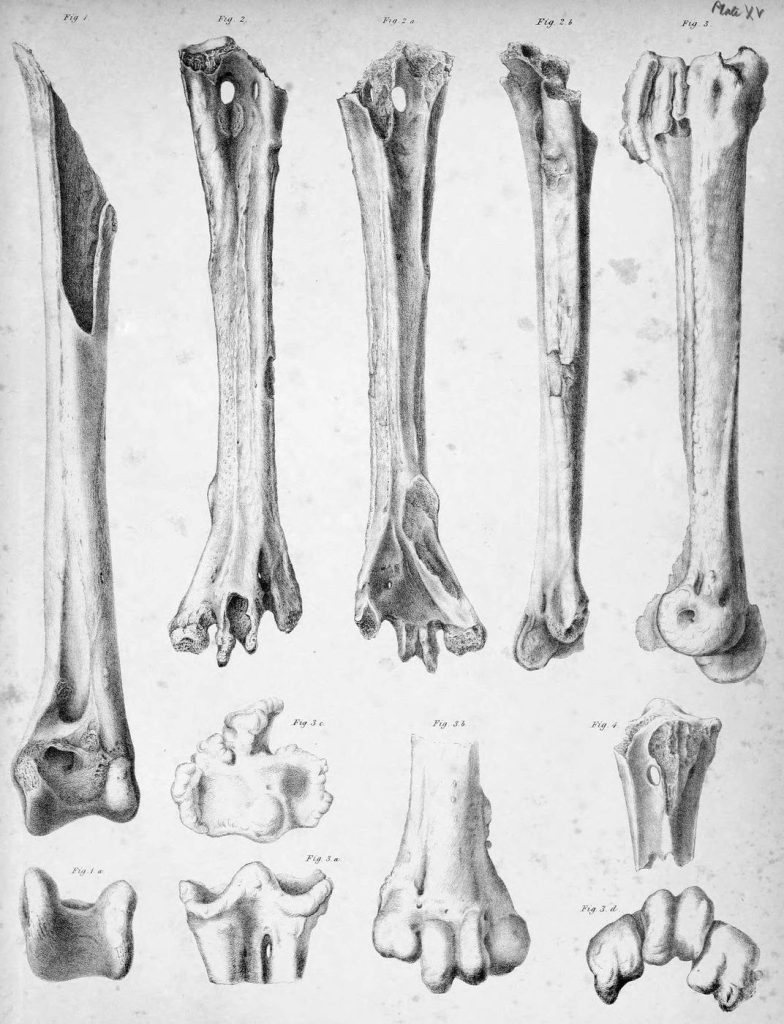
The first subfossil bones were collected in 1786 from caves on the Plaine Corail. They were not described until 1848, by Strickland and Melville. Gmelin’s name, from 1789, was based on Buffon’s earlier account of the bird, not on bones. Large cave excavations followed in the late 1860s and early 1870s. Thousands of bones are now in museum collections. That is the evidence we have. There is no living population, and no complete skin.
Frequently asked questions
Was the Rodrigues solitaire a kind of dodo?
No. It was a different species, in a different genus, from a different island. It was the dodo’s sister species, and both sit inside the pigeon family. The two are easy to confuse because both were large, flightless Mascarene pigeons, and some languages even use a “dodo” name for the solitaire. They are not the same bird.
Why was it called a solitaire?
Leguat wrote that it went by that name because it was seldom seen in company, even though there were many of them on the island. Pairs, once they had raised a young bird, stayed together.
Are any stuffed Rodrigues solitaires left?
There is no record of a live bird or a skin leaving the Mascarene Islands. Museums hold bones, including mounted skeletons put together in the nineteenth century. The 1708 engraving is the only image known to have been drawn from a living bird.
When did the last Rodrigues solitaire die?
Nobody recorded a last individual. The IUCN account, following Hume (2017), treats the species as still present, but rare, in 1761, and likely extinct sometime in the 1760s.
What did it eat?
The IUCN assessment, citing Hume (2017), reports hard seeds, and fallen fruit and leaves. Leguat also found a gizzard stone in the birds he opened.
How did it go extinct?
People hunted it, and ships that came for tortoises took solitaires as food too. Cats and goats, introduced after 1726, are thought to have added to the decline. The drop after 1733, when the bird was still called common, was rapid. By 1761 most of the birds were already gone.