
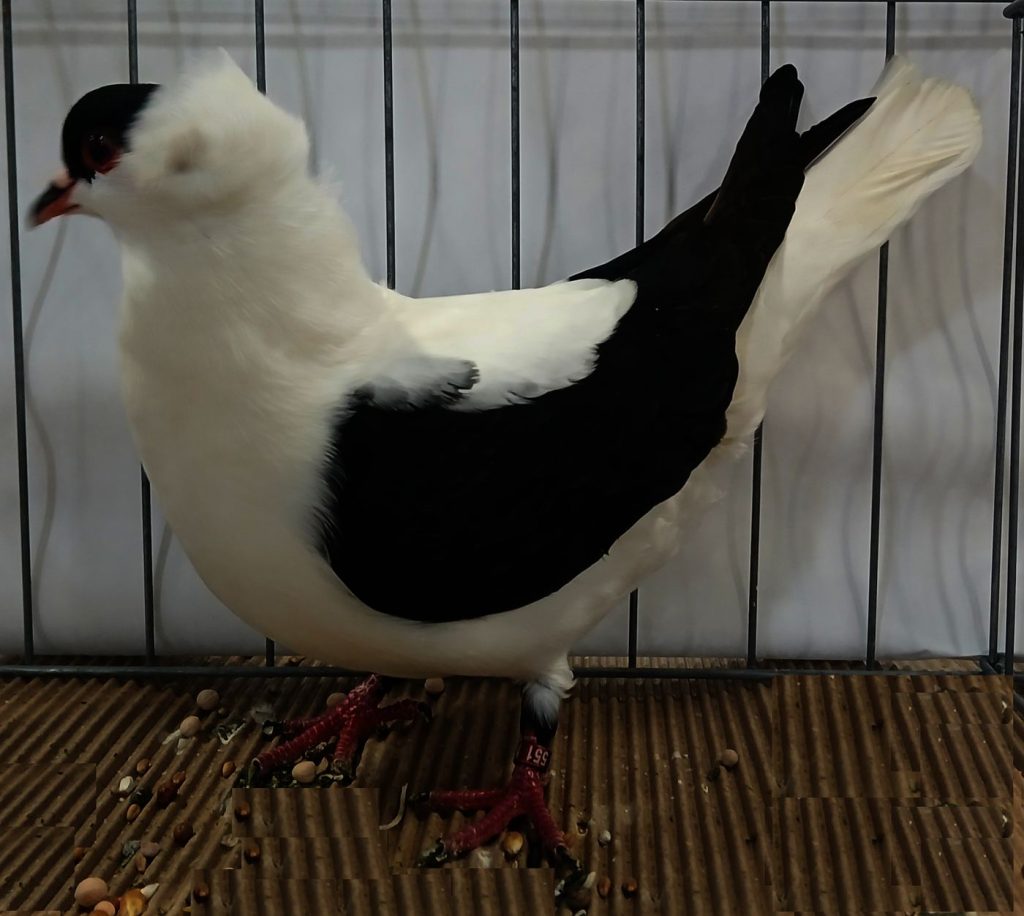
The Fairy Swallow is a colour pigeon with a white body, coloured wing shields and muffs, and a pear-shaped coloured spot on the forehead. In the National Pigeon Association (NPA) standard it is the crested, spot-marked form of the Saxon Wing Pigeon, also called the Saxon Fairy Swallow. The same standard calls the plain-headed bird a Silesian Swallow.
It is not the same bird as the Tiger Swallow. That bird is also spot-marked, but the feathers of the wings and muffs alternate between coloured and white. Some English pages call the Tiger Swallow a Bohemian Fairy Swallow, which is how the two names get mixed up.
Like other domestic breeds, it descends from the rock pigeon (Columba livia). It is kept as a show bird.
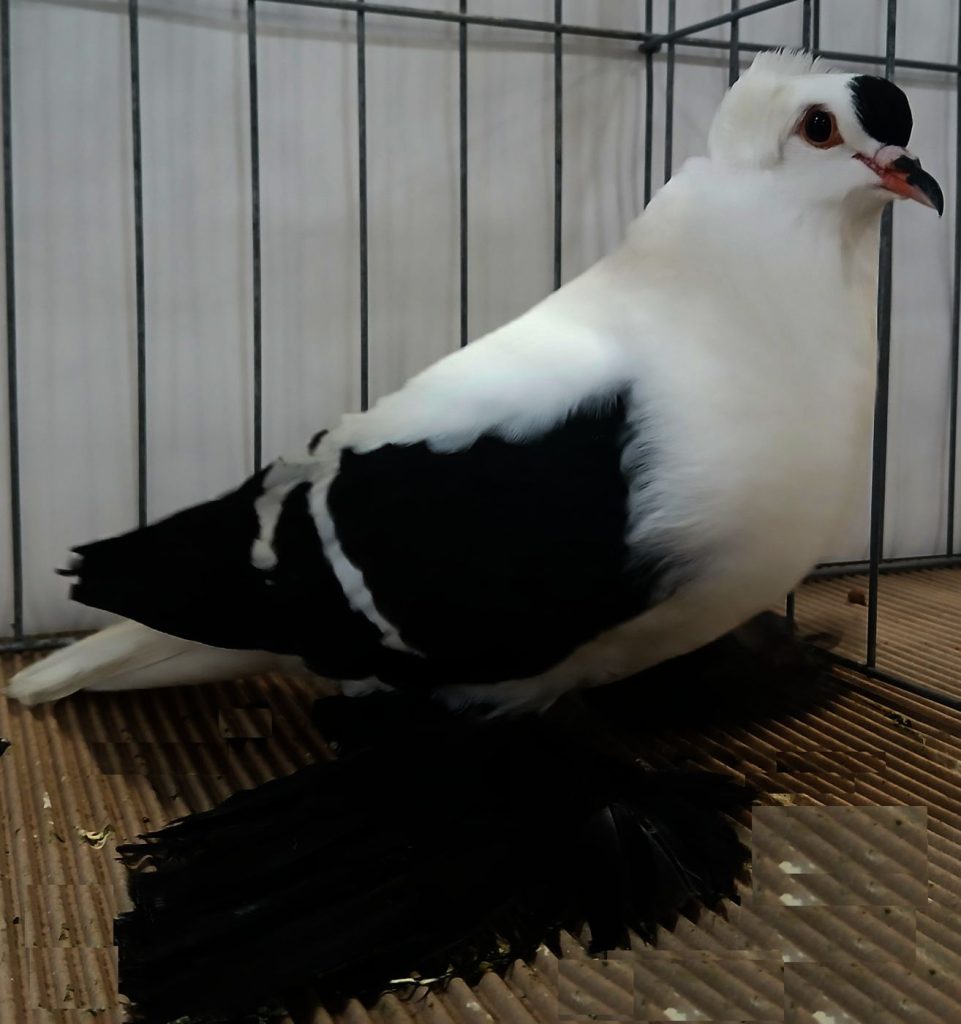
Fairy Swallow at a glance
| Feature | Fairy Swallow |
|---|---|
| Species | Domestic rock pigeon (Columba livia) |
| US name | Crested, spot-marked Saxon Wing Pigeon (Saxon Fairy Swallow) |
| Closest EE breed | Saxon Wing Pigeon (Sächsische Flügeltaube), no. 0469, Germany |
| Head | Shell crest, ending in a rosette on each side |
| Marking | White body and tail; coloured wing shields and muffs; a pear-shaped coloured spot on the forehead |
| Colours | Black, red, yellow, blue and silver, without bars, with white bars, or spangled; blue also with black bars, silver with dark dun bars, and blue and silver chequered; ash red and cream with or without dark bars |
| Eyes | Dark (bull); cere small, flesh-coloured to red |
| Beak | Moderately long; colour depends on the plumage (see below) |
| Feet | Low station, with long, thick muffs |
| Rings | EE list: 11 mm. UK NPA authorised list (sizes as of 1 January 2017): Fairy and Silesian Swallows in group E |
| German club | Sonderverein der Züchter Sächsischer Flügel-, Schwalben- und Schildtauben von 1920 (opens in new tab) |
Names, and what they do not mean
In the United States the NPA and the United Swallow Club (opens in new tab) keep several muffed swallows and wing pigeons under one standard. The names mark the head and the wing, not a set of unrelated breeds:
- Saxon Swallow, or Fullhead Swallow: a coloured cap on the head, not only a forehead spot.
- Fairy Swallow (Saxon Fairy Swallow): the crested, spot-marked wing pigeon.
- Silesian Swallow: the same spot marking, but a smooth head.
- Bohemian, or Tiger, Swallow: a spot-marked bird, crested or smooth, with alternating coloured and white feathers in the wings and muffs.
The Entente Européenne (EE) list treats some of these as separate breeds. The German Saxon Wing Pigeon (Sächsische Flügeltaube; French: Pigeon de Saxe à ailes colorées) is number 0469, with Germany as the standard country and a ring size of 11 mm. The Saxon Swallow (Sächsische Schwalbe; Hirondelle de Saxe) is number 0468, also German, also 11 mm. The Bohemian Tiger Swallow is listed on its own as numbers 0477 (muffed) and 0478 (clean-legged), with Czechia as the standard country.
In Germany the Saxon Wing Pigeon is shown with a shell crest (Rundhaube) or smooth-headed. That is the same split the US standard names Fairy and Silesian.
The forehead spot
The spot is what makes a Fairy or Silesian a wing pigeon rather than a Fullhead Swallow. It should be symmetrical and pear-shaped. The highest point sits on top of the head, between the centres of the eyes. The colour should not reach the eye cere. The spot narrows at the base and should not run to the corner of the mouth.
A Fullhead Swallow is marked differently. Its cap covers the top of the head, from between the mandibles, in a line to the lower part of the eyes and back to the rosettes. The cap should reach the crest but not go into it. That is a different bird from the Fairy Swallow, even when both have a shell crest and coloured wings.
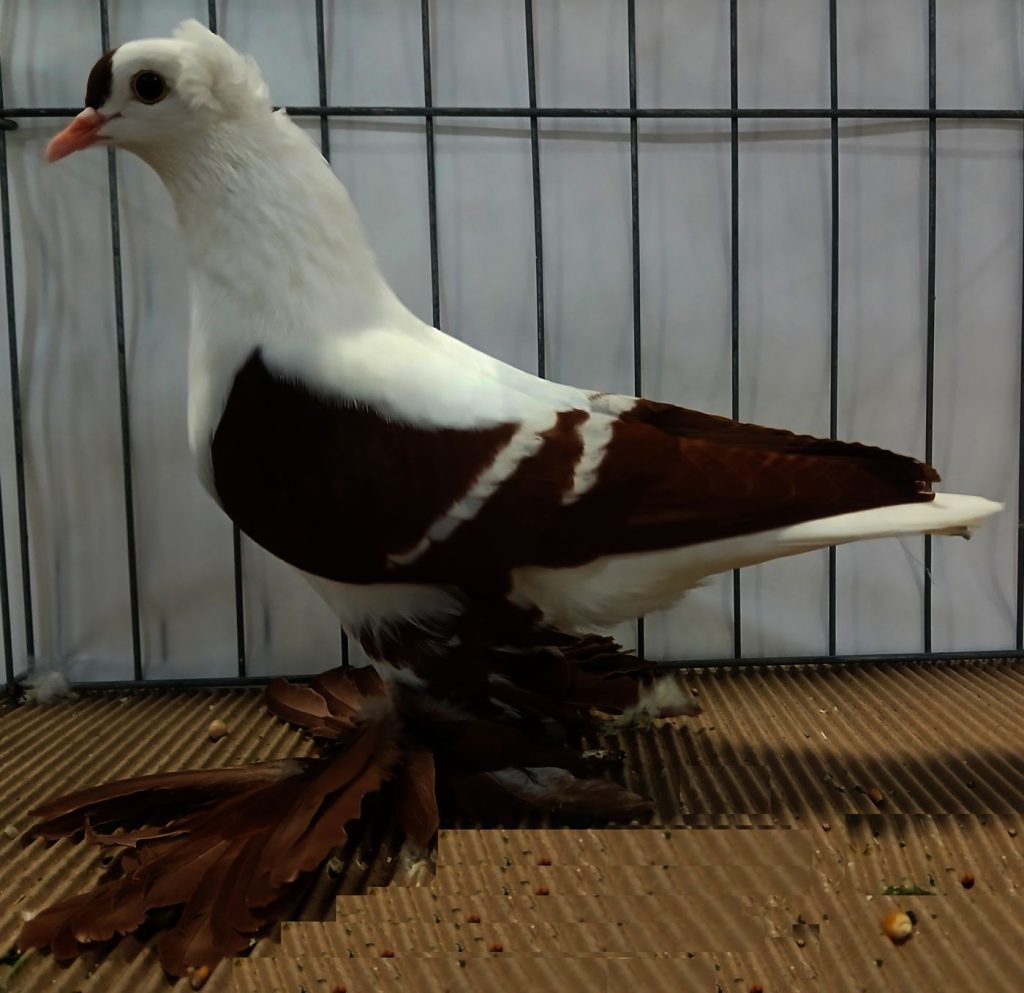
Crest, or none
A Fairy Swallow should have a shell crest: round and thick, with a well-formed rosette on each side. The rest of the head, apart from the forehead spot, is white. The Silesian Swallow has the same body, muffs and forehead spot, but no crest.
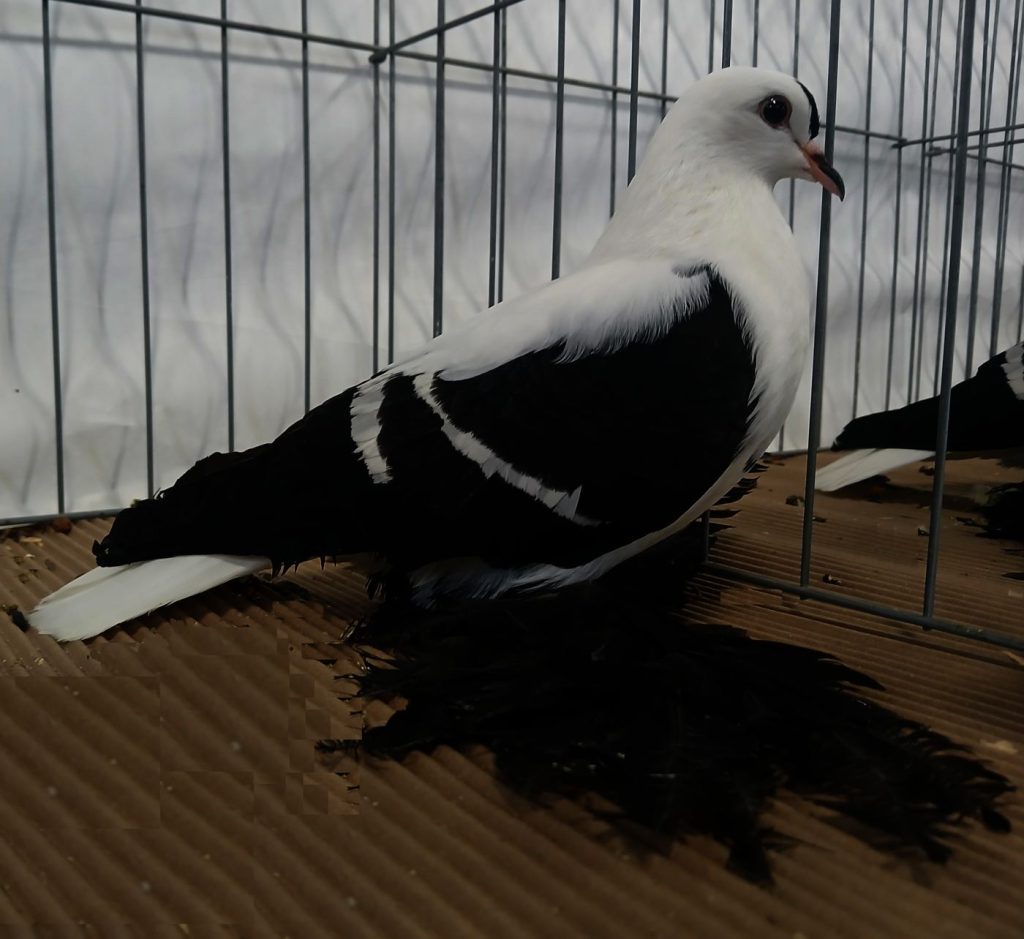
Body, muffs and stance
The US standard asks for a strong, full body of field-pigeon type, standing medium to low, with every part in balance. The head is longish and curved, with a reasonably high forehead. The neck is medium, full where it meets the body, and the throat should be cleanly cut, without a gullet. The breast is broad, full underneath and slightly prominent, covering the wing butts. The back is long, broad at the shoulders, tapering to the tail and sloping at about 15 degrees. The wings are powerful, held tight, and should not cross at the tail; the secondaries should meet over the rump. The tail is moderately long, well closed, and should not touch the floor.
The feet carry long, thick muffs in three layers that lie flat, with a sickle-shaped curve into the hock feathers. The standard says the shape of the foot feather matters more than its length. The muffs should match the colour of the wing shields.
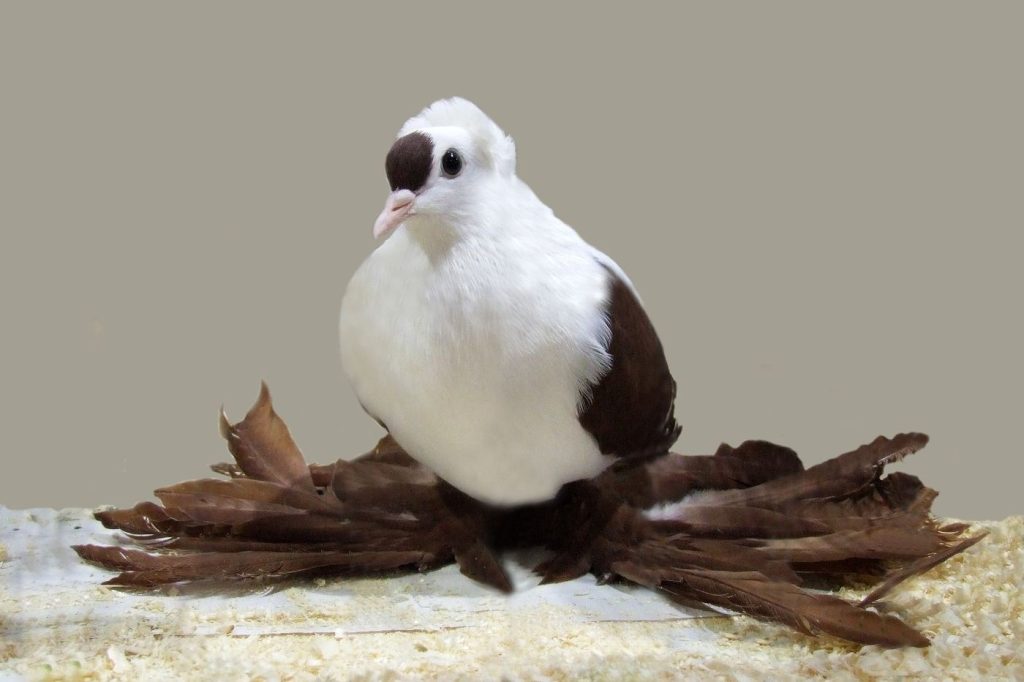
Colours and the beak
Recognised colours in the US standard are black, red, yellow, blue and silver, each without bars, with white bars, or spangled. Blue is also shown with black bars, silver with dark dun bars, and blue and silver in chequer. Ash red and cream are accepted with or without dark bars.
On black, red and yellow birds the colour should be rich and even, with a clear sheen. On blue, silver, ash red and cream it should be light, clear and even. More on how pigeon colours are inherited is in the colours and genetics guide.
Beak colour follows the plumage. On reds and yellows the beak is flesh-coloured. On blacks the upper beak is black. On blues it is blue-black to black. On silvers the upper beak is light horn, mostly toward the front. The lower beak is flesh-coloured in every colour.
The eye is dark (bull). The cere is small and fine, from flesh to red.
How it differs from related colour pigeons
These breeds share a muffed field-pigeon build and a white ground, but the markings are not the same.
| Breed | Head | Main marking |
|---|---|---|
| Fairy Swallow | Always crested, in the US standard | Forehead spot; coloured wing shields and muffs; white body and tail |
| Silesian Swallow | Smooth | The same spot and wing marking |
| Saxon Swallow (Fullhead) | Usually crested | A coloured cap, not only a spot; coloured wings and muffs |
| Tiger Swallow | Crested or smooth | A forehead spot, but the wing and muff feathers alternate coloured and white |
| Saxon Shield | Plain, shell-crested or double-crested | White bird, including the muffs; colour only on the wing shields |
| Saxon Priest | Always double-crested | A coloured bird with a white cap, and white bars or spangles |
The Archangel can also show a priest marking, but it is a different breed, kept for the bronze or black sheen on a slim, clean-legged body.
Origin and the German club
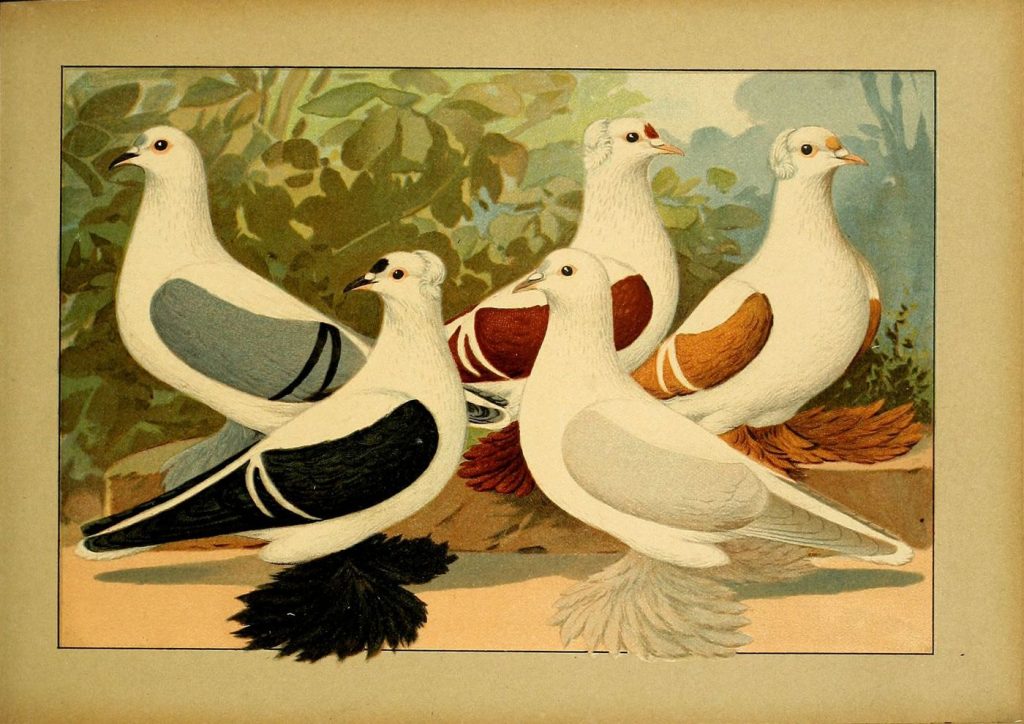
The US standard gives a shared homeland for these muffed swallows and wing pigeons: Saxony, the Erz Mountains, Lusatia (Lausitz), Silesia and Bohemia. The German association (VDT) describes the Saxon Wing Pigeon as a Saxon breed, long kept especially in the Erzgebirge and the Lausitz, and also in Silesia, and as a strong, low-standing field pigeon, heavily muffed, with a shell crest or a smooth head.
The specialist club is the Sonderverein der Züchter Sächsischer Flügel-, Schwalben- und Schildtauben, founded on 8 February 1920 in Geyer. It looks after the Saxon Wing Pigeon, the Saxon Swallow, the Bohemian Tiger Swallow and the Saxon Shield. That is a different club from the older Sonderverein der Züchter Sächsischer Farbentauben von 1895, which looks after other Saxon colour breeds, including the Saxon Priest.
How a Fairy Swallow is judged
The NPA standard gives no points scale. Judges work through the bird in this order:
NPA order of evaluation
The standard gives no points scale. Judges work through the bird in this order.
In the loft
Heavy muffs pick up damp bedding and droppings more readily than clean legs, and a low-standing bird sits closer to the floor. A dry loft and bedding that is changed often matter more here than they do for a clean-legged utility pigeon. The standard is silent on flying ability; this is a show bird, and the muffs are not a flying type.
The EE ring size for the Saxon Wing Pigeon is 11 mm. The UK National Pigeon Association’s authorised ring list, with sizes as of 1 January 2017, places Fairy and Silesian Swallows in size group E, the same group as Priests, Saxon Spots, Storks, Shields and Whitetails. The printed list does not give a millimetre figure for that letter.
Frequently asked questions
What is a Fairy Swallow pigeon?
It is a muffed colour pigeon with a white body and tail, coloured wing shields and muffs, a pear-shaped coloured spot on the forehead, and a shell crest. In the US standard it is the crested, spot-marked Saxon Wing Pigeon.
Is a Fairy Swallow the same as a Bohemian Fairy Swallow or a Tiger Swallow?
No. In the NPA and United Swallow Club standard, Bohemian or Tiger Swallow refers to a spot-marked bird whose wing and muff feathers alternate coloured and white. Some English pages use Bohemian Fairy Swallow for that tiger-marked bird. The Fairy Swallow itself has solid, barred or spangled wing shields, not that alternating pattern. See our Tiger Swallow guide.
What is the difference between a Fairy Swallow and a Silesian Swallow?
The marking is the same. The Fairy Swallow is crested; the Silesian Swallow is smooth-headed. In Germany both are shown as the Saxon Wing Pigeon.
What colours does the Fairy Swallow come in?
The US standard lists black, red, yellow, blue and silver, without bars, with white bars, or spangled, plus blue with black bars, silver with dark dun bars, and blue and silver chequer. Ash red and cream are also listed, with or without dark bars.
Does a Fairy Swallow have to have a crest?
Under the US names, yes: the crested bird is the Fairy Swallow, and the smooth-headed bird is a Silesian Swallow. The German Saxon Wing Pigeon includes both.
What eye colour should it have?
Dark, or bull, eyes, with a small cere from flesh-coloured to red.