
The Brunner Pouter is the smallest and finest of the pouter pigeons. It comes from Bohemia and Moravia, in today’s Czech Republic, and takes its name from the city of Brno, once called Brünn. A good Brunner stands very upright on long, thin legs, with a small round crop set high on a slim body.
The NPA standard calls it lively, tame and gentle. Both cocks and hens strut, bow and hop when courting.
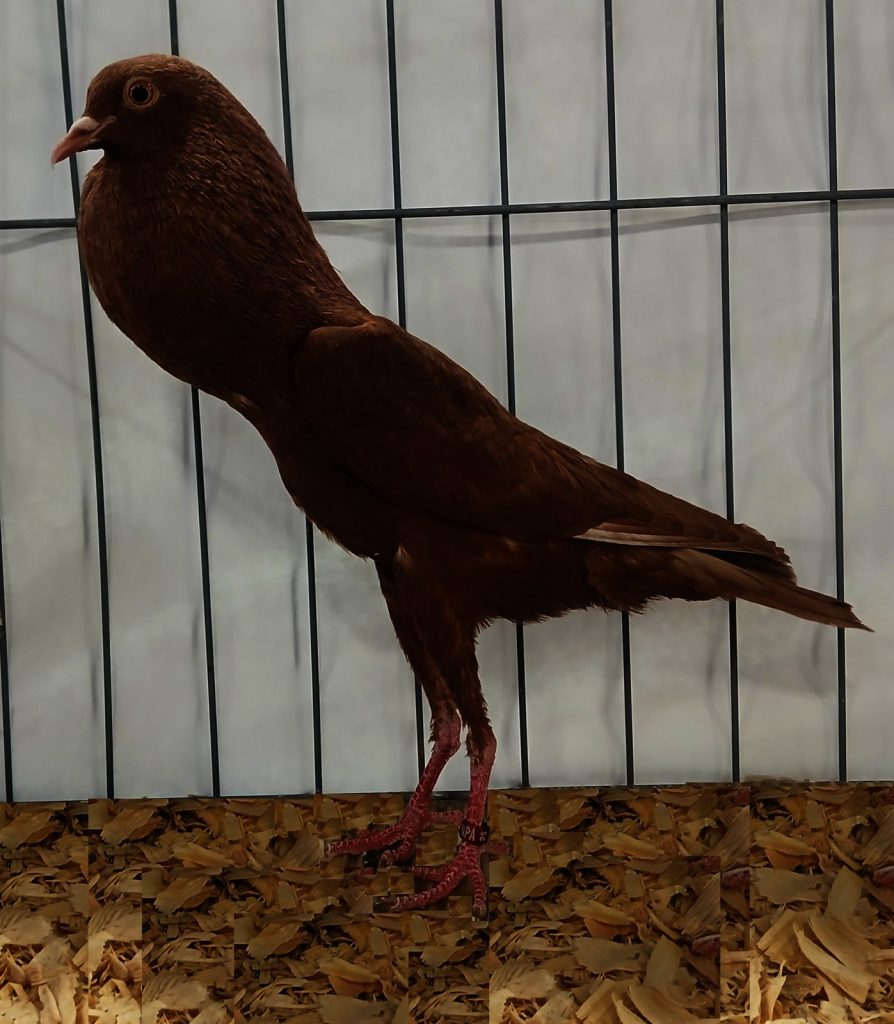
Brunner Pouter at a glance
| Feature | Brunner Pouter |
|---|---|
| Species | Domestic rock pigeon (Columba livia) |
| Origin | Bohemia and Moravia (Czech Republic) |
| Other names | Brněnský voláč (Czech), Boulant Brunner (French), Brünner Kröpfer (German) |
| Standard | Czech Republic; European list number 0330 |
| NPA group | Croppers and pouters |
| Height | 10¾ to 12 in (275 to 300 mm) for cocks |
| Posture | Body, back and tail in one line at about 60 degrees |
| Legs | Long, slender and unfeathered, about 2 cm apart |
| Ring size (NPA) | 7 mm |
Origin and history
According to the Dutch Brünner Kropperclub, the breed probably took shape early in the 19th century in the pigeon lofts of Vienna and Prague. Local pouters were crossed in, among them the coarser, muffed Prague Cropper, which the club names as the source of the stork marking. In Austria the bird was once known as the Dutch cropper, and the older English name was Bohemian Brünner.
The two main sources give slightly different dates for its arrival in Germany. The VDT, the German fancy pigeon association, says it spread from Saxony from the middle of the 19th century. The Dutch club says the first birds came to Germany from Brno in the 1880s, which is how the name Brünner Kröpfer took hold. German breeders later crossed in French Pouters and Pigmy Pouters.
Brunner Pouter timeline
- Early 1800sThe breed probably takes shape in the lofts of Vienna and Prague, crossed with local pouters such as the Prague Cropper.
- Mid-1800sThe breed starts to spread into Germany from Saxony.
- By 1876Gottlob Neumeister’s Das Ganze der Taubenzucht shows the Brunner on a plate of pouters.
- 1880sBirds from Brno are imported into Germany, where the name Brünner Kröpfer takes hold.
- 1904Gustav Prütz’s Die Arten der Kropftaube quotes Dietz calling it the smallest and daintiest of all pouters.
- 191036 fanciers found a specialist club in Mainz on 13 March and publish the first standard that year.
- 1911The club shows 50 Brunners at the Crystal Palace show in London.
- 1930A Brunner Pouter club is founded in the Netherlands.
- 2010National clubs agree one European standard, and a European club is founded.
The German specialist club was founded in Mainz on 13 March 1910 by 36 fanciers, and it wrote its first standard that year. The club history says it had 300 members by 1914 and showed 50 Brunners at the Crystal Palace in London in 1911. Birds of that time were still broad-standing and short-necked. An article for the club’s centenary quotes the breeder Erber, who wrote that the look of the breed changed a great deal after 1924.
In the Netherlands the breed spread in the early 1900s and a club was founded in 1930. During the Second World War the occupying forces ordered fancy pigeons to be killed, and the Dutch club says a small group of Brunners survived at the central fancy pigeon park in Gouda. In 2010 the national clubs agreed one European standard.
Size and shape
The Brunner is small, but it is tall for its weight because it stands so upright. The chart compares its height with other pouters in the NPA book.
How tall is a Brunner? Standing height compared
Heights from each breed’s NPA standard, in inches, with centimetres in brackets.
Brunner hens are usually about ¾ in (20 mm) shorter than cocks. Each standard measures in a slightly different way, so treat this as a rough comparison.
The body is long, narrow and slim, with a sloping back that runs straight into the tail. The neck is very long, and the crop is round and set high, with the beak resting tightly on it so that only the upper beak shows. The wing tips cross well over the base of the tail. The VDT puts the balance of the bird at about two thirds in front of the legs and one third behind.
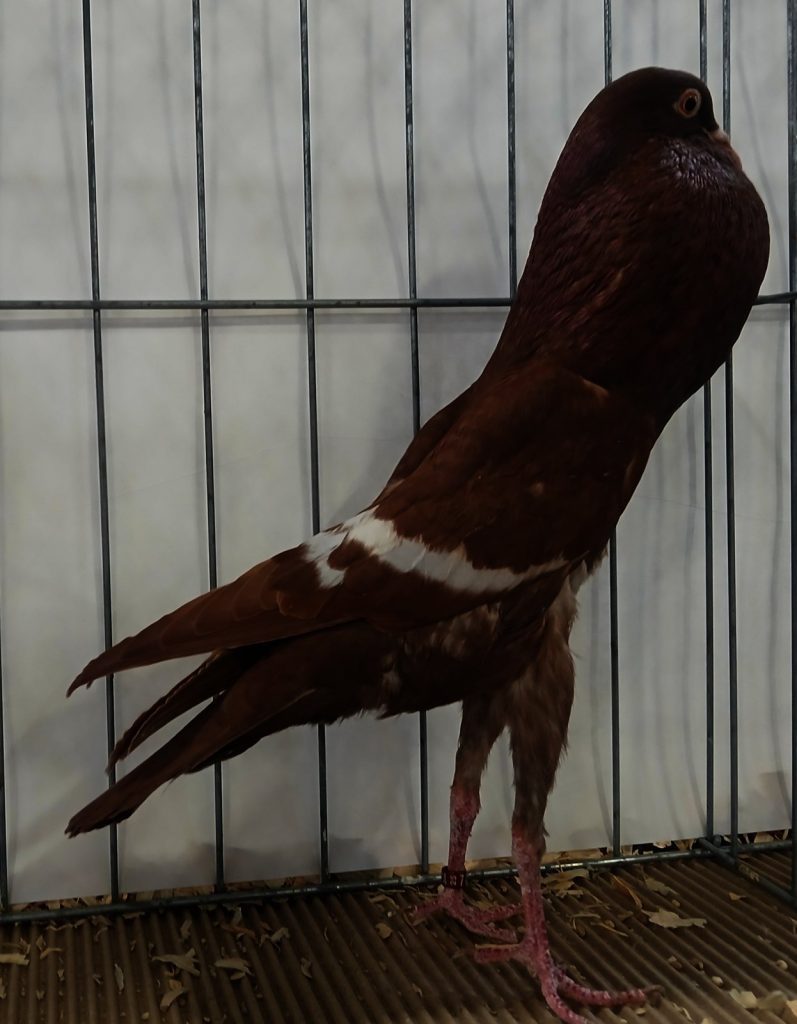
Major faults in the standard include a coarse or broad body, a short neck or legs, a level stance, feathered legs, uncrossed wings and a crop that is long or shapeless rather than round.
How a Brunner is scored
The NPA standard splits 100 points across 14 features. The crop, body, legs and colour carry 15 points each.
Where the 100 points go
- Body, posture, action and feathering: 30
- Crop and neck: 20
- Legs: 15
- Colour and marking: 15
- Head, eyes and beak: 10
- Wings and tail: 10
The standard also sets an order of importance for judges, which shows how much weight goes on the overall shape of the bird.
What matters most when judging
The order of importance in the standard, from first to last.
Colours and markings
The Brunner comes in many colours. The VDT recognises 47 colour varieties in Germany, and the NPA standard notes that newer colours such as gold, almond and reduced should be accepted when the colour is clear and rich.
Colours and markings in the standard
- White
- Black
- Red
- Yellow
- Dun
- Andalusian
- Brown
- Khaki
- Lavender
Barred or checkered
- Blue
- Silver
- Ash red
- Ash yellow
- Brown
- Khaki
White barred
- Red
- Yellow
- Black
- Blue
- Silver
- Isabel
Markings
- Tigered
- Storked
- Gansel
- Pied
- Grizzled
- White flighted (4 to 9 flights)
Newer colours
- Gold
- Almond
- Reduced
Swatches are approximate and only show the general shade.
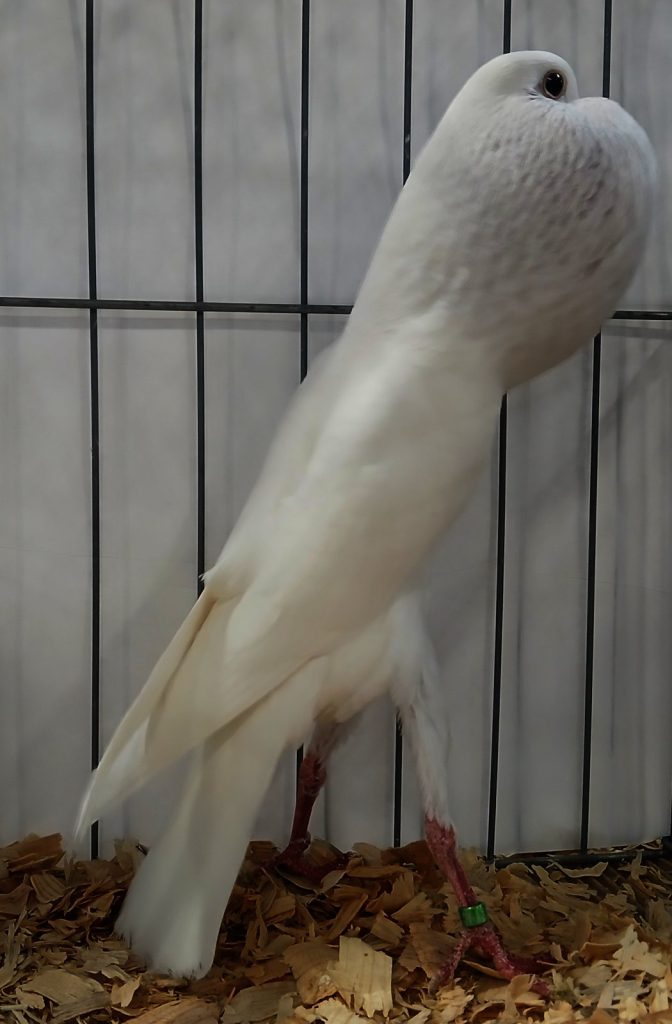
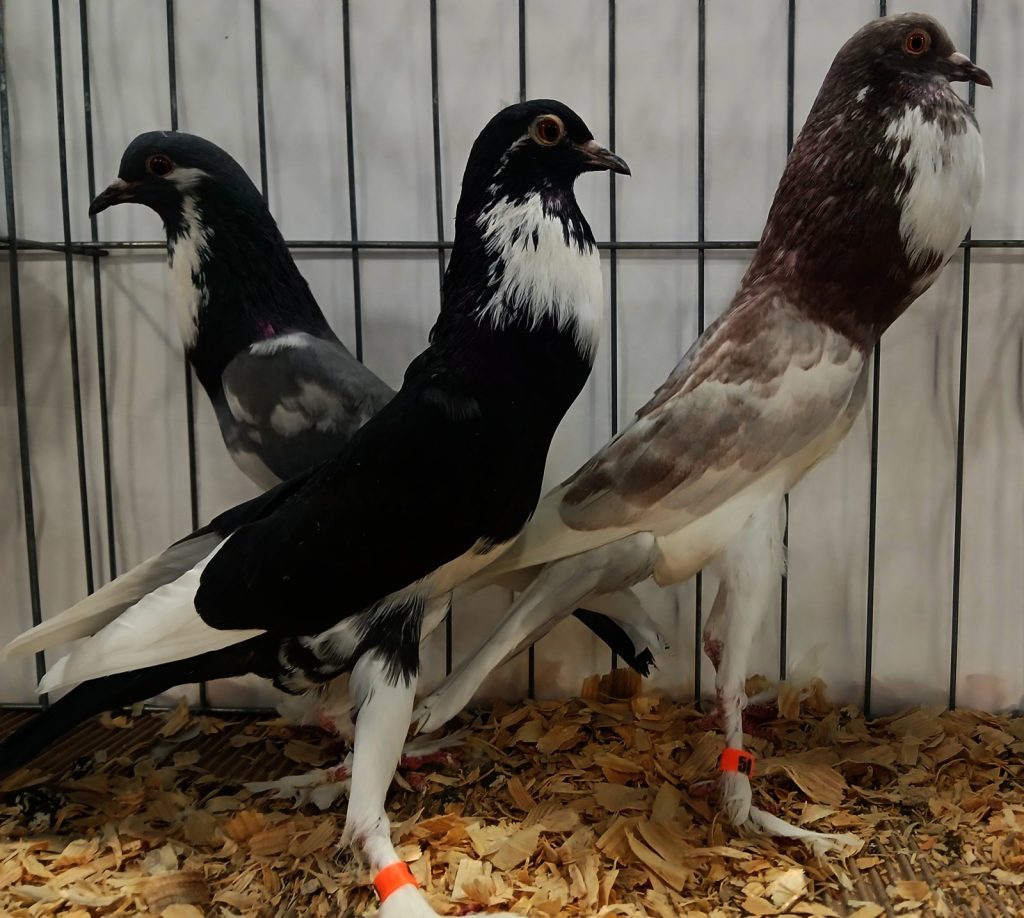
Stork-marked birds are mainly white with a coloured tail, flights, head, bib and a patch on the chest. Pied birds have a white half-moon on the crop, white thighs and rump, and 7 to 10 white primaries. Whites should have dark eyes and a light beak. Our guide to pigeon colours and genetics explains the basic patterns.
How it compares with other pouters
| Breed | Origin | Size and stance |
|---|---|---|
| Brunner Pouter | Bohemia and Moravia | Smallest pouter; erect at about 60 degrees |
| Holle Cropper | Netherlands | Small; horizontal, ball-shaped |
| Dutch Cropper | Netherlands | One of the largest croppers; almost horizontal |
| English Pouter | England | About 16 in from floor to head; upright |
| Pigmy Pouter | Bred as a miniature English Pouter | No more than about 12 in tall |
Source: NPA Book of Standards.
Care
Brunners need a dry, airy loft, clean water, a good seed mix and grit; our guide to what pigeons eat covers the basics. The VDT describes them as good at brooding and rearing their own young.
Quick facts for keepers
- Smallest of the pouters
- Height 10¾ to 12 in (275 to 300 mm)
- Legs about 2 cm apart
- Back and tail at about 60°
- Ring size 7 mm
- 47 colour varieties in Germany
- Raises its own young
Like other pouters, they inflate their crops a great deal. Our article on why pigeons puff up their chests explains the behaviour, and our sour crop guide covers the crop problem pouter keepers should know about.
Clubs and shows
In Germany the breed is looked after by the Club der Brünner-Kröpfer-Züchter von 1910 (opens in new tab). The VDT says it has about 400 members and that its main show draws 1,000 to 1,300 birds. In the Netherlands there is the Brünner Kropperclub (opens in new tab), and there is also a European club for the breed.
In the UK, the National Pigeon Association places the Brunner in its blower section; see its judges list and show guidance (opens in new tab). The American standard is in the NPA Book of Standards (opens in new tab). Our guides to pigeon shows and types of pigeon cover other breeds and classes.
Brunner Pouter FAQs
What is a Brunner Pouter?
It is a small pouter pigeon from Bohemia and Moravia, now the Czech Republic. It stands very upright on long, thin legs and has a small round crop set high on a slim body.
Why is it called the Brunner Pouter?
The name comes from Brünn, the old German name for Brno. The Dutch club says the name took hold after birds from Brno reached Germany in the 1880s.
How big is a Brunner Pouter?
The NPA standard gives 10¾ to 12 in (275 to 300 mm) for a bird standing in show position. Hens are usually about ¾ in (20 mm) shorter than cocks.
Is the Brunner the smallest pouter?
Yes. The NPA standard calls it the smallest and finest of all pouter breeds.
What colours do Brunner Pouters come in?
Selfs, barred and checkered birds, white bars, tigers, storks, gansels, pieds, grizzles and white flights, plus newer colours such as almond. The VDT recognises 47 colour varieties.
Are Brunner Pouters good parents?
The VDT describes them as excellent at brooding and rearing their own young.