
Sour crop is when a pigeon’s crop empties slowly or stops emptying, so the food inside ferments and smells sour. A yeast, Candida, often grows in the stalled crop, and hand-fed squabs are most at risk. Signs include a crop that is still full and squashy long after feeding, sour breath, vomiting and weight loss. It needs a vet.
Please note: this article is general information and is not a substitute for advice from an avian vet or a licensed wildlife rehabilitator. If you have found an injured or sick bird, contact a vet or your local rescue (see our list of pigeon-friendly rescue centres).
What is the crop?
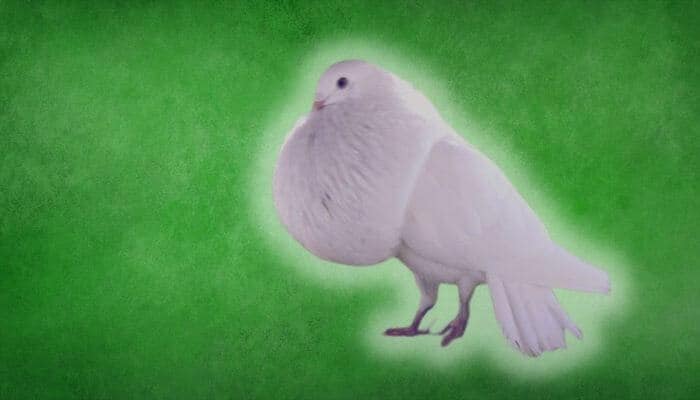
The crop is a thin-walled pouch at the base of the neck, an outgrowth of the gullet where food is held before it moves on to be digested. It lets a pigeon eat quickly and digest later. In breeding birds the crop lining also makes the crop milk that both parents feed to squabs.
A crop that is blown up with air is a different thing. Pouter breeds inflate the crop when they display, and that is normal for them. Sour crop is about food and fluid that will not move on.
What causes sour crop?
The underlying problem is crop stasis: the crop slows or stops emptying. Food that sits in a warm crop ferments, and yeast and bacteria multiply (MSD Veterinary Manual (opens in new tab)). Candida yeast is normally present in small numbers, but in a stalled crop it can take over and invade the crop lining (MSD Veterinary Manual (opens in new tab)).
In squabs the usual triggers are hand-feeding mistakes: formula that is too cold or too thick, feeding too much, and keeping the youngster too cold (MSD Veterinary Manual (opens in new tab)). A study of young meat-type pigeons in Taiwan traced crop impaction and candidiasis to hand-feeding too much unsuitable feed at too early an age, and the same lesions were produced in a follow-up experiment (Tsat and colleagues 1994 (opens in new tab)). Contaminated formula, water or feeding equipment can also bring in yeast (VCA Animal Hospitals (opens in new tab)).
In adult birds, sour crop is often a sign of another problem rather than the whole story. Vets treat crop stasis as either primary or a result of illness elsewhere in the body (dvm360 (opens in new tab)), so they look for an underlying cause such as canker, a blockage or a recent course of antibiotics, which can upset the normal balance and let yeast grow (MSD Veterinary Manual (opens in new tab)).
Signs of sour crop
- A crop that is still full, doughy or squashy long after the last feed, often with fluid that can be felt sloshing
- A sour or rotten smell from the mouth
- Bringing food back up, or flicking the head as if trying to clear the throat
- Loss of appetite, weight loss and a fluffed-up, quiet bird
- White patches in the mouth or throat, which can be yeast (thrush) and are easy to confuse with canker
Candidiasis in birds commonly shows as white plaques in the mouth, regurgitation, delayed crop emptying, loss of appetite and weight loss in young birds (MSD Veterinary Manual (opens in new tab)).
What a vet will do
A vet will usually take a swab or a small wash sample from the crop and look at it under the microscope. Large numbers of budding yeast point to candidiasis, and the sample also shows whether bacteria are involved (dvm360 (opens in new tab)). If the crop is badly impacted, the vet may empty it safely.
Treatment depends on the cause and needs a prescription. Nystatin is a common first choice for yeast in the crop because it works on contact in the gut; fluconazole is used when the yeast resists nystatin or the bird is hard to medicate (MSD Veterinary Manual (opens in new tab)). Antibiotics are only useful when a bacterial infection is confirmed, because unnecessary antibiotics can make yeast worse. The vet will also treat any underlying disease.
What you can do before you reach a vet
- Keep the bird warm, quiet and away from the rest of the flock. Cold makes crop stasis worse, especially in squabs (MSD Veterinary Manual (opens in new tab)).
- Remove old or mouldy food and give clean, fresh water.
- Do not squirt liquids into the beak or massage the crop unless a vet has shown you how. Pushing fluid up from a full crop can make the bird inhale it.
- Avoid sugary home remedies such as honey or syrup, which can feed yeast (VCA Animal Hospitals (opens in new tab)).
- Apple cider vinegar is popular with keepers. The MSD Veterinary Manual notes reports that making the upper gut more acidic with it has cleared yeast overgrowth (MSD Veterinary Manual (opens in new tab)), but it does not empty a stalled crop and is not a substitute for diagnosis and treatment.
Hand-feeding squabs safely
Most sour crop cases in squabs start with feeding. Use formula made up fresh, warm and at the consistency recommended for the bird’s age, and let the crop almost empty before the next feed. Young birds with candidiasis may need smaller, more frequent feeds while they recover (MSD Veterinary Manual (opens in new tab)). Clean syringes, tubes and bowls after every feed. For general care see how to take care of a baby pigeon.
Preventing sour crop
- Feed a fresh, dry grain mix and throw out anything damp or mouldy. See the best pigeon food for what a balanced diet looks like.
- Clean pigeon feeders and drinkers often, and change water daily. More in what pigeons drink.
- Give clean grit, which pigeons need to grind whole seeds in the gizzard.
- Treat any illness early, because a sick pigeon is more likely to develop crop stasis.
Sour crop FAQs
What is sour crop in pigeons?
It is when the crop empties slowly or stops emptying and the food inside ferments. Yeast often grows in the stalled crop.
What are the signs of sour crop?
A crop that stays full and squashy long after feeding, a sour smell from the mouth, vomiting, loss of appetite and weight loss.
Can sour crop kill a pigeon?
Yes, especially in squabs. A bird that is weak, fluffed up or vomiting needs an avian vet the same day.
How is sour crop treated?
A vet checks a crop sample for yeast and bacteria, may empty the crop, and prescribes an antifungal such as nystatin if yeast is the problem.
Does apple cider vinegar cure sour crop?
Not on its own. It has been reported to help with yeast overgrowth, but it does not empty a stalled crop or treat the underlying cause.
How do you prevent sour crop in squabs?
Feed fresh, warm formula at the right thickness, let the crop almost empty between feeds, keep squabs warm and clean all feeding equipment.
Sources
References used for this page:
- MSD Veterinary Manual: Mycotic diseases of pet birds (candidiasis) (opens in new tab)
- MSD Veterinary Manual: Pediatric diseases of pet birds (crop stasis) (opens in new tab)
- VCA Animal Hospitals: Candida infections in birds (opens in new tab)
- dvm360: Avian gastrointestinal anatomy and diseases (opens in new tab)
- Tsat, S. S. et al. 1994. Force-feeding and candidiasis in pigeons. Avian Pathology 23: 569-574 (opens in new tab)
Last updated 9 November 2026 · Health