
Pigeons drink plain water, and they should not be given anything else, as other drinks may harm them. Water also softens their food in the crop. Squabs do not drink at first: for the first few days they are fed only on their parents’ crop milk, and they start drinking by themselves at around three to four weeks old, when they begin to eat solid food.

How Do Pigeons Drink?
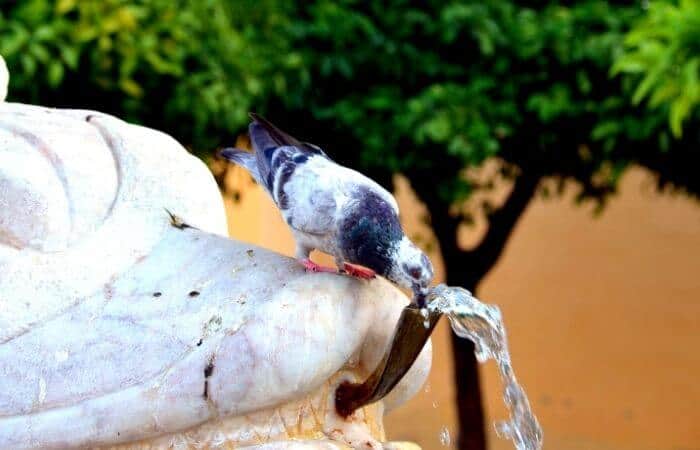
Pigeons submerge their beaks in water completely and then suck it up.
Many birds fill their beaks with water and tilt their heads back so the water can flow down their throats, but not pigeons.
They suck water up as if through a straw.

They can drink with their heads down and they can swallow.
As they don’t have lips, pigeons cannot lap liquids and because they don’t have cheeks, they cannot hold water.
Pigeon Should Only Drink Water
As pigeon owner you shouldn’t give your pigeons any water that has been adulterated.
That is, no water that has colourants or sugar. Distilled water is not ideal either, because it contains no minerals.
Clean, fresh tap water changed every day is usually the best choice.
You should also avoid giving them mammalian milk as they are lactose intolerant.
Some pigeon owners may add different things to their birds’ drinking water, but that isn’t advisable unless you consult an avian veterinarian beforehand.
This is usually because of a perceived health problem. Adding bird vitamins and minerals can be fine if you follow the label.
Many commercial bird feed brands include them, but home remedy dosing of birds through their water can cause more harm than good.
The only other kind of liquids your birds should be exposed to are the juices from the fruit that they occasionally eat.
This is natural and won’t harm them.
Harmful Liquids
Pigeon fanciers can obviously control what their birds drink, unless, of course, they let them fly free.
Feral pigeons, on the other hand, especially are exposed to all the different types of liquids.
Being curious birds, they may peck at spilled drinks.
Soft drinks are full of sugar and are not good for them.
Alcoholic drinks are toxic to birds, so they should never be offered.
Can A Pigeon Drink Too Much Water?
On the pigeon forums some people talk about their pigeons drinking too much water.
This could be because of the climate in which they are living.
Pigeons have very high metabolic rates and the addition of extreme heat would make them drink more.
On the other hand, excessive drinking could be caused by an illness of some kind.
It is best to have their droppings examined to determine the real cause before administering any type of home remedy through their drinking water.
Introducing Hand Reared Chicks To Water
If you are hand-rearing pigeon fledglings and weaning them off the crop milk mixture onto solid feed, you can start introducing water to their diet with an eyedropper and then gently pushing their beaks into a bowl of water.
They will soon get the idea.
Summary
So Pigeons need and do drink water, without any additives unless recommended by a vet.
Like all creatures, including us, pigeons need good clean water to survive.
If you are a bird lover and would like to attract pigeons and other birds to your garden, one way to do this is to leave out sufficient water, so they can drink and bathe.

New to pigeon keeping?
A Beginner’s Guide to Pigeon Keeping. Practical care for pets, lofts and first-year keepers.
Price: $2.95.
Last updated 31 October 2026 · Nutrition