
Pigeons breed faster when everything about their environment encourages mating: a secure, private loft where predators cannot see in, shelter, and good food. The techniques below tend to give higher breeding rates.
1. Improve Their Living Environment
Buying a secure pigeon loft will help your pigeon to feel safe and at ease.
If your pigeon loft is primarily made from chicken wire this means that cats and other predators will be able to see directly in, this will unsettle them and can disturb their laying/breeding cycle.

A good pigeon coop which is conducive to a fast breeding rate should have the following:
- Privacy – there should be at least one part of the coop which predators cannot see into so that your pigeons can feel safe and secure.
- Shelter – if your coop is exposed to the wind you need to ensure that part of it offers some protection from the weather.
- Good nesting materials available – providing your pigeon with good quality nesting materials is a good idea too if you want to encourage them to lay more frequently. Tobacco stems are said by some breeders to be one of the best nesting materials for pigeons, as they are traditionally believed to help deter parasites.
2. Make Sure Their Diet Is Good
Good quality pigeon food helps to keep your pigeons fit, healthy and ready to mate and lay eggs.
Some links on this page go to Amazon. If you buy through them we may earn a small commission, at no extra cost to you. As an Amazon Associate I earn from qualifying purchases.
A bird-seed mix designed specifically for pigeons (opens in new tab) is your best bet.
Sprouted seeds can also be a good addition to your pigeon’s diet from time to time.
In addition to seeds some grains should also be included in your pigeon’s diet.
3. Give Them Time To Pair Up
In breeding it’s not enough to just throw a bunch of pigeons together and hope for the best.
You need to make sure you have given your pigeons adequate time and space to properly pair up.
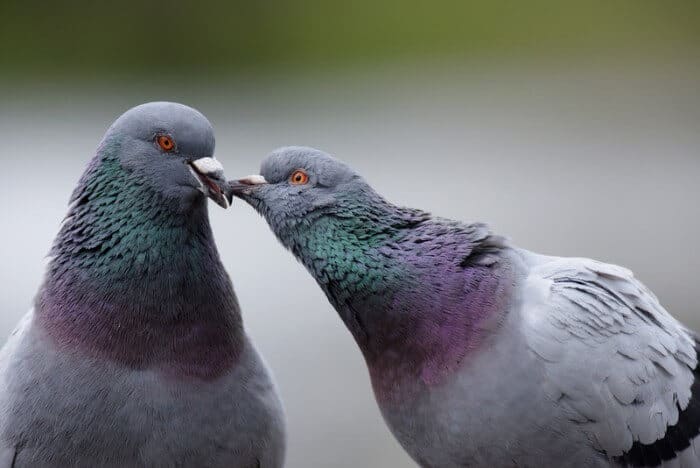
Pigeons usually pair for life so they like to take their time getting to know a potential partner before anything happens.
Pigeon pairing can take a day, a week or even up to a month.
If you have two pigeons that you want to pair we advise you give them their own private cage so that they can take their time to get to know each other.
Give them a coop that has all they need in it and they feel comfortable in (as in step one) this may (though not necessarily) help speed up the courtship.
Egg Laying Speed
Pigeons can lay up to 24 eggs in a year, however most female pigeons will lay less than this.
Pigeons will lay between one to three eggs per cycle
Unpaired females sometimes lay too, but their eggs will be infertile.
Paired pigeons almost always lay two eggs, but in rare cases may lay three.
It is extremely rare for a pigeon to lay four eggs but it has been known to happen.
24 eggs in a year equates to 12 cycles of two eggs each.
If your pigeon is producing this many eggs then it is unlikely that changing their environment or food will do anything to speed up their rate of reproduction as they physically can’t produce eggs much faster than they already are. Pushing hens to breed non-stop can also wear them out, so many breeders limit each pair to a few rounds a year.
 (opens in new tab)
New to pigeon keeping?
Our eBook is a short beginner’s guide. It covers:
- Suitable breeds
- Raising pigeons from eggs
- Looking after baby pigeons
- Handling
- Cleaning
- Feeding
- Breeding
- Nesting
Summary
Compared to many birds pigeons do breed quite easily and quickly but sometimes there’s not a lot you can do to speed up that breeding rate.
By providing a secure, sheltered coop giving them time to properly pair up and ensuring that they have a high quality diet you are doing everything necessary to give them the best possible breeding environment.
Last updated 31 October 2026 · Keeping