
What pigeons can you eat? Most table meat is squab: a young domestic pigeon taken at about 26-30 days, before first flight, often near 500 g from utility breeds such as White King, Carneau and French Mondain. In Britain wood pigeon is the main wild game pigeon. Feral city birds are usually a poor choice. Flavour runs from mild squab to richer, gamey wood pigeon.

Squab, wood pigeon and wild birds at a glance
People asking what pigeons you can eat usually mean three different products. This table separates farmed squab, legal game wood pigeon, and other wild or feral birds. For how the meat tastes, see what pigeon tastes like. Eggs are a separate question; see can you eat pigeon eggs.
| Type | Source | Typical age / size | Flavour and use |
|---|---|---|---|
| Squab | Farmed utility breeds | About 26-30 days; often ~500 g | Mild, tender; restaurant and home table bird |
| Wood pigeon | Wild game (where legal) | Adult Columba palumbus; large for a pigeon | Richer, minerally; breasts often pan-fried |
| Other wild / feral | Shot game or city birds | Varies; city birds unknown diet | Game can be good; feral city birds usually avoided |
Squab: young domestic pigeon
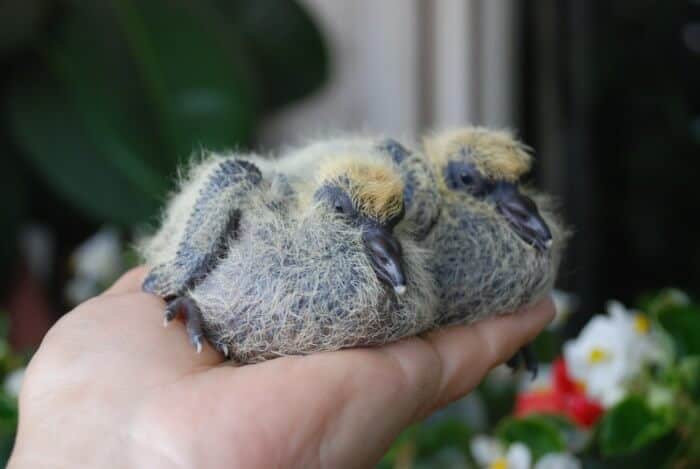
Squab means a young domestic pigeon raised for meat. Extension and NSW DPI notes say birds are typically taken just before they leave the nest, around 26-30 days old, when many weigh about 500 g. Until then they are fed almost entirely on crop milk from both parents (see do pigeons produce milk), so the meat stays tender and the flavour is milder than adult game.
Squab is the usual entry point for people who have never eaten pigeon: dark meat, but less intense than a mature wood pigeon. It appears on restaurant menus more often than in everyday home cooking in the UK, usually as breast.
Utility breeds used for squab
| Breed | Role in meat production | Notes |
|---|---|---|
| White King / King | Core US and export utility line | Short, stocky; NSW DPI adult about 750-850 g |
| Carneau (often Red) | French utility; common with King | Compact; adults a little lighter than White King in NSW notes |
| French Mondain | Heavy European utility / show | Used in crosses; see French Mondain |
| Giant Homer | Listed among common meat breeds | Utility Homer type selected for mass |
| Giant Runt and similar giants | Sometimes tried; often poor brooders | Large body does not always mean good squab output; see Giant Runt |
Fancy or racing lines are not selected for nest productivity or breast mass. If you are comparing types of pigeon for the table, start with the utility group above rather than pouters, tipplers or pure show birds. Homers alone tend to give smaller or less efficient squabs than King-Carneau-Mondain stock.
Wood pigeon

In Britain the wood pigeon (Columba palumbus) is the main wild pigeon taken as game. It is larger than a city rock dove: BTO BirdFacts give a typical length around 38-43 cm and an adult mass often near 450-550 g, with a wide range. The meat is darker and more gamey than farmed squab.
Hunting seasons, licences and which species you may take vary by country and region. This page is not legal advice: check current local rules before shooting or buying game. Buy from a reputable game dealer when you can, and inspect breasts for shot damage and drying.
Other wild pigeons and feral city birds

Other wild columbids are eaten in some countries where hunting is legal and the birds are handled as game. Plump birds with clean shot and enough subcutaneous fat cook more kindly than thin ones.
Feral pigeons in towns (rock-dove descendants living on street food and scraps) are a different proposition. Their diet and parasite load are unknown, and most cooks and game dealers simply do not use them. Prefer farmed squab or properly handled game.
Cooking and buying notes
Pigeon breasts are small and lean enough to dry out if overcooked. Short pan-frying to pink, or moist braises for older birds, are the usual approaches. Sharp, fruity sauces (redcurrant, blackberry, red-wine reductions) cut the richness of adult game.
When buying whole birds, a reputable butcher or game dealer matters more than a clever recipe. For farmed meat, ask for squab from utility stock rather than unnamed “wild” labels that may mean something else.
What pigeons can you eat? FAQs
What pigeons can you eat?
Farmed squab from utility breeds, and wood pigeon or other legal game where rules allow. Feral city pigeons are usually avoided.
What is squab?
A young domestic pigeon taken at about 26-30 days, often around 500 g, before it has flown.
Which breeds make the best squab?
White King, Carneau, French Mondain and Giant Homer are the breeds most often listed for meat; King-Carneau-Mondain crosses are common.
Is wood pigeon the same as squab?
No. Squab is farmed young domestic pigeon. Wood pigeon is a wild species with richer, gameier meat.
Can you eat feral city pigeons?
Technically they are the same species as many domestic birds, but unknown diet and condition make them a poor kitchen choice; use farmed or proper game instead.
Can you eat pigeon eggs?
Yes in principle, but they are small and rarely sold; see our pigeon eggs page.
Sources
Primary references used for this page:
- poultry.extension.org (University of Kentucky) – Raising pigeons in small and backyard flocks (opens in new tab)
- NSW Department of Primary Industries – Squab raising (Primefact / PDF) (opens in new tab)
- BTO BirdFacts – Woodpigeon (opens in new tab)
Last updated 6 November 2026 · Hunting