
Pigeons eat from bird tables, ground trays and spilled seed, so take those away first. Then put the food in a hanging feeder inside a guardian cage with 35–40 mm gaps, which lets tits and finches in and keeps pigeons out (the RSPB (opens in new tab)). Weight-activated feeders and seed mixes with less cereal also help.
Why pigeons take over a feeder
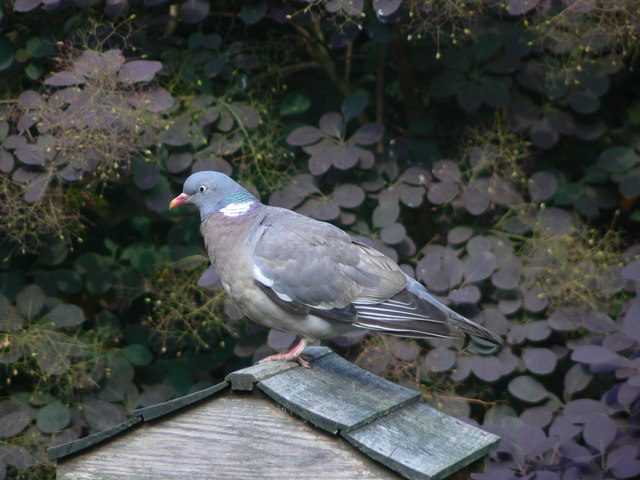
Pigeons are big, and they eat a lot. A wood pigeon weighs around 450 g, more than 40 blue tits, and the BTO (opens in new tab) says wood pigeon numbers in British and Irish gardens are booming. They visit suburban gardens more than rural ones.
Most of their feeding happens on the ground or on flat surfaces. This is what draws them in:
- Seed knocked out of hanging feeders onto the lawn or patio
- Bird tables and open ground trays
- Seed mixes with a lot of cereal grain, which big-billed pigeons prefer (BTO (opens in new tab))
- Feeders hung next to a fence, shed roof or branch they can stand on
Hanging feeders are still hard for them, but not impossible. BTO Garden BirdWatch readers have seen wood pigeons fly at feeders to knock seed out, and cling to one perch while feeding from the one above (BTO (opens in new tab)).
Put a guardian cage around the food
A guardian is a metal cage that fits round a hanging feeder, over a bird table or over a ground tray. The the RSPB (opens in new tab) says gaps of 35–40 mm let tits, finches, sparrows and robins through and keep pigeons out. The BTO (opens in new tab) recommends the same kind of cage.
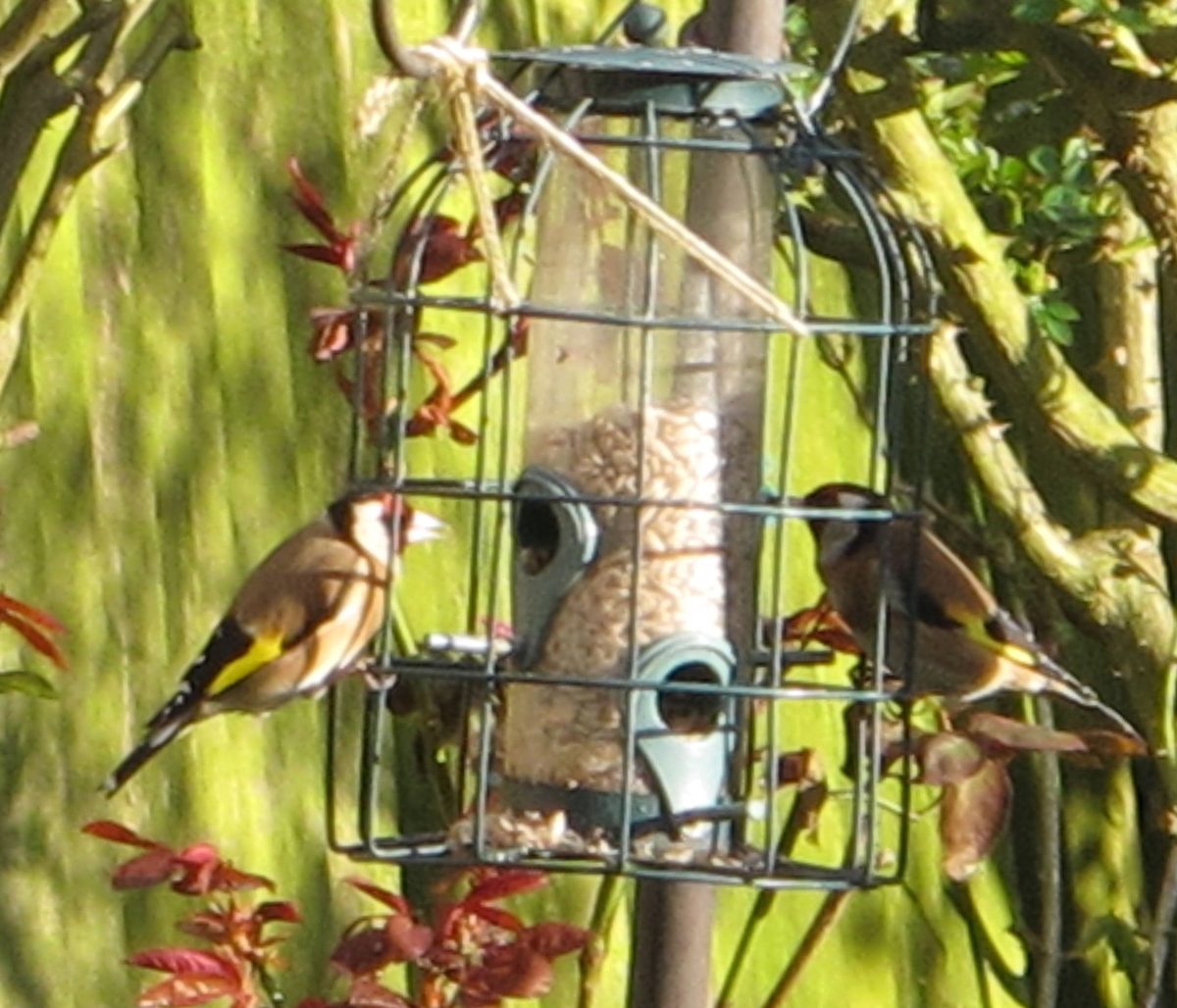
For ground feeding, the RSPB feeder buying guide (opens in new tab) suggests a protector cage over the tray. It keeps cats off the feeding birds and stops pigeons eating the food before the smaller birds get a look-in.
Try a weight-activated feeder
These feeders have a sprung shroud or perch. When something heavy lands, it drops and covers the feeding ports. The RSPB (opens in new tab) lists them as a fix for pigeons and squirrels, and the Cornell Lab’s Project FeederWatch (opens in new tab) suggests feeders that close under the weight of a large bird. Most are sold as squirrel-proof, so check that the closing weight is low enough for a pigeon.
Choose feeders that suit small birds
The Cornell Lab’s Project FeederWatch (opens in new tab) advises tube feeders with short perches and no catch tray at the bottom, and says to avoid platform trays and food spread on the ground. Small hopper feeders also put larger birds off, while large hoppers let doves feed.
The RSPB now goes further and advises against flat-surfaced feeders, including bird tables, because disease spreads more easily where contaminated food collects (RSPB (opens in new tab)). Giving up the table helps the small birds and takes away the pigeons’ easiest meal.
| Feeding set-up | What pigeons can do | Source |
|---|---|---|
| Bird table or open ground tray | Feed freely and eat most of the food | BTO, Cornell Lab |
| Spilled seed under a feeder | Feed on the ground below | Cornell Lab, RSPB |
| Tube feeder with short perches | Struggle, though some cling or knock seed out | BTO, Cornell Lab |
| Guardian cage with 35–40 mm gaps | Cannot get in | RSPB |
| Weight-activated feeder | Ports close under their weight | RSPB, Cornell Lab |
Change what you put out
Pigeons favour grain and larger seeds. The BTO (opens in new tab) suggests avoiding mixes with a lot of cereal and feeding smaller seeds instead. Sunflower hearts in a hanging feeder, nyjer in a small-port feeder, and peanuts or fat balls in a mesh feeder are all on the RSPB’s starter list for small birds. Never use nylon mesh bags, which can trap birds’ feet.
Give only what is eaten in a day or two, and tip out old food before refilling. Less spilt and stale seed means less for pigeons and rats.
Move the feeders and clear up underneath
Keep feeders clear of fences, shed roofs and strong branches, so a pigeon cannot stand next to them and stretch across. Hang them high enough to be out of reach of cats, and a couple of metres from thick cover (RSPB (opens in new tab)).
Sweep up under the feeders often. The RSPB also suggests moving feeders to a new spot regularly, ideally every week, so dropped seed and droppings do not build up in one place.
Keep the feeding station clean
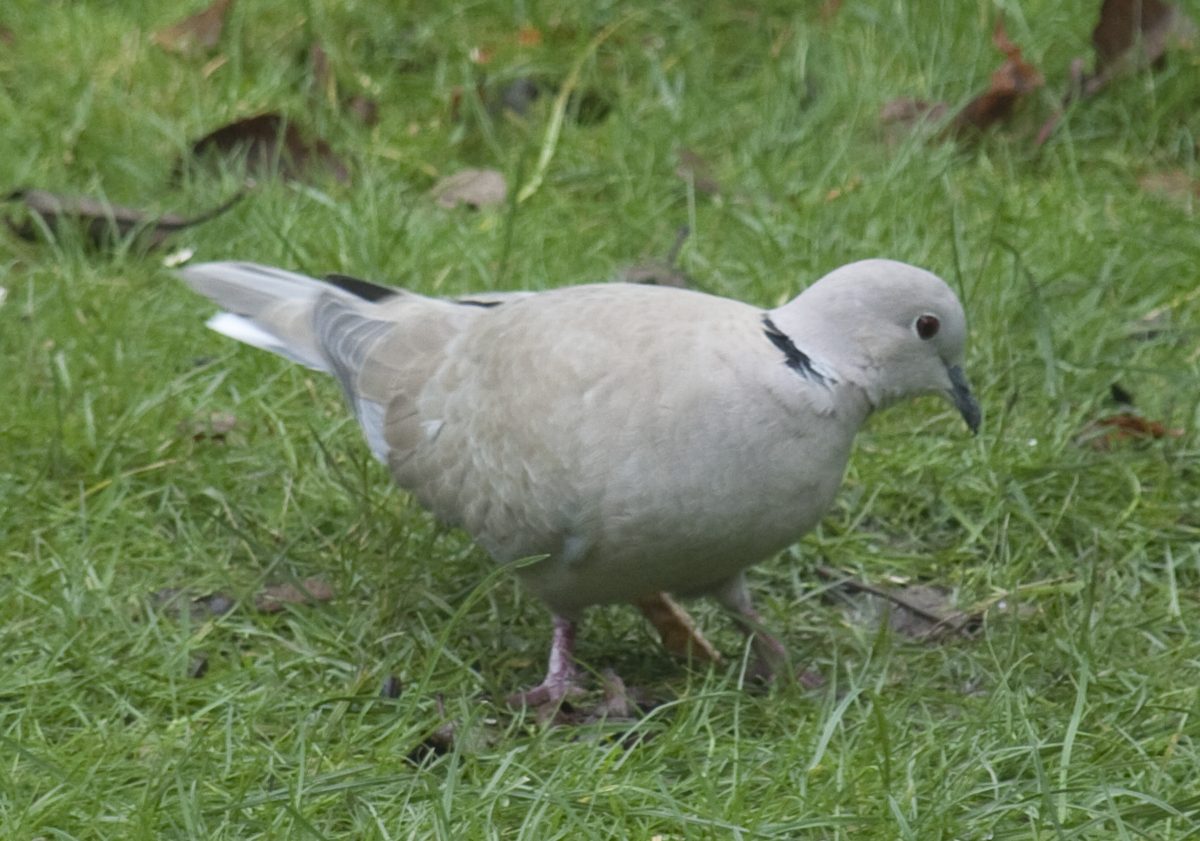
Pigeons and doves that visit feeders can carry trichomonosis (called canker in pigeons). It also spreads to finches such as greenfinches and chaffinches, through food and water that sick birds bring back up (Garden Wildlife Health (opens in new tab)). The RSPB advises washing feeders every week with a mild disinfectant and hot water, then rinsing and drying them before refilling.
The RSPB also now advises pausing seed and peanut feeders from the start of May to the end of October, when disease spreads more easily and natural food is easy to find. Small amounts of mealworms or suet are fine in those months.
Taking the feeders down for a while
If a flock has learned your garden, a break can help. The Cornell Lab of Ornithology (opens in new tab) notes that some people take feeders down for a couple of weeks when unwanted birds take over. Pigeons go where food is easy to find, so the break works best when the feeders that come back are caged or weight-activated.
Feeders and tables that keep pigeons out
These three were in stock on Amazon UK when we checked. They show the three main designs: a caged table, a caged hanging feeder and a weight-activated feeder.
Riverside Woodcraft Premier Plus full-cage bird table
Some links on this page go to Amazon. If you buy through them we may earn a small commission, at no extra cost to you. As an Amazon Associate I earn from qualifying purchases.
For a bird table
Riverside Woodcraft Premier Plus full-cage bird table
- Stainless steel mesh with 3.8 × 3.8 cm gaps around the feeding area, inside the 35–40 mm range the RSPB gives for guardians.
- Hand made in the UK, with an anti-bacterial coating, according to the listing.
- Small birds feed inside while wood pigeons stay outside the mesh.
Our take: An expensive option, but it is the one to look at if you want to keep a bird table rather than switch to hanging feeders.
Check price on Amazon (opens in new tab)Gardman heavy-duty caged seed feeder
Caged hanging feeder
Gardman heavy-duty caged seed feeder
- A seed tube inside a cast metal cage.
- The listing gives 500 g of seed, 485 g of peanut bites or 360 g of sunflower seed.
- It is 31 cm tall.
Our take: A cheaper way to get a guardian cage. Check the cage gaps against the 35–40 mm guide before you buy.
Check price on Amazon (opens in new tab)Jacobi Jayne Squirrel Buster seed feeder
Weight-activated
Jacobi Jayne Squirrel Buster seed feeder
- A spring-loaded shroud closes the feeding ports when something heavy, such as a squirrel or a pigeon, lands on it.
- Made for mixed seed and seed blends.
- The maker offers UK phone support and spare parts.
Our take: Good if squirrels are a problem as well as pigeons. Hang it where pigeons cannot reach the ports from a branch or fence.
Check price on Amazon (opens in new tab)What not to do
Do not put spikes, sticky gel or glue on or near a feeder. They can hurt the small birds you want to feed (see our page on repellent gel). Never use poison. All wild birds in the UK are protected under the Wildlife and Countryside Act 1981 (opens in new tab), and pigeons may only be killed or taken under licence for set purposes, such as protecting public health or preventing serious damage to crops (see wood pigeon protection).
If pigeons are a wider problem in your garden, the garden guide covers crops, lawns and perches, and the general guide to keeping pigeons away covers roofs, balconies and other places. If you keep pigeons and want to feed your own birds, see our guide to pigeon feeders instead.
Frequently asked questions
What is the best way to keep pigeons off a bird feeder?
Use a hanging feeder inside a guardian cage with 35–40 mm gaps, and stop seed reaching the ground. The RSPB says gaps of that size let small birds in and keep pigeons out.
What size gaps keep pigeons out but let small birds in?
The RSPB gives 35–40 mm. Tits, finches, sparrows and robins get through, but pigeons do not.
Do pigeon-proof feeders work?
Caged and weight-activated feeders work well for most people. Some wood pigeons still knock seed out of open hanging feeders, so clear up underneath too.
What bird seed do pigeons not like?
Pigeons prefer grain and large seeds. The BTO suggests avoiding mixes with a lot of cereal and offering smaller seeds. Sunflower hearts in a hanging feeder are a common choice.
Should I stop feeding birds to get rid of pigeons?
A break of a couple of weeks can help a flock move on. It works best if you come back with caged or weight-activated feeders and keep the ground clear.
Are bird tables bad for small birds?
The RSPB now advises against flat-surfaced feeders, including bird tables, because disease spreads more easily where contaminated food collects. A caged table keeps pigeons off but is still a flat surface, so clean it often.
As an Amazon Associate, Pigeonpedia earns from qualifying purchases. Amazon links on this page may earn us a small commission, at no extra cost to you.
Sources
We used these sources for this page:
- RSPB: bird feeders for small birds (guardian gap sizes) (opens in new tab)
- RSPB: how and what to feed your garden birds (opens in new tab)
- BTO Garden BirdWatch: Woodpigeon factsheet (opens in new tab)
- BTO Bird Table, Spring 2014: Woodpigeon species focus (opens in new tab)
- Cornell Lab Project FeederWatch: feeding birds (opens in new tab)
- Cornell Lab All About Birds: feeders overrun by unwanted birds (opens in new tab)
- RSPB: bird feeder buying guide (opens in new tab)
- Garden Wildlife Health: trichomonosis in garden birds (opens in new tab)
- RSPB: the Wildlife and Countryside Act (opens in new tab)
Last updated 27 November 2026 · Problems