
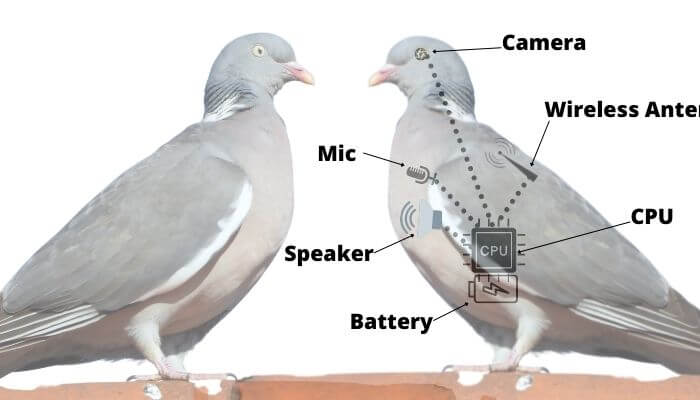
Yes, pigeons are real. The claim that they are government surveillance drones comes from Birds Aren’t Real, a satirical movement started by Peter McIndoe in Memphis in 2017. The joke lands because spies really have used pigeons: the CIA built a tiny pigeon camera in the 1970s, and China has tested bird-shaped drones.
Where the idea that pigeons aren’t real comes from
Birds Aren’t Real began in January 2017, when McIndoe made a sign with the slogan at a protest in Memphis and a video of him explaining the made-up theory spread online (The New York Times (opens in new tab)). The movement claims that the US government replaced birds with surveillance drones. It is a parody of conspiracy thinking, and its members play the part straight at rallies and on social media. The New York Times reported in 2021 that McIndoe had broken character to explain that the point was to poke fun at misinformation.
Pigeons are an easy target for the joke because they live so close to people. The feral pigeons that sit on window ledges and walk around our feet in town squares are descended from the rock dove and have lived alongside humans for thousands of years.
Pigeons really have been used as spies
The joke would not work without some truth behind it. Pigeons have carried cameras and secret messages for more than a century.
The first pigeon camera, 1907
Julius Neubronner was a pharmacist in Kronberg, near Frankfurt, who sent prescriptions by homing pigeon. In 1907 he applied for a patent on a camera weighing only 40 grams that a pigeon could wear on a harness, with a timer that took pictures during the flight. His pigeons were already used to carrying light pouches of prescriptions, and with a camera they could fly up to 100 km in about an hour. The German patent office at first refused, and granted the patent on 2 December 1908 only after he sent in certified photographs. He showed the system at the International Photographic Exhibition in Dresden in 1909, where pigeons were released and their pictures sold as postcards (Deutsches Technikmuseum (opens in new tab)).
The Secret Pigeon Service, Second World War
In the Second World War, a British military intelligence section, MI14(d), dropped pigeons in containers by parachute over occupied Europe, each with a questionnaire attached. More than 1,000 birds came back with messages, including details of V1 rocket launch sites and German radar stations (BBC News (opens in new tab)). Pigeons had already carried messages in the First World War; see how many pigeons died in WW1 and famous pigeons.
The CIA’s pigeon camera, 1970s
Files the CIA declassified in 2019 describe a programme code-named Tacana. The agency’s camera cost $2,000 and weighed 35 g, with a harness of under 5 g. Test flights were made over a prison and over the Navy Yard in Washington, and about half of the 140 pictures on each roll of film came out well (BBC News (opens in new tab)). A memo from September 1976 named a target, the Leningrad shipyards that built the most advanced Soviet submarines, but the released files stop there.
The CIA Museum holds one of the cameras. It is 4.7 by 2.4 by 2.2 cm, and a tiny battery-powered motor wound the film on and cocked the shutter. The museum says details of the pigeon missions are still classified (CIA Museum (opens in new tab)). The same files describe ravens trained to drop bugging devices on window sills. The plan relied on the bird’s homing instinct, explained in how pigeons navigate.
Bird-shaped drones, 2018
Robot birds do exist. In 2018 the South China Morning Post reported that more than 30 military and government agencies in China had used dove-like drones, in at least five provinces, under a programme called “Dove” led by Song Bifeng of Northwestern Polytechnical University (South China Morning Post (opens in new tab)). They are machines built to look like birds from a distance, and there is no report of them mixing with ordinary city pigeons.
How to tell that a pigeon is real
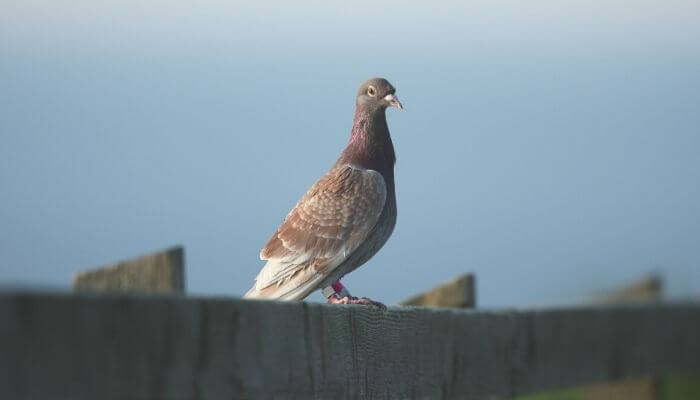
There is no evidence that any of the pigeons in a park or on a roof are machines. A real pigeon does things no drone does: it eats seeds and scraps, drinks by sucking water up without lifting its head, leaves droppings, moults its feathers every year and raises squabs in an untidy nest. For more about the living bird, see our pigeon facts and what pigeons are good for. Pigeons also have their own social lives and some capacity for emotion; see do pigeons have feelings.
And if a pigeon seems to be watching you, it is far more likely to be hoping for food than listening in. We cover the joke version of that worry in why you shouldn’t tell a pigeon a secret, and what to feed them in our guide to the best pigeon food.
Are pigeons real? FAQs
Are pigeons real or drones?
Pigeons are real birds. The idea that they are government drones comes from Birds Aren’t Real, a satire started in 2017 that parodies conspiracy theories.
Who started Birds Aren’t Real?
Peter McIndoe, who began it in Memphis in January 2017 with a protest sign and a video that spread online. He later said it was meant to mock misinformation.
Did the CIA really use spy pigeons?
Yes. Files declassified in 2019 show the CIA tested pigeons carrying a 35 g camera in the 1970s. The CIA Museum says details of the missions are still classified.
Do pigeon drones exist?
Bird-shaped drones have been built. In 2018 Chinese agencies were reported to be using dove-like drones, but these are machines built to look like birds, not living pigeons.
Why do people say pigeons aren’t real?
Mostly as a joke. Birds Aren’t Real turned it into a running gag, and pigeons are an easy target because they live so close to people.
Sources
References used for this page:
- The New York Times (9 December 2021). Birds Aren’t Real, or are they? Inside a Gen Z conspiracy theory. (opens in new tab)
- Deutsches Technikmuseum: Julius Neubronner und seine fliegenden Fotografen (Google Arts & Culture). (opens in new tab)
- BBC News (13 September 2019). CIA declassifies Cold War spy pigeon missions. (opens in new tab)
- CIA Museum: Pigeon camera. (opens in new tab)
- South China Morning Post (24 June 2018). China takes surveillance to new heights with flock of robotic doves. (opens in new tab)
Last updated 12 November 2026 · Fun