
Pigeons are good for more than most people expect. Fruit-eating pigeons spread the seeds of forest trees, pigeons have carried messages in wartime and been trained to spot cancer cells and people lost at sea, and city pigeons are a major food for peregrine falcons. Some popular claims, though, have little evidence behind them.
What pigeons are good for: claims and evidence
Select a claim to see what the evidence says.
Spreading tree seeds Well supported
True for many fruit-eating pigeons, especially in the tropics and on islands. Town pigeons mostly destroy the seeds they eat.
Spotting cancer in images Shown in trials
Pigeons reached 85% accuracy on breast tissue slides, 99% when four birds were pooled. A research tool, not a diagnostic one.
Search and rescue at sea Shown in trials
93% accurate at spotting objects in the sea against 38% for human crews, in US Navy trials around 1980.
Carrying messages Historical
Used in both world wars; 32 pigeons have received the PDSA Dickin Medal.
Feeding birds of prey Well supported
About half the diet by weight of a pair of Exeter peregrines over 20 years.
Fertiliser Historical
Pigeon towers in Egypt and Iran were built largely for the manure.
Controlling insects Little evidence
Insects are a small part of the town pigeon’s diet, and we found no evidence that pigeons reduce insect numbers.
Leaving less food for rats Little evidence
We found no study showing that pigeons reduce rat numbers.
They spread the seeds of forest trees
A 2026 review of 369 studies of what pigeons eat found that they take a huge range of fruit and seeds, with figs especially prominent: 94 species of fig appear in the recorded diets (Ando et al., 2026 (opens in new tab)). Many tropical and island pigeons are fruit eaters that act as seed dispersers, carrying seeds away from the parent tree. Pacific pigeons in Tonga, for example, have been studied as seed dispersers for the islands’ trees (McConkey et al., 2004 (opens in new tab)).
The same review found that pigeons also destroy many seeds, and that this side of their diet has been underestimated. Several genera act as both seed dispersers and seed predators. The town pigeon is mainly a seed eater, grinding seeds in its gizzard, so its role in spreading plants is probably small. For more on diet, see what pigeons eat.
They have helped scientists and rescuers
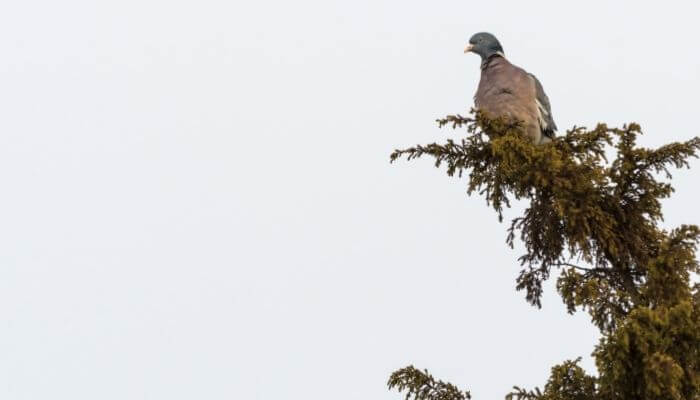
Pigeons share many features of their visual system with humans (see pigeon eyesight), and they can be trained to sort images. In a 2015 study, pigeons learned to tell benign from malignant breast tissue in microscope slides, rising from 50% accuracy, which is chance, to 85% over 15 days of training, and they could still do it with images they had never seen. When the answers of four birds were pooled, accuracy reached 99%. They also spotted microcalcifications on mammograms, but could not learn to classify suspicious masses (Levenson et al., 2015 (opens in new tab)). The researchers see pigeons as a way to study how people read medical images, not as a replacement for doctors.
In the late 1970s and early 1980s, a US Navy scientist, Jim Simmons, trained pigeons to search the sea from Coast Guard helicopters. The birds were 93% accurate at locating objects floating in the water, while human flight crews managed 38%. The project ended after two helicopter crashes damaged the equipment and funding was cut (American Psychological Association (opens in new tab)). Earlier, B.F. Skinner had trained pigeons to guide missiles in the Second World War, and in 1966 Thom Verhave trained pigeons to pick out faulty drug capsules, reportedly with 99% accuracy after a week. Neither idea was put into use.
They carried messages in war
The pigeon’s homing ability made it a messenger long before radio. The PDSA Dickin Medal, the animals’ award for bravery, has been given to 32 pigeons since 1943, more than any animal except dogs (PDSA (opens in new tab)). For their role in the wars, see how many pigeons died in WW1; for the spy missions, see are pigeons real. Homing pigeons are still raced today; see how far a homing pigeon can fly.
They feed other wildlife
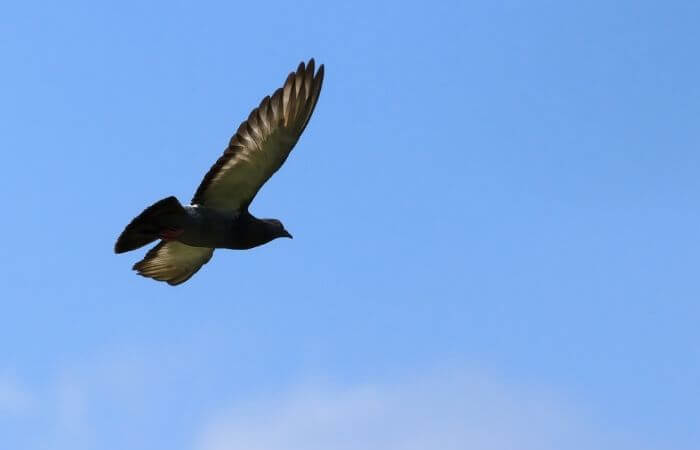
Pigeons are an important food for birds of prey. A 20-year study of a pair of peregrine falcons nesting in Exeter found that feral pigeons made up about a third of the birds they ate by number and just over half of their diet by weight (Dixon and Drewitt, 2018 (opens in new tab)). Sparrowhawks, foxes and cats also take them; see natural predators of pigeons.
Their droppings were used as fertiliser
For centuries pigeon droppings were collected and spread on fields. In Egypt and Iran, farmers built tall towers to house thousands of pigeons for their manure, and in Iran some towers are still opened once a year to collect it. See Egypt’s pigeon towers.
People keep them and eat them
Many people keep pigeons as pets, show birds or racers; see pigeons as pets. Young pigeons, called squabs, are also raised for meat; see which pigeons people eat.
Claims with little evidence
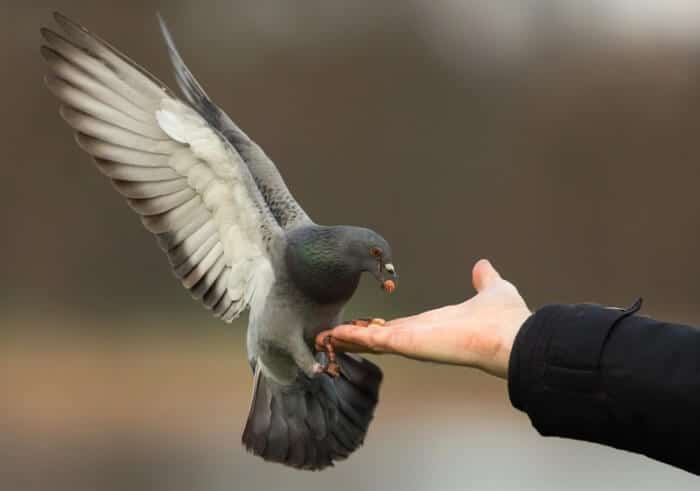
Two benefits often repeated online do not stand up well. The first is that pigeons control insects. Town pigeons do eat some insects, worms and snails, but these are a small part of a mostly seed-based diet, and we found no evidence that they reduce insect numbers. The second is that by eating dropped food they leave less for rats. Pigeons do clear up scraps, but we found no study showing that this reduces rat numbers. For the health side of living alongside pigeons, see do pigeons carry diseases.
What are pigeons good for? FAQs
What are pigeons good for in the environment?
Fruit-eating pigeons spread the seeds of many forest trees, especially in the tropics and on islands, and pigeons are an important food for predators such as peregrine falcons.
Are pigeons useful to humans?
Yes. They have carried messages in war, been used in research on how we read medical images, been tested for sea rescue, and are kept as pets, show birds, racers and for meat.
Do pigeons eat insects?
Some. Town pigeons eat mainly seeds and scraps and take a few insects, worms and snails. We found no evidence that they control insect numbers.
Do pigeons help keep streets clean?
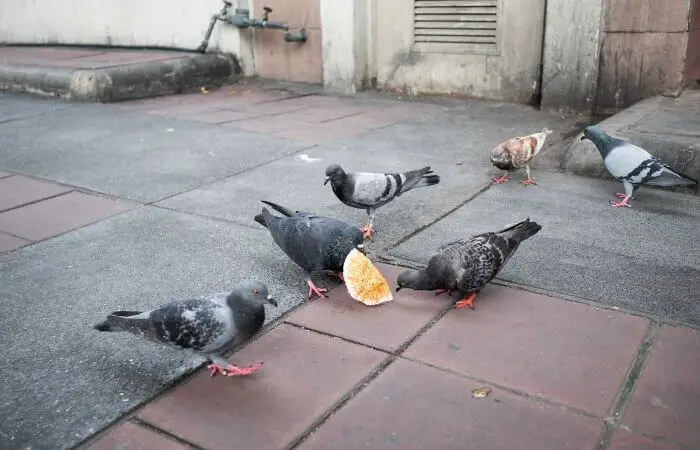
They eat dropped food, but we found no study showing that this reduces the number of rats.
How many pigeons have won the Dickin Medal?
Thirty-two pigeons have been awarded the PDSA Dickin Medal since 1943, more than any other animal except dogs.
Sources
References used for this page:
- Ando, H. et al. (2026). A global overview of pigeon–fruit interactions. Ibis. (opens in new tab)
- McConkey, K.R., Meehan, H.J. and Drake, D.R. (2004). Seed dispersal by Pacific Pigeons (Ducula pacifica) in Tonga, Western Polynesia. Emu 104: 369–376. (opens in new tab)
- Levenson, R.M. et al. (2015). Pigeons (Columba livia) as trainable observers of pathology and radiology breast cancer images. PLOS ONE 10: e0141357. (opens in new tab)
- American Psychological Association, Monitor on Psychology (October 2002). Pigeons as baggage screeners, rats as rescuers. (opens in new tab)
- PDSA: The PDSA Dickin Medal. (opens in new tab)
- Dixon, N. and Drewitt, E.J.A. (2018). A 20-year study investigating the diet of Peregrines, Falco peregrinus, at an urban site in south-west England (1997–2017). Ornis Hungarica 26(2): 177–187. (opens in new tab)
Last updated 12 November 2026 · Facts