

Some links on this page go to Amazon. If you buy through them we may earn a small commission, at no extra cost to you. As an Amazon Associate I earn from qualifying purchases. Some links also go to Pharma Pigeon Products, and we may earn a commission on purchases made through them too.
Pigeons need vitamins A, E, C, D, K and the B group to stay healthy, whether they are show birds or pets. Most of these come from a well-balanced diet containing a mix of foods to cover all of their vitamin needs (opens in new tab).
Please note: this article is general information and is not a substitute for advice from an avian vet or a licensed wildlife rehabilitator. If you have found an injured or sick bird, contact a vet or your local rescue (see our list of pigeon-friendly rescue centres).
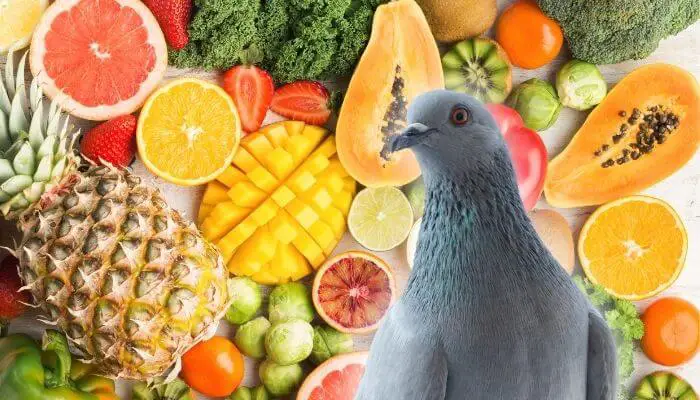
Indications of a Poor Diet
It does not take too long to realize that you haven’t got your pigeon’s diet quite right.
Signs include:
- Listlessness
- General disinterest in leaving perch, loft or racing basket
- Pigeon stops flapping its wings early in the morning and/or after feeding
- Lack of racing performance
- Lack of fertility
- Poor development and growth in young birds
The Vitamins Pigeons Need:
1. Vitamin A
Just like for humans, vitamin A is vital for your pigeon’s healthy skin.
This vitamin is also important for healthy mucous membranes, like those found in your bird’s eyes, nose, mouth and sinuses.
A diet that consists of only seeds can lead to a vitamin A deficiency.
2. Vitamin E
Pigeons need vitamin E because it plays a role in many metabolic processes that occur in the cells.
A deficiency can lead to a variety of health issues, so this is an important nutrient to include in your bird’s diet.
3. Vitamin C
Pigeons make their own vitamin C, so healthy birds don’t need it in their diet.
A vet may still suggest a vitamin C supplement in some cases.
This is sometimes done when a pigeon has liver disease or is under stress.
4. Vitamin D
Vitamin D helps your pigeon’s body absorb calcium, which is important for strong bones.
Access to sunlight is necessary to maintain vitamin D levels but in some climates may not be enough to cover their daily needs so a good feed will contain this vitamin.
5. B Vitamins
This is a group of eight vitamins, and each is important for some aspect of your pigeon’s health.
Pigeons are at risk of a deficiency if they are refusing to eat for some reason.
It’s important to make sure they are getting adequate amounts of each of the B vitamins for good overall health.
6. Vitamin K
Your pigeon’s healthy blood relies on vitamin K. It aids in coagulation and can be found in green foods, which pigeons tend to enjoy.
A deficiency is rare, unless your pigeon has recently finished a course of antibiotics.
Racing Pigeons and B Vitamins
The B vitamins are essential for all pigeons but more importantly for racing pigeons (opens in new tab) as they play such a vital role in aiding metabolism which helps with energy levels.
The most important B vitamins are:
- B1 – Thiamine is needed to turn carbohydrates into energy and for healthy nerves. A lack of it can cause loss of appetite and nervous signs such as weakness or poor balance.
- B2 – As part of the metabolic system, B2 processes proteins, fats and carbohydrates. B2 also aids the optimum functionality of the nervous system and is essential for embryo development.
- B6 – Important for growth, B6 is another vitamin with a crucial role in the pigeon’s metabolic process, particularly processes in the nerves and liver.
- B9 – Better known as folic acid, B9, along with B6 and B12 is needed because it is used in the production of red blood cells which are essential for circulation and respiration. Pigeons can become anemic (opens in new tab) just like humans and B9 helps prevent this.
- B12 – It is the cobalt in B12 that is used in red cell production and this factor also makes it an essential vitamin in the first few weeks after hatching. Pigeon breeders should also note that B12 is essential for egg development.
It is unlikely that a problem with a pigeon can be isolated to any single B vitamin because their role in the bodily processes and functions are complex and synergistic.
Antioxidants
It should also be remembered that some vitamins act as antioxidants, and these are essential to all animal life.
Antioxidants are substances which slow down the oxidation of cells. Oxidation creates free radicals that cause damage and inhibit cell function.
Among other nutrients, vitamins C and E are known to be effective antioxidants that prevent and interrupt the chain reactions that free radicals create.
Too many of these free radical chain reactions can build up to cause oxidative stress.
Flight is known to increase oxidative stress in birds, which is one more reason racing pigeons need a diet that covers their vitamin and nutrient needs.
Pigeon conditioner and vitamins
In the UK, “pigeon conditioner” is the name for a grain and seed mix fed to racing pigeons, mostly through the moult and the racing season. A typical mix contains wheat, red and white dari (sorghum), oats, linseed and safflower.
A conditioner is a food, not a vitamin supplement. Grain and seed mixes are low in some vitamins and minerals, so keepers usually give grit and a mineral supplement as well (opens in new tab). Ask an avian vet if you think your birds are short of something.
Healthy Pigeon Diets
Just like you eat a varied meal plan, the same is important for your pigeon.
Feeding them the same thing all the time increases the risk of a vitamin deficiency so giving them many different kinds of healthy foods is the right idea.
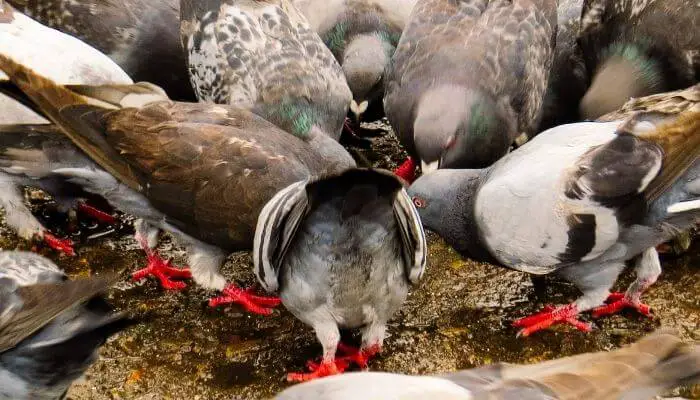
A diet that closely mimics that which they’d eat in the wild is your best bet.
Seeds and grains are an important part of a pigeon’s diet.
However, as mentioned above, they can’t be the only thing your bird eats, or you run the risk of deficiencies in several nutrients, including calcium and vitamin A.
Pigeons should also eat fruits and vegetables.
They contain a range of vitamins and antioxidants, and many pigeons like them.
Be sure to finely chop any fruits and vegetables you feed to your bird so that they can swallow them without risk of choking.
Avoid iceberg lettuce, as it’s mostly water and doesn’t contain a lot of nutrition.
Avocados can be toxic to pigeons and should never be offered as part of their diet.
In the wild, pigeons sometimes forage for small insects or worms.
You can also offer these from time to time, but they should only be a small part of the diet.
Cooked meats and cheeses are best avoided. Pigeons are seed eaters, and dairy in particular can upset their digestion.
Giving Pigeons Vitamins
A healthy and varied meal plan is the best way to ensure that your pigeon is getting the vitamins it needs to thrive. However, there are times when supplementing with a vitamin may be necessary.
For example, if your bird has been sick and isn’t eating or has finished a round of antibiotics.
Birds with specific health conditions may also need a vitamin supplement (opens in new tab).
You can find these products in powder form, which can be sprinkled on their seeds or fruits and vegetables, making it simple to get your bird to eat them.
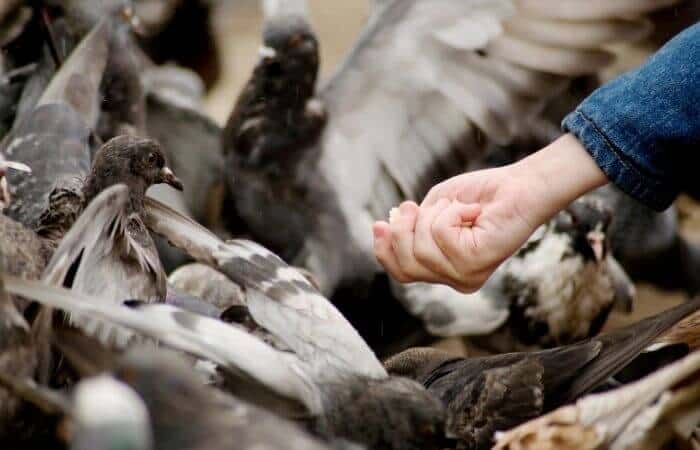
You can also add nutritional oils (such as cod liver oil) or extracts to your pigeon’s food to ensure that it consumes the vitamins it needs.
During certain parts of their lives, pigeons may need extra nutrition.
This includes during racing season, when they are molting, and when they are breeding.
Do your research or talk to your vet about what changes to your pigeon’s diet might be necessary during these times in its life.
Keep in mind that some vitamins can be toxic to pigeons in large amounts, so you don’t want to overdo it.
Your vet can help you determine the right amount, especially if you’re using a supplement, so that you’re not compromising your pigeon’s good health.
Sources:
- Vitamin A deficiency in pigeons (opens in new tab)
- The Effect of the Administration of Glycine to Pigeons on a Diet Deficient in Vitamin B (opens in new tab)
Last updated 1 November 2026 · Nutrition