
This plan builds a simple wooden nest box for pigeons, like the one pictured below, for about $30 in materials, not including tools.
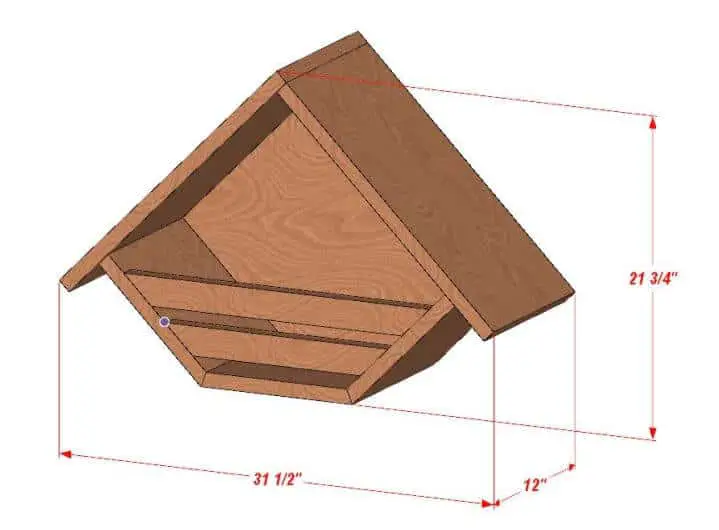
Once the box is built, line the floor with a shallow layer of soft, dry material so eggs are less likely to crack. Shredded nesting paper works well; you can see other options on our pigeon nesting materials page.
Quick picks
Some links on this page go to Amazon. If you buy through them we may earn a small commission, at no extra cost to you. As an Amazon Associate I earn from qualifying purchases.
Best for lining the box
Natural crinkle paper
| Item | Best for | Why |
|---|---|---|
| Natural crinkle paper | Lining the finished box | Soft enough that eggs are less likely to crack, and easy to change when soiled. |
Lining the box
Bonka Bird Toys 1574 Natural Crinkle Paper
Best for lining the box
Bonka Bird Toys 1574 Natural Crinkle Paper
- Soft shredded paper for lining a nest.
- Also used as a foraging filler.
- Sold as a bird-safe paper.
Our take: Put a shallow, dry layer in the box or nest bowl, and replace it when it gets dirty or damp.
Check price on Amazon (opens in new tab)Recommended Tools:
- Mitre saw
- Circular saw
- Drill
- Screwdriver
- Tape measure
- Pencil
- Safety glasses
- Spirit level
| Estimated cost: |
|---|
| $30 (prices will vary depending on your location) |
These plans are for domestic pigeons. Wild stock doves need a large cavity box instead; our species guide covers the entrance size and siting.
Pigeon Nest Box PDF
If you’d prefer to download and print off a PDF of our nest box plans and cut list so you have a working copy then you can do so by clicking the button below:
Pigeon Nest Box Cut List
Ensure that you have all the lumber and plywood listed below cut to the correct size before you start assembling the nest box.
| Name | Material | Property | Length | Width | Quantity | Note |
|---|---|---|---|---|---|---|
| P1 | Plywood 1” | Cutout | 19 3/8″ | 24 7/16″ | 1 | Back |
| P2 | Plywood 1” | 22 1/4″ | 12″ | 1 | Top left | |
| P3 | Plywood 1” | 21 1/4″ | 12″ | 1 | Top right | |
| P4 | Plywood 1” | Angle Cut | 10 1/2″ | 12″ | 2 | Front left/right |
| P5 | Plywood 1” | Angle Cut | 11″ | 12″ | 1 | Front bottom |
| P6 | Plywood 1” | Cutout | 22 3/16″ | 2″ | 1 | Long lintel |
| P7 | Plywood 1” | Cutout | 16 3/16″ | 2″ | 1 | Short lintel |
Pigeon Nest Box Building Plans – Step By Step Visual Guide
1. Fit The Roof
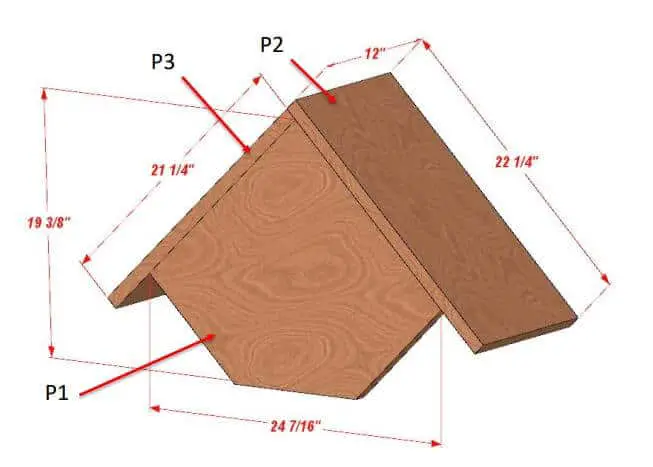
Attach the back panel to the roof panels using 2″ screws or nails.
2. Attach The Front Flooring Panels
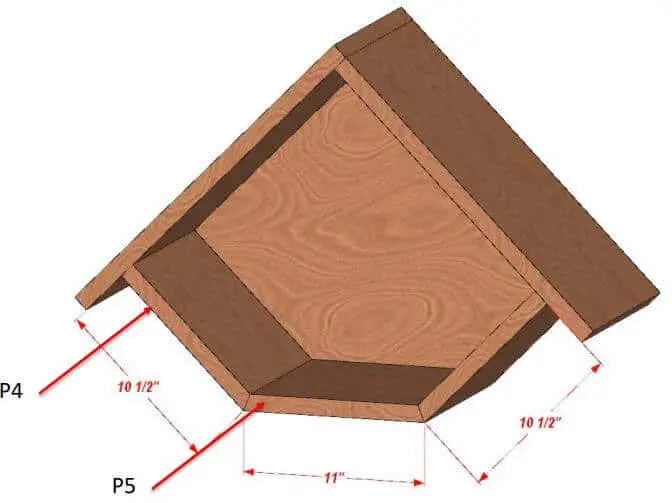
Attach the front and floor panels securely to the back panel and roofing panels using 2″ screws or nails.
3. Fit The Lintels
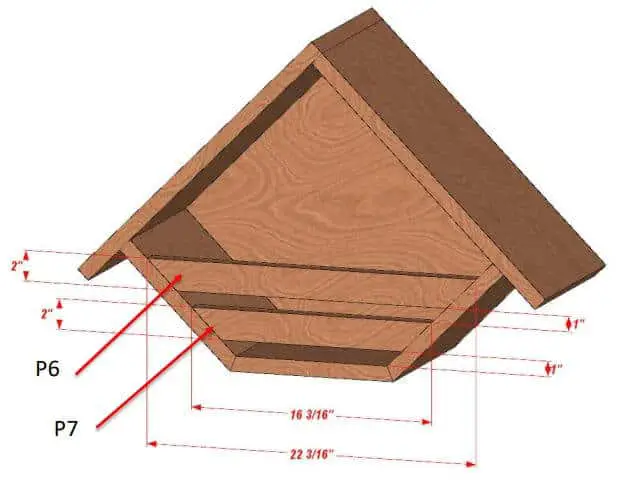
Fit the lintels across the front of the nesting box and secure them with screws, nails or high-quality wood glue.
4. Paint/Varnish It
Finish the nesting box off by painting or varnishing it to make it more durable against the weather.

New to pigeon keeping?
A Beginner’s Guide to Pigeon Keeping. Practical care for pets, lofts and first-year keepers.
Price: $2.95.
5. Enjoy Your New Pigeon Nesting Box
It’s done and should look something like this:
We hope you enjoy it as much as the pigeons and doves will no doubt enjoy nesting in it.
Looking for more pigeon-related DIY projects?
Try these:
Verdict
The box from these plans is the structure. The lining is what the hen sits on, so keep it dry and replace it when it gets dirty. See our nesting materials guide for other options.
As an Amazon Associate, Pigeonpedia earns from qualifying purchases. Amazon links on this page may earn us a small commission, at no extra cost to you.
Last updated 31 October 2026 · Keeping