
A pigeon that isn’t sitting on its eggs is often just waiting for the second egg, which usually comes about two days after the first, or taking a short break while its mate is away. If neither parent has sat on the eggs for a day or more, the usual reasons are infertile eggs, a lost mate, or something scaring the birds off the nest. The main reasons are:
- The eggs aren’t fertilized
- The female may have lost her mate
- They may be waiting for a second egg to be hatched
- They know the eggs are bad
- They may be forced to abandon their eggs due to a threat
If you’ve found an abandoned pigeon egg read our article on how to care for a pigeon egg here.
1. The Eggs May Not Be Fertilized
Female pigeons can lay eggs without the help of a male. This is not unusual, for example in hens kept without a male, and young females in particular may lay before they are ready to incubate.
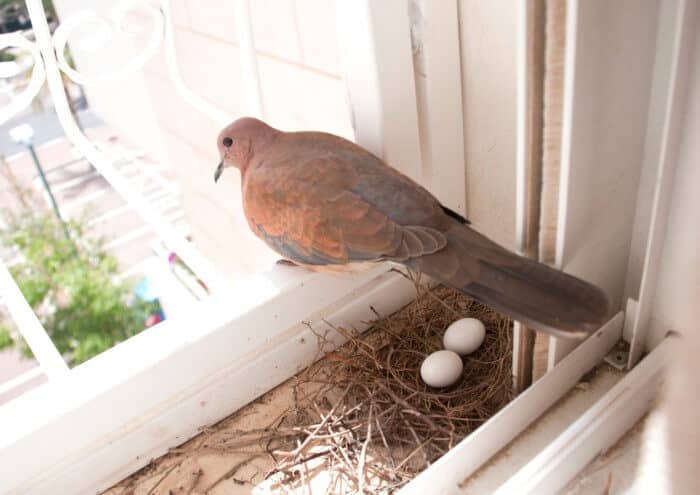
A very young female may be mature enough to lay the clutch, but too inexperienced to incubate them correctly.
Infertile eggs are not always abandoned, though. Many hens sit on infertile (“clear”) eggs for the full incubation period, or even longer, before giving up on them.
2. The Female May Have Lost Her Mate
For successful hatching and rearing, it takes a pair of pigeons.
Pigeons are generally good parents in the sense that both the male and female take part in the brooding.
Normally, the female sits on the eggs from late afternoon, through the night, until mid-morning, while the male rests and feeds.
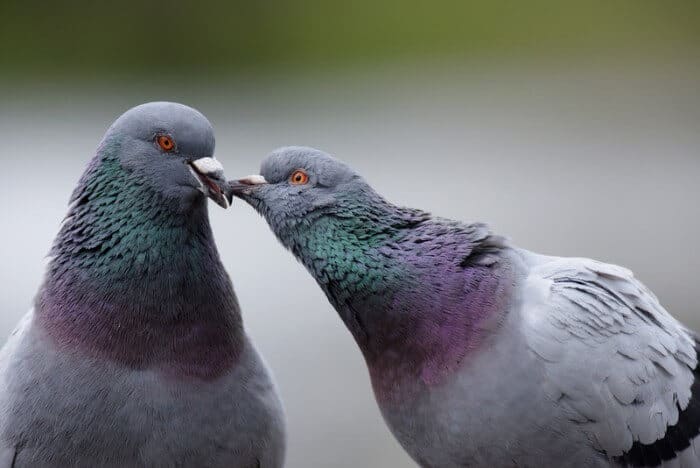
From mid-morning to late afternoon the male takes over and she goes off to feed.
In this way, they share the incubation of the eggs.
A female on her own would be unlikely to achieve a successful hatching.
A lone female would likely abandon the clutch due to hunger.
On the other hand, a lone male that has lost his female partner for some reason may also do this.
3. They May Be Waiting For The Second Egg
Female pigeons, on average, lay two eggs.
The second egg usually appears a day or two after the first.
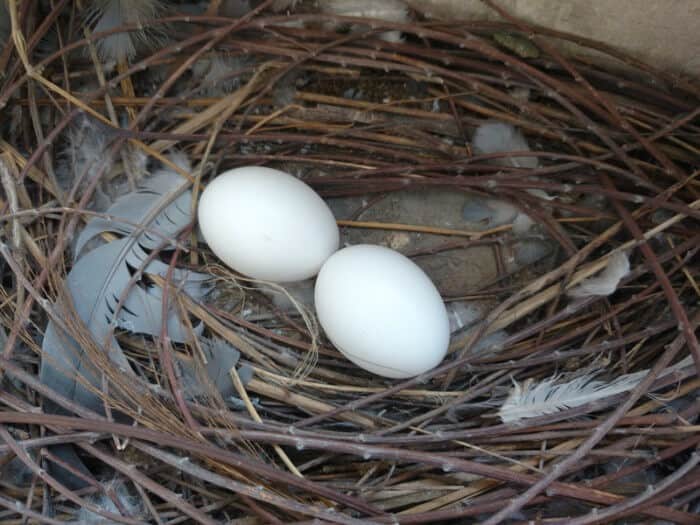
Inexperienced pigeon owners may think that the first egg has been abandoned because they don’t notice either of the birds incubating it.
Don’t fret because this is quite normal behavior.
Many times, the female won’t start the brooding process until the second egg has emerged.
4. The Eggs May Not Be Viable
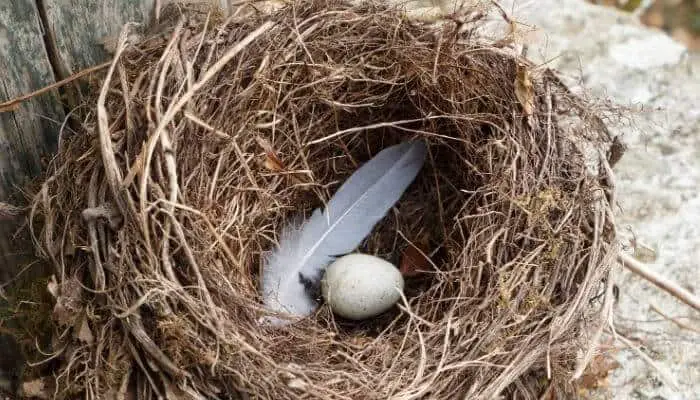
Parents can’t see inside an egg, but they do sometimes give up on eggs that are cold, cracked or long overdue.
Some will stop sitting on eggs that won’t hatch, although many keep sitting regardless.
The reliable way to check an egg is candling.
Take the egg into a dark room and hold a bright torch against the blunt end. From about day 5, a fertile egg shows a network of red veins and a dark spot. An infertile egg stays clear. See how long pigeon eggs take to hatch for what to expect day by day.
One of the major reasons that eggs may not be healthy is the result of malnutrition of the parent birds.
The correct alimentation, a well-balanced diet, is the key to healthy pigeons and therefore their offspring.
5. Pigeons May Abandon Their Eggs Due To A Threat
A nest could be abandoned, leaving the eggs behind, simply because the pigeons felt under a threat of some kind.
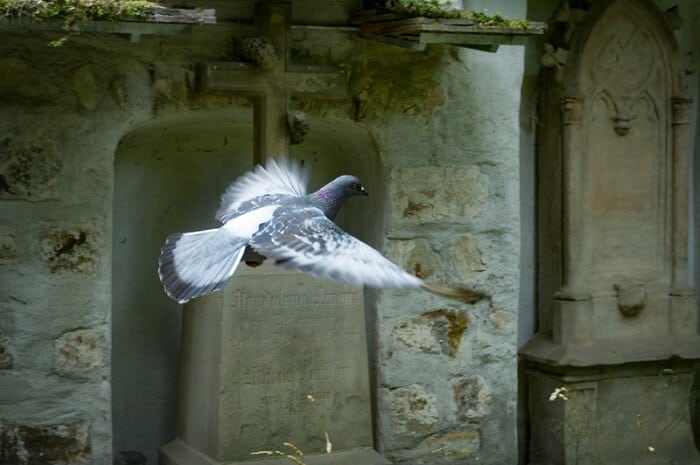
Pigeons return to the same nest time and time again, but when in danger from predators or human activity, they may abandon the site completely.
Extreme weather may have something to do with it too.
A female who has laid a clutch of eggs but has lost her mate and takes up with a new male is likely to leave the first batch.
Top Tip: If you find eggs that have been recently abandoned you can help them hatch either using an incubator or using the warm water trick which helps hatch eggs that are nearly ready to hatch.
This guide is general information. If a bird is injured or seriously ill, contact an avian vet or a wildlife rescue as soon as you can.
How long can pigeon eggs be left uncovered?

Short gaps are normal. Parents swap over twice a day, and eggs often sit uncovered for a few minutes during the change, or for longer before the second egg is laid. In the first few days, before the embryo has developed much, an egg can usually cope with several hours without warmth. Later in incubation, and in cold weather, a few hours can be enough to kill the embryo.
What to do if a pigeon isn’t sitting on its eggs
- Watch from a distance for a few hours before you touch anything. A parent may be nearby.
- If there is only one egg, wait for the second. Most pairs start sitting properly once both are laid.
- If you keep pigeons, candle the eggs at around day 5 to 7 and remove clear ones, so the pair can start again.
- If the parents have been gone for a day or more and the eggs are cold, the chance of hatching is low. An incubator is the best option for eggs that are still warm.
- If the eggs are well past day 19 or 20 and nothing has hatched, they are almost certainly not going to.
Wild pigeons are protected in many places while nesting. In the UK, it is an offence to take or destroy the eggs of wild birds, including feral pigeons, unless a general licence applies, so leave wild nests alone where you can. For abandoned eggs you have already taken in, see how to care for a pigeon egg.
See also: Pigeon Sitting Not Moving Meaning – 7 Reasons
Sources
- Association of Avian Veterinarians: Pigeon husbandry (PDF) (opens in new tab)
- GOV.UK: Bird licences (opens in new tab)
Last updated 31 October 2026 · Health