Behavior
Much of what pigeons do, from head-bobbing to preening and cooing, has a practical reason linked to feeding, safety or breeding. This section explains the everyday behaviour of town, wild and loft birds, including courtship and nesting, life in a flock, eyesight and how homing pigeons find their way back.
-
Behavior
How Do Pigeons Navigate?
Nobody knows for certain how pigeons navigate. Homing pigeons can reliably return to their loft from 600 miles or more away, and scientists have tested several theories, but…
-
Behavior
Why Do Pigeons Bow?
Pigeons bow mainly as part of the bow-coo, a display in which a male puffs out his neck, coos loudly, lowers his head and turns in a circle.…
-
Behavior
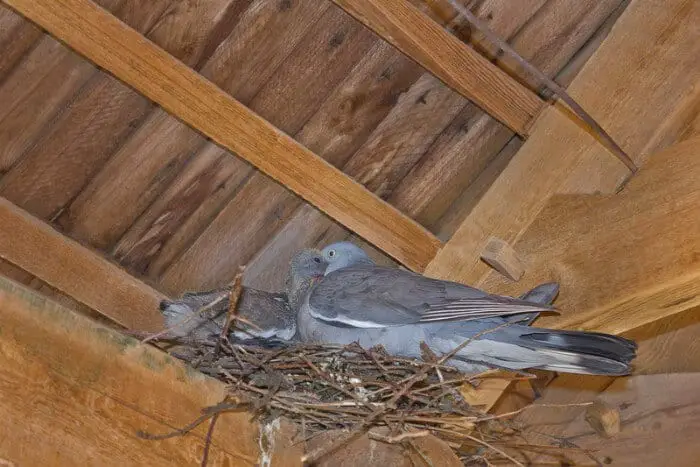
Where Do Pigeons Build Their Nests?
Pigeons will nest anywhere that is out of reach and offers some protection against the elements. Common places for pigeons to nest include; abandoned buildings, roofs, attics, beams,…
-
Behavior
Why Do Pigeons Fight? 8 Reasons
Pigeons mostly fight over space, nest sites, mates and food. Males (cocks) do most of the fighting, especially in spring when they are claiming nest boxes, and they…
-
Behavior
Why Do Pigeons Bob Their Heads?
Pigeons bob their heads as they walk. A well-known 1978 study by Barrie Frost found the main reason for the movement. Is it Bobbing? To the untrained eye,…
-
Behavior
Can Pigeons Swim?
No, pigeons cannot swim. They have no webbed feet and their feathers are not waterproofed like a duck’s, so a pigeon that lands in deep water soon becomes…
-
Behavior
What Sound Does a Pigeon Make?
Pigeons make a soft, low cooing sound, usually written as “coo” or “croo-croo”. They also make short grunts when they feel threatened, baby pigeons squeak and peep for…
-
Behavior
Why Do Pigeons Have Bad Feet?
Pigeons, especially those living in towns and cities, often have damaged or misshapen feet. Knowing what causes these problems helps pet owners prevent them and helps anyone keep…