
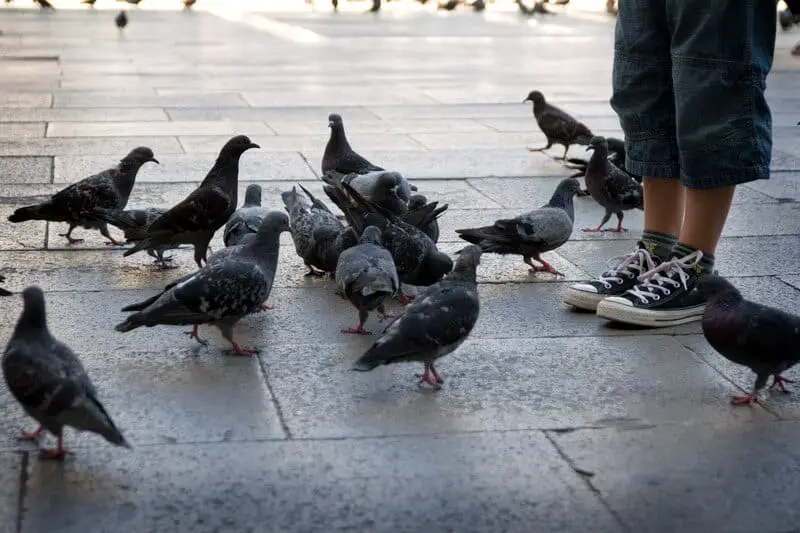
Unlike a domestic pigeon which you may keep for a pet, feral pigeons live freely, both in urban and rural areas. You can see them in our own pigeon photos.
If you happen to love pigeons and want to know more about them, there’s a lot to know about these feral pigeons that is likely to be interesting to you.
If you keep pet pigeons, it’s nice to know a little more about how they live in their natural environment so you can provide the best care possible for your bird.
There’s so much to know so let’s get started with this complete guide to feral pigeons.
Other Names for the Pigeon
When you hear about pigeons, you may hear them being called by several different names.
Pigeons also go by the names of rock dove, rock pigeon, blue rock pigeon and wild rock pigeons.
The word “pigeon” comes from the Latin pipio, a young cheeping bird, while the scientific name Columba livia combines the Latin word for dove with a word meaning bluish-grey.
While there are about 350 recorded types of pigeons, the most common is the feral pigeon, or wild pigeon.
Estimates put the European population in the tens of millions, with many more spread out across other places in the world.
Wild Pigeon or Feral Pigeon?
While most people use the terms “wild pigeon” and “feral pigeon” interchangeably, there is a difference that separates them from one another.
Wild rock doves are the original wild birds, which still nest on sea cliffs in places such as parts of Scotland, Ireland and the Mediterranean, while feral pigeons are descended from escaped domestic birds and are mostly found living in urban areas, like the city you live in.
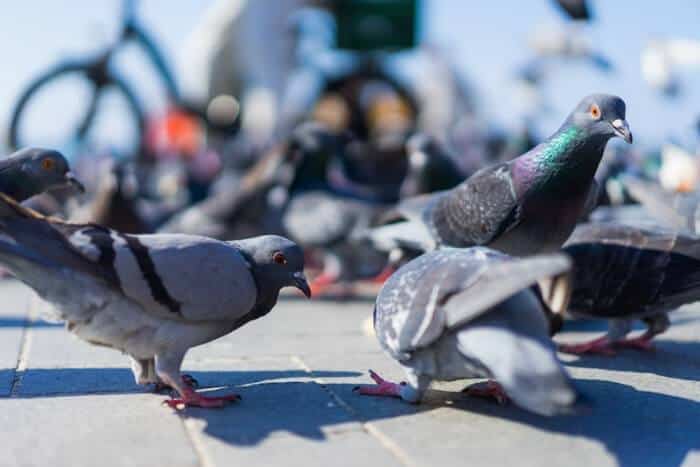
In other words, feral pigeons usually live close to humans, while truly wild rock doves live in remote cliff habitats.
The Feral Pigeon’s Appearance
Pigeons, like every other species, vary a bit in size and shape.
· On average, they are 32 to 37 centimeters in length.
· They have a wingspan of 64 to 72 centimeters.
· Pigeons range in weight from about 240 to 380 grams.
· Pigeons are usually a grey-blue color with green or purplish feathers in the neck area.
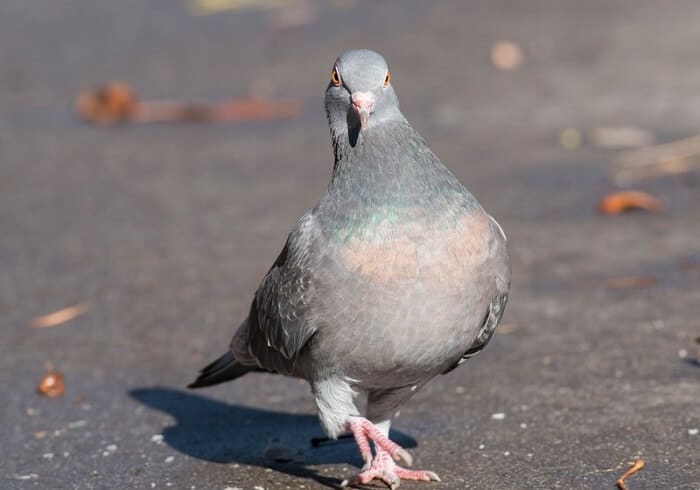
· Juvenile pigeons have brownish eyes, while adults have orange-red eyes.
· A pigeon’s beak is usually black in color, while their legs and feet are usually red.
· They often have white feathers on their lower backs, two black bars across each wing and a dark band at the end of the tail.
Of course, there is some variation to this and not all pigeons look exactly the same.
The Diet of a Feral Pigeon
If you keep pigeons as pets, you have a lot more control over what they’re eating. The ideal diet for a pigeon is a mixture of seeds, grains, protein, fruits and vegetables, which is easy to do with pre-made mixes and pigeon pellets, supplemented with fresh produce.
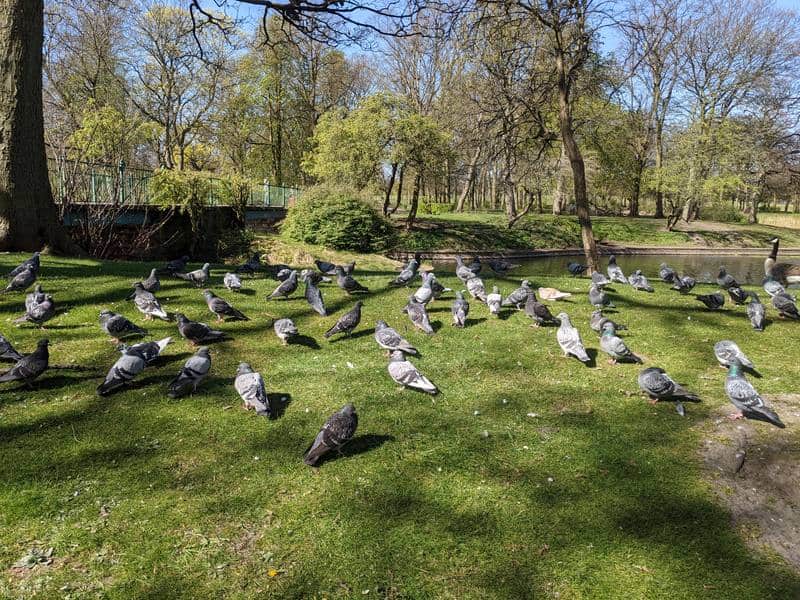
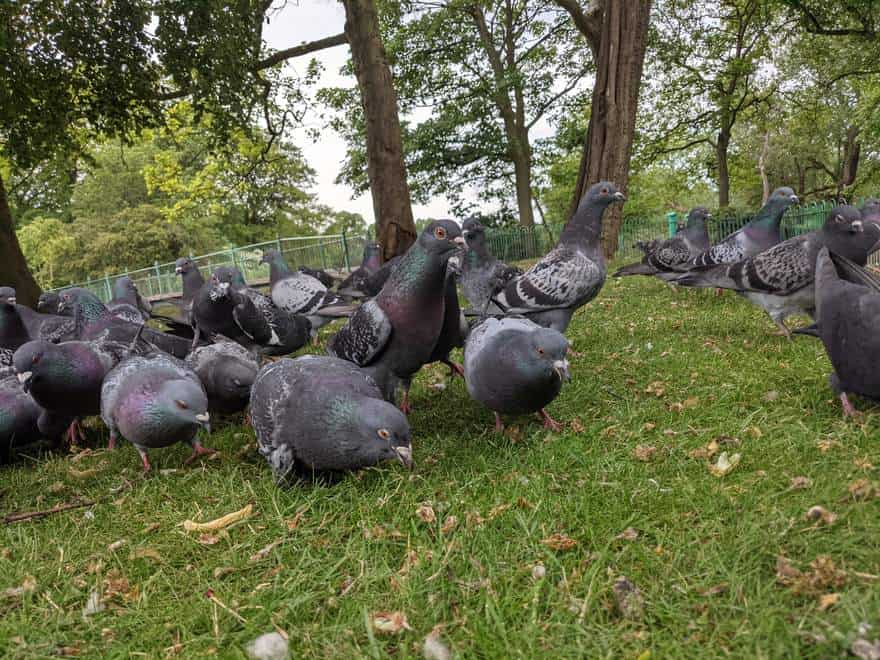
Feral pigeons, on the other hand, don’t have this kind of access to food. In general, they eat mostly seeds and grains, with the occasional insect or worm.
Feral pigeons also eat waste, such as food tossed on the ground or into garbage cans by humans.
Most experts caution against feeding feral pigeons because it encourages their population and isn’t a healthy diet for them.
Of course, pigeons also need access to a water source so you may see them near lakes or rivers in urban areas and fountains in the cities.
How Long Do They Live?
Pigeons in captivity, such as those you keep for pets, naturally live longer than feral pigeons because they are safe and well cared for in your home. A pet pigeon will typically live from 9-15 years however many pet pigeons have lived as long as 20 years.
However, feral pigeons have a lifespan of only three to six years. They may live longer in the wild if predation is low and humans leave them alone.
Feral pigeons may live longer in areas where there are fewer humans, such as farms or suburbs, rather than downtown cities.
The Reproductive Cycle of a Feral Pigeon
Breeding peaks in summer and spring, but pigeons tend to breed year-round. In general, feral pigeons typically build their nests on flat rooftops or along rocky coastlines.
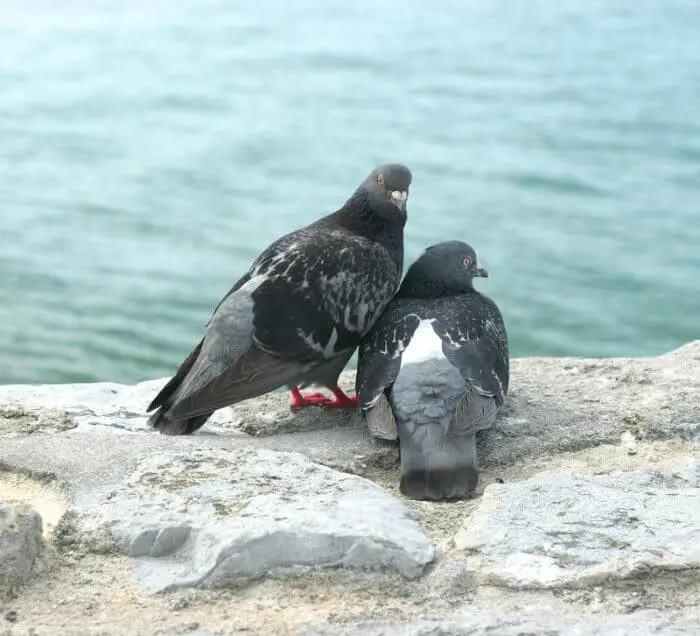
The male and female pigeon build the nest together and usually form long-lasting, monogamous pairs.
Usually, the mother pigeon lays two eggs per brood and the mother and father take turns incubating the eggs, with the mother taking care of them from midafternoon, through the night and into the mid-morning.
The father takes over from mid-morning to midafternoon so the mother pigeon can rest and eat.
The eggs are white.
Once the babies hatch, both parents take care of the babies, feeding them crop milk and watching over them until they’re ready to leave the nest.
The Life Cycle of the Feral Pigeon
Most pigeon babies leave the nest after about 30 days and usually look fully grown and much like adult pigeons when they fly away. This is why it’s rare to see a hatchling or baby pigeon.
Pigeons reach sexual maturity at approximately six to seven months of age and can begin breeding at the time, though it’s more common for them to wait until they’re about a year old to mate and reproduce.
In some cases, females that breed before they are a year old produce only one egg per brood, instead of the average two eggs.
Once the babies leave the nest, they start the cycle over again when they find their mate and raise their own hatchlings.
Predators of the Feral Pigeon
In towns and cities, humans are one of the biggest threats to feral pigeons. This is because many cities take pigeon control measures since they see the birds as pests and take action to get rid of them.
Feral pigeons that live in less populated areas may be safer from humans, but there are other predators that they have to be on the lookout for.
The peregrine falcon is one of the pigeon’s main natural predators because they make their home in many of the same places that pigeons do, including sea cliffs and tall city buildings.
The sparrowhawk may also hunt feral pigeons, though not to the same degree as the peregrine falcon.
The Flight Characteristics of a Feral Pigeon
While you may often see feral pigeons on the ground scavenging for food, they are quite fascinating fliers.
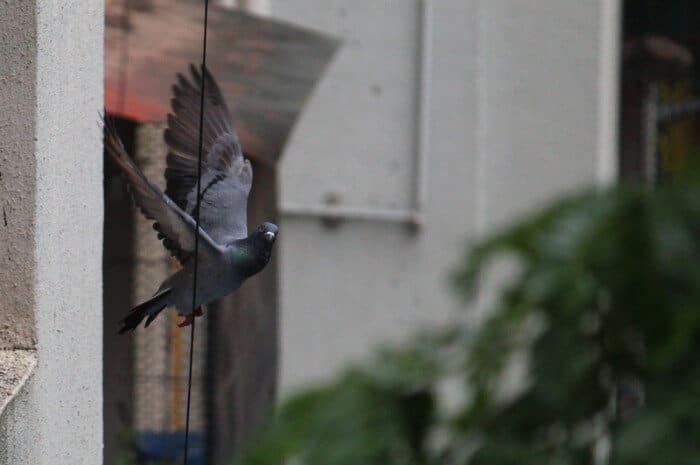
Pigeons can fly up to altitudes of 6,000 feet and typically fly at around 50 to 60 miles per hour, with speeds above 90 miles per hour recorded. The best racing pigeons have flown 600 to 700 miles in a day, though feral pigeons usually stay much closer to home.
Pigeons are good navigators and were used for many years to carry messages around the world.
Other Facts about Feral Pigeons
Pigeons are very intelligent birds and can be trained to pass a version of the mirror self-recognition test and to tell the letters of the alphabet apart.
Pigeons in the wild retain this intelligence, though you may find it hard to see it since they aren’t performing any of the wonderful things they can do, such as assisting in search and rescue missions at sea and carry messages across enemy lines during wartime.
Read our article on pigeon facts for more pigeon trivia.
Protecting Feral Pigeons
Most of the time, people are looking for ways to get rid of feral pigeons. Despite common belief, pigeons are pretty clean animals, and the risk of catching a disease from them is low for healthy people, although their droppings can carry some infections, so basic hygiene matters.
If their population grows too large, control can be done in humane ways to protect the feral pigeons and their way of life.
Contacting your local humane society or animal control officer is better than other methods, which can actually kill feral pigeons.
Feral pigeons live a fascinating lifestyle and there’s a lot to learn about them, whether you’re just curious or you want to try keeping pigeons as pets.
Taking care of the feral pigeon is as important as caring for any other animal and you can help by taking a stand for them.
Last updated 24 October 2026 · Types