
The Holle Cropper is a small cropper pigeon from the Netherlands, bred to look like a ball. It stands level on its toes, pulls its head back into a large inflated crop, and carries its short tail out behind like a handle. In Dutch it is the Holle Kropper, which means “hollow cropper”, after its hollow back.
The breed has a long Dutch history and a small following today. The Dutch rare breeds foundation lists it as threatened.
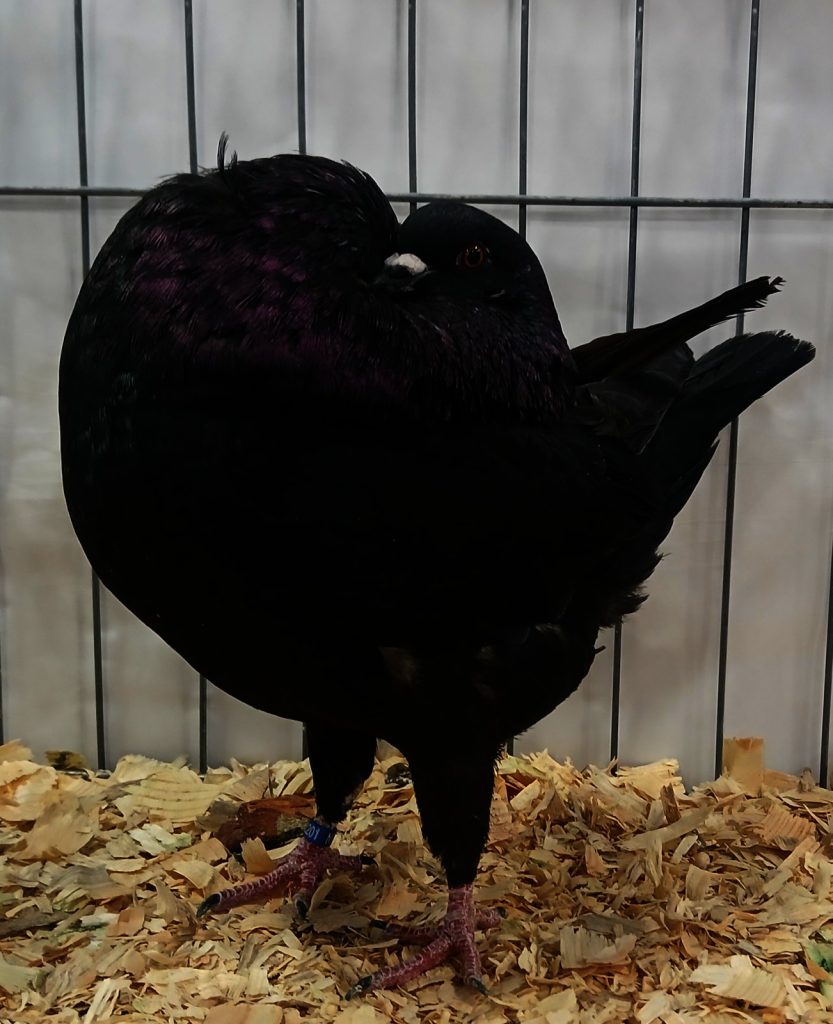
Holle Cropper at a glance
| Feature | Holle Cropper |
|---|---|
| Species | Domestic rock pigeon (Columba livia) |
| Origin | The Netherlands |
| Forerunner | The Uploper, a Dutch flying cropper |
| NPA group | Croppers and pouters |
| Shape | Horizontal body, hollow back, large round globe |
| Legs | Straight and close set, clean or lightly feathered |
| Markings | Self, pied or tiger splashed, in all standard colours |
| Status in the Netherlands | Threatened, about 250 breeding hens |
| Dutch club | Holle Kropper Club, founded 1904 |
History: from flying cropper to show bird
The Holle has deep roots. The Dutch rare breeds foundation (SZH) notes that the breed already appears in a painting by Melchior d’Hondecoeter from 1665.
Its forerunner was the Uploper. In 1735 the English writer John Moore described it as a good blower and flier that was found all over the Netherlands.
By the late 1800s there were three local types, known as the Hague, Amsterdam and Groningen types. A history of the breed by Jansma (2010) notes that the bird was often called the Dutch or Amsterdam balloon cropper at this time.
Holle Cropper timeline
- 1665The breed already appears in a painting by Melchior d’Hondecoeter.
- 1735John Moore describes the Uploper, the forerunner of the Holle, as a good blower and flier found all over the Netherlands.
- Before 1900Three regional types exist: the Hague, Amsterdam and Groningen types.
- 1904The Holle Kropper Club is founded in Utrecht on 20 January. Its standard replaces the regional types with one breed.
- About 1918A standard drawing by Van Gink fixes the main features that breeders still aim for.
- 1926Van Gink writes that the new ideal was reached within 20 years.
- TodayThe Dutch rare breeds foundation lists the Holle Cropper as threatened.
The Holle Kropper Club was founded in Utrecht on 20 January 1904. Its standard turned the regional types into one breed. Breeders wanted a hollower back and a longer, supple neck, and the bird became shorter and carried itself more level. According to Jansma, fantails and other breeds were crossed in, and later the Modena was used to fix the horizontal stance. The name “holle” only became common during the 20th century.
The breed’s friends’ group, Vrienden Holle Kropper Fokkers, credits a breeder named Tuyt with a simple test: a good Holle should fit inside a circle from every side. The standard drawing by Van Gink dates from about 1918, and in 1926 Van Gink wrote that the new ideal had been reached within 20 years.
The ball shape
Everything in the standard serves one outline. Seen from the side, the globe, neck, body and vent should join in a single round shape, with only the tail breaking it.
A ball with a handle: the shape in the standard
The NPA standard compares the bird to a sphere with the tail as a horizontal handle.
The globe is the inflated crop. It should be large, wide rather than high, and kept well filled. The neck is long and S-shaped, and it falls back into the hollow of the back so that the head rests in the middle of the globe. A narrow chest, a flat or rounded back, and a bird that fails to fill its globe are all faults.
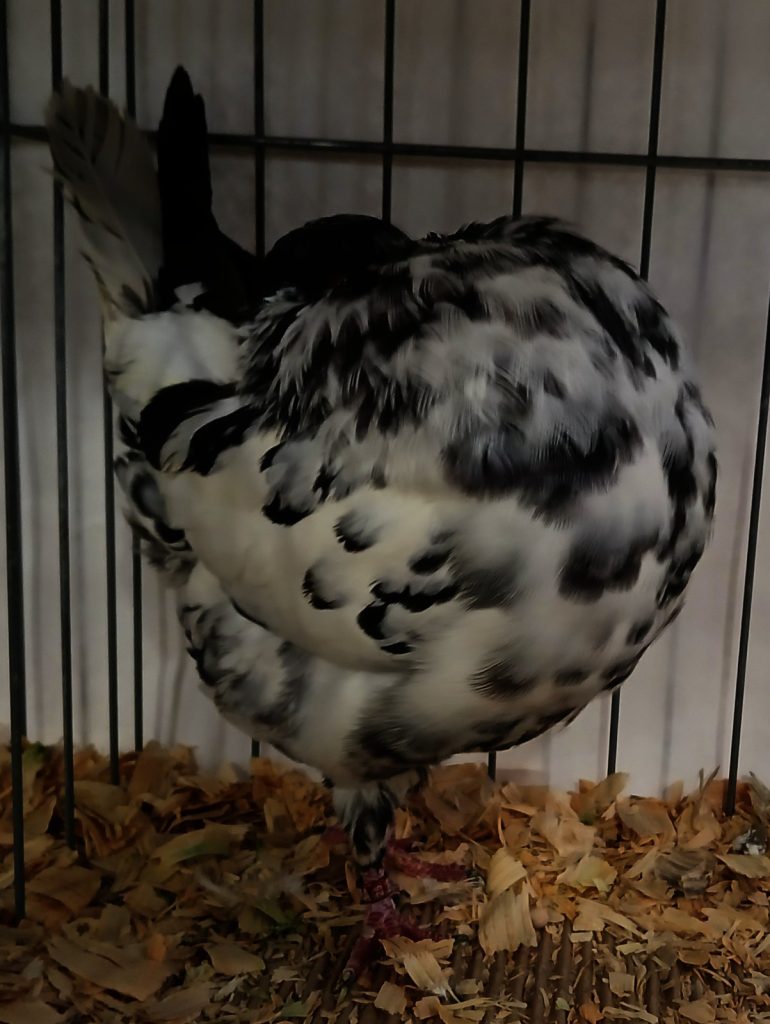
Pouters and croppers can blow up their crops much further than other pigeons. Our article on why pigeons puff up their chests explains the behaviour in general, and our pigeon anatomy guide shows where the crop sits.
How a Holle is scored
The NPA standard scores the Holle out of 100 points. Carriage, globe and body together make up 60 of them, so shape counts for far more than colour.
Where the 100 points go
- Carriage: 20
- Globe: 20
- Body: 20
- Legs, tail and wings: 15
- Condition, colour and markings: 15
- Head, eyes, beak and neck: 10
Lack of animation is also a fault. The standard asks for a bird that stands on its toes in an alert, jaunty way, with just enough movement of the neck to give the body a light trembling motion.
Colours and markings
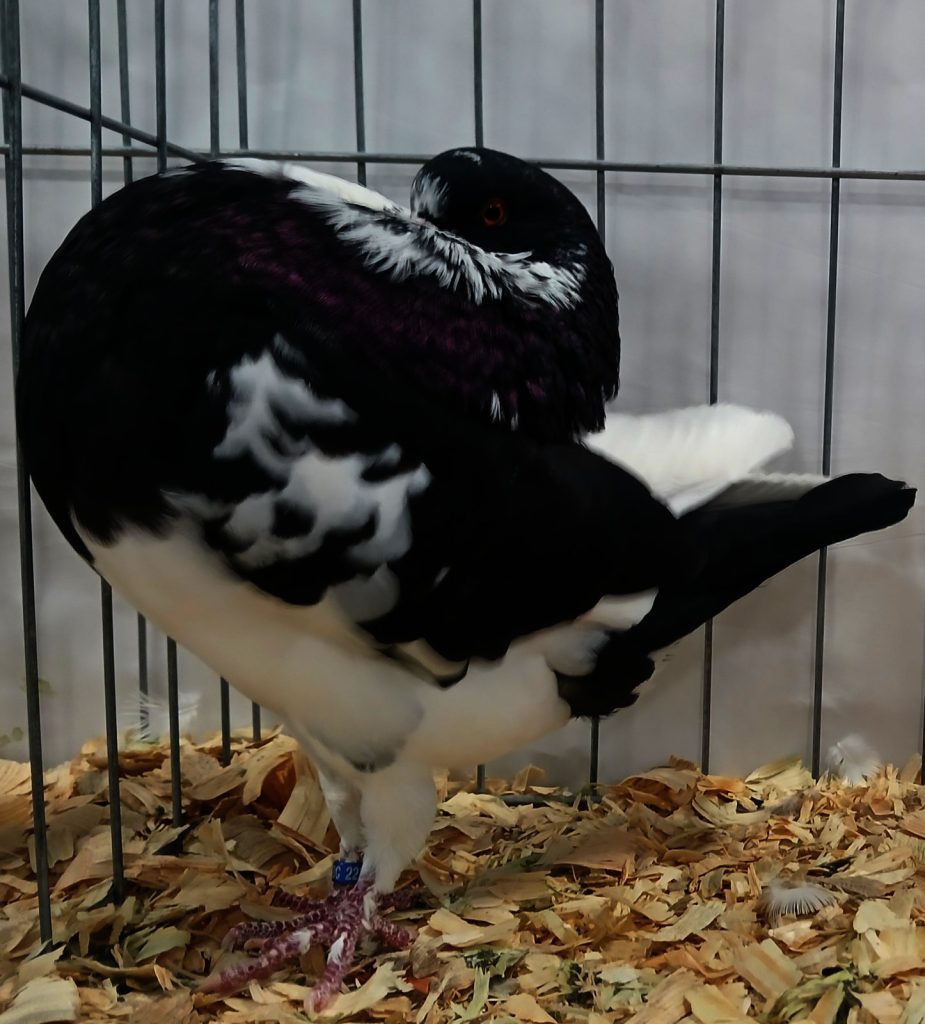
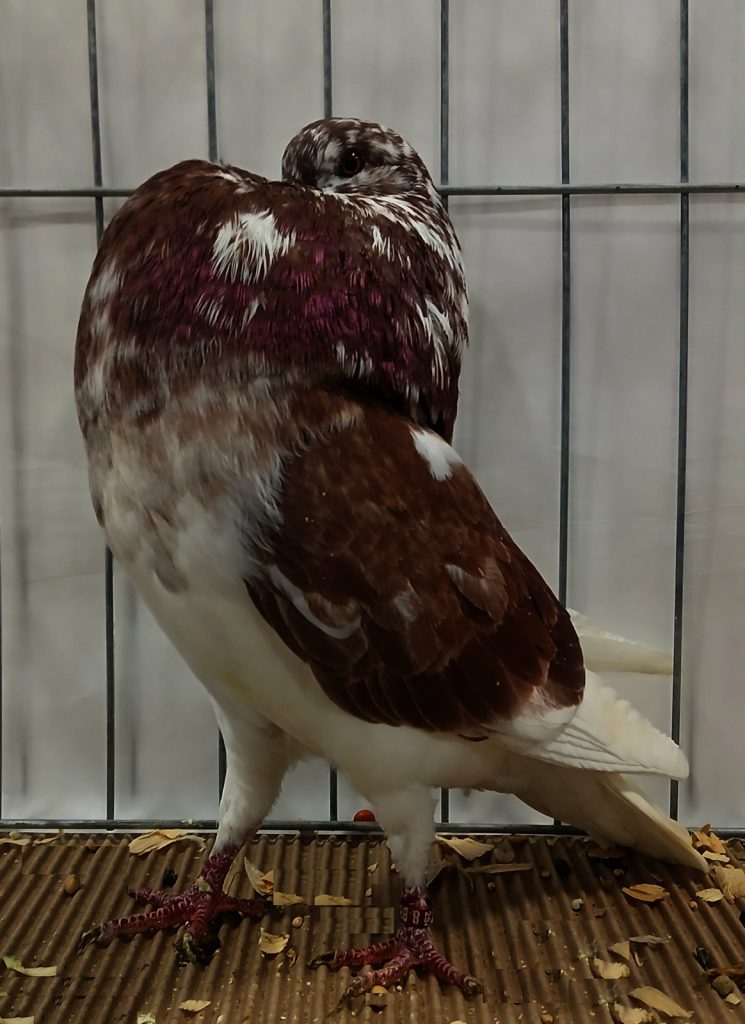
A Holle can be self coloured, pied like other pouters, or tiger splashed. All standard pigeon colours are allowed, and they should be bright, clear and even. The SZH counts 10 recognised colour varieties in the Netherlands.
Colours and markings
- Self (solid colour)
- Pied, as in other pouters
- Tiger splashed
- All standard pigeon colours
- Dark bull eyes in whites
- Yellow, orange or pearl eyes in other colours
Status in the Netherlands
The SZH, which keeps track of rare Dutch breeds, gives these figures for the Holle Cropper.
The Holle Cropper in the Netherlands
Figures from the Dutch rare breeds foundation (SZH).
The SZH also describes the Holle as temperamental but pleasant to keep. The cocks court with small dancing steps and jumps, with the tail spread. The foundation adds that the breed can be kept even in a small garden.
How it compares with other croppers
| Breed | Origin | Stance | Legs |
|---|---|---|---|
| Holle Cropper | Netherlands | Horizontal, on its toes | Clean or lightly feathered |
| Dutch Cropper | Netherlands | Medium height, almost horizontal | Heavy muffs |
| Norwich Cropper | England | Very erect, on tiptoe | Clean |
| Brunner Pouter | Bohemia and Moravia | Erect, about 60 degrees | Long, slender, bare shanks |
| English Pouter | England | Upright and very tall | Feathered |
Source: NPA Book of Standards.
The NPA standard for the Norwich Cropper says that breed came from the Powting Horseman, the Dutch Uploper described by Moore, or both. So the Holle and the Norwich may share an ancestor. For the most slender of the pouters, see our Brunner Pouter guide.
Care
Holles need a dry, airy loft, clean water, a good seed mix and grit. Our guide to what pigeons eat covers feeding.
Like other croppers, they can suffer crop problems if the crop does not empty properly. Learn the signs in our guide to sour crop, and ask an avian vet if a bird’s crop stays full.
Clubs and shows
In the Netherlands the breed is supported by the Holle Kropper Club and by the Vrienden Holle Kropper Fokkers (opens in new tab). The SZH breed page (opens in new tab) has the current status figures.
In the UK, the National Pigeon Association places the Holle Cropper in its blower section; see its judges list and show guidance (opens in new tab). The American standard is in the NPA Book of Standards (opens in new tab). Our types of pigeon guide lists other breeds.
Holle Cropper FAQs
What is a Holle Cropper?
It is a small Dutch cropper pigeon with a horizontal body, a hollow back and a large round crop. The standard describes it as a sphere with the tail as a horizontal handle.
What does “Holle” mean?
“Hol” is Dutch for hollow. The name refers to the hollow back that breeders selected for after 1904, and it came into general use during the 20th century.
Is the Holle Cropper rare?
Yes. The Dutch rare breeds foundation lists it as threatened, with about 250 breeding hens, and says numbers have been stable over the last 15 years.
How is the Holle Cropper different from the Dutch Cropper?
Both are Dutch, but the Holle is small and stands on its toes with clean or lightly feathered legs. The Dutch Cropper is one of the largest croppers and has heavy muffs.
What colours does the Holle Cropper come in?
All standard pigeon colours, as self, pied or tiger-splashed birds. Whites have dark bull eyes, and other colours have yellow, orange or pearl eyes.
Can you keep Holle Croppers in a small garden?
The Dutch rare breeds foundation says the breed can be kept even in a small garden. They still need a proper loft that is dry and has good airflow.