

Sour crop is a condition suffered by many species of birds including chickens, parrots and pigeons.
It is usually linked to an infection in the crop, and as it is a disruption to the digestive process of the bird, it is vital to recognise and treat it quickly.
What is the Crop and Its Purpose?
The crop is an important part of a pigeon’s digestive system (opens in new tab).
It is an extension to the oesophagus and part of the alimentary tract, the crop is a pouch where food is stored prior to digestion.
It is also known as the craw or, in scientific terms, the ingluvies.
This expanded, thin-walled muscular pouch is located near the gullet (throat) and is not usually visible in pigeons.
There are three main purposes of the crop in pigeons:
- Safety: It enables the pigeon to eat a lot of food quickly and then move on from the source meaning the bird doesn’t have to hang around in one place.
- Nutrition: It enables the bird to eat more food than it needs, reserving excess food for later when maybe food cannot be found.
- Breeding: It is where the crop milk is made and stored ready to feed baby pigeons.
What Is Sour Crop?
Sour crop is a common problem that pigeons can develop.
The crop slows down or stops emptying, and the food left inside it ferments and turns ‘sour’. A yeast (Candida) infection is often involved, either as the cause or as a result.
Common triggers include mouldy or spoiled food, hand-feeding mistakes in squabs (formula that is too cold, too much or given too often), and other infections such as canker that slow the crop down.
It usually happens when food had been stored for too long in the crop.
The food begins to break down and ferment causing an imbalance in the bird’s natural digestive bacteria and activating and increasing the candida fungus which is already present in the crop.
The fermented food tastes and smells sour.
Sour crop may also occur in young pigeons as a result of hand-rearing and feeding.
How Does Sour Crop Affect Pigeons?
Sour crop has a number of different negative impacts on a pigeon’s health and day-to-day life.
Some of the most common symptoms of the infection that a bird will display if unwell include:
- A crop that swells and looks to fill up like a balloon containing lots of water.
- A newly developed disinterest in food. The pigeon will not have the will to eat anything.
- A strong sour odour that will be immediately detectable if you open the pigeon’s beak and try to smell around the revealed area.
- A significant drop in total body weight, which will be as a result of the reduced eating habits that are being caused by the sour crop.
- The pigeon will begin to noticeably flick and shake its head from side to side, an indicator of the discomfort that it is feeling from its swollen and fluid filled crop.
- Some adult pigeons in discomfort may begin to pull out their feathers.
- There may be frequent periods of vomiting, and the vomit will often have a putrid odour thanks to the internal souring process that is taking place.
- In more mild cases of the infection, you might also notice signs of thrush developing in small white coloured spots in the throat. This is often mistaken by some to be canker.
How to Treat Sour Crop in Pigeons
You should always try to seek the help and guidance of a veterinary surgeon if you suspect that your pigeon is suffering from sour crop.
Sour crop can kill, especially in squabs, so treat home care as first aid only, ideally after speaking to a vet, while you arrange an appointment at a pigeon friendly animal clinic.
1. Fasting:
For an adult pigeon, remove food for up to 12 to 24 hours, but keep fresh water available unless your vet says otherwise. Never fast a squab.
This will allow some time for the bird’s crop to naturally begin to empty as much as possible.
If successful, that can reduce the swelling and some discomfort compared to if the bird had continued to eat, especially if spoiled food started the problem.
You should isolate your bird, both so you can control what it eats and because an underlying infection such as canker can spread to other birds.
2. Apple Cider Vinegar:
Some keepers add a little apple cider vinegar to the drinking water once the crop has emptied. Don’t squirt liquids into the beak with a syringe unless a vet has shown you how, as the bird can inhale them.
Apple cider vinegar is popular with pigeon keepers (opens in new tab), who believe it makes the crop less friendly to yeast, but there is little scientific evidence for this and it is not a treatment for sour crop.
Please note that it is important you follow the specific dilution guidelines on the bottle of whichever ACV you choose.
3. Break the fast:
Once the crop has emptied, let the pigeon drink water. The water should be lukewarm, and at first they should only have a few sips.
Also, give them around a teaspoon-sized portion of soft solid food.
They will have been fasting for a long time at this point, so reintroducing food on a small scale is important to prevent any potential accidents and incidents of overfeeding or over-drinking.
Add to this, the fact that the crop will likely still be inflamed.
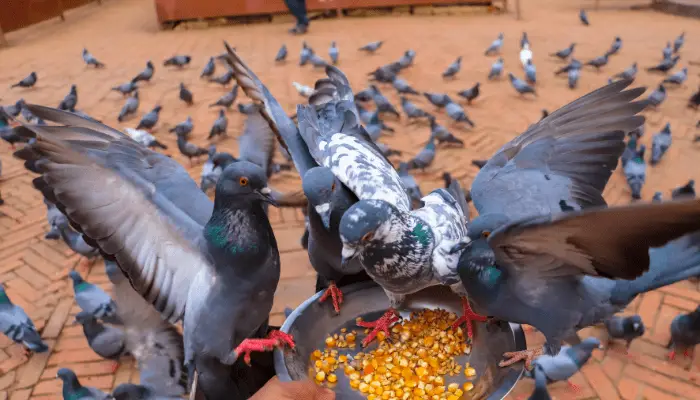
Until you are able to get your pigeon properly assessed and treated by a vet, all you can do after performing these actions is monitor the progress and status of the pigeon, checking routinely to make sure that the sour crop has diminished or vanished.
Over time, you can begin to gradually build up back to normal rations of both food and water for the bird.
Other things to know:
- Gentle crop massage is sometimes used to break up the contents, but only do it if a vet has shown you how: pushing the contents up can make the bird choke or inhale fluid.
- Avoid sugary remedies such as molasses or honey, which can feed yeast.
- Don’t give Epsom salts or oils by syringe without veterinary advice.
- If the crop still hasn’t emptied after 12 to 24 hours, the bird needs a vet, who may need to empty the crop safely.
Medicines depend on the cause, so they should be chosen by a vet, and most of them need a prescription. Common options include:
- Nystatin, the usual first choice for a yeast infection of the crop
- Fluconazole or other antifungals for stubborn yeast infections
- Antibiotics, but only if a bacterial infection is confirmed, as unnecessary antibiotics can make yeast worse
- Canker treatment, if that is the underlying cause
How to Prevent Sour Crop in Pigeons
An important part of preventing digestive problems in pigeons is to make sure that they have access to good quality grit at all times.
Pigeons need grit in the gizzard to grind whole seeds, so clean, good quality grit helps their digestion as a whole.
Alongside good quality grit you also, of course, want to make sure that the quality of the food that you give your pigeons is also top-notch.
Ensure your pigeon has a good diet with a varied mixture of recommended grains, seeds, fruits and other vegetation to give them the best chance of not developing sour crop.
The key thing when it comes to the food that you provide for the pigeons is that you make the effort to check that no section of the ingredients or mixture has turned mouldy.
If any food you find has gone bad, you need to dispose of it immediately.
If other birds in your loft/coop/cage still have some of the spoiled feed, dispose of it immediately and clean the feeders thoroughly before filling them with fresh food.
You can greatly reduce the risk of sour crop if you are vigilant and fastidious about the way you care for your birds.
Don’t cut corners when it comes to the quality of the food and grit that you provide, your pigeons will be grateful!
This guide is general information. If a bird is injured or seriously ill, contact an avian vet or a wildlife rescue as soon as you can.
Sources:
- Force-feeding and candidiasis in pigeons (opens in new tab)
- Systemic Clinical and Metabolic Diseases (opens in new tab)
Last updated 23 October 2026 · Health