
Pigeon racing is legal in the UK and in most other countries. Plenty of lofts are kept clean, and plenty of fanciers spend years raising birds they know individually.
The question is not whether every loft is a scene of neglect. It is whether the sport, as it is actually practised, causes avoidable suffering and death on a scale that is hard to defend.
- 8.6% / 0.447%Taiwan sea races: 8.6% finished in time in a 2024 winter qualifier (7,712 of nearly 90,000). 0.447% completed every stage of the 2024 spring southern series (315 of 70,450).
- 4,000 of 9,000Peterborough to the North East, 19 June 2021: about 4,000 of about 9,000 birds had arrived in the first reports later that week.
- 3,000 to 4,000Of about 11,000 Belgian entries in the Narbonne race of 29 July 2022, the Belgian federation said about 3,000 to 4,000 were lost.
- Almost twice as highSerum corticosterone, a stress hormone, was almost twice as high in pigeons raced over medium and long distances as in unraced birds from the same lofts, and was still raised a month after the last race.
How a pigeon race works
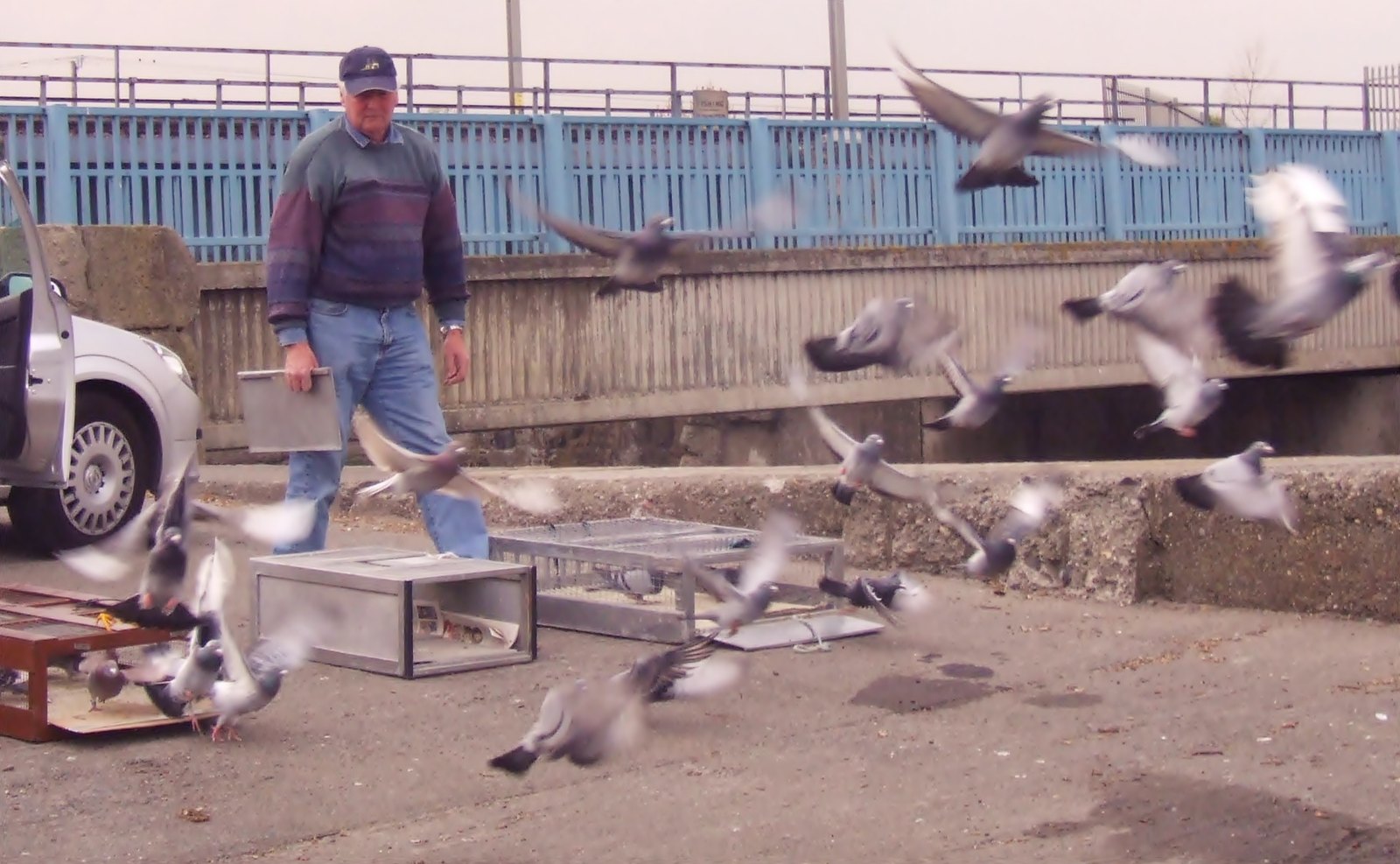
Racing pigeons are domestic homing pigeons, selectively bred from the rock dove (Columba livia). They are taken from their home loft, transported to a liberation point, and released together.
The winner is the bird that returns at the highest speed, usually timed when it enters the loft. Races may be a few dozen miles or well over 500 miles.
Some of the most prestigious events, such as the Barcelona race back to Britain and northern Europe, ask experienced birds to cross mountains and the sea. Our guide to how far homing pigeons can fly sets out the distances involved.
Widowhood
Fanciers often try to sharpen a bird’s urge to get home. In the widowhood system, a pair is split up and one bird is sent to race back to its mate and its nest box.
The Royal Pigeon Racing Association (opens in new tab) has described this as a way of using the stronger pull of territory and the pair bond, especially in hens on long races. The birds are not volunteers.
They are, as the RPRA’s then manager Stewart Wardrop put it in 2013, sent only if the fancier thinks they have a genuine chance of getting back. SPCA New Zealand (opens in new tab) has warned that the separation may cause distress, because it uses the pair bond to make the bird fly home with greater urgency.
How many pigeons do not come home?
There is no single official return rate for the sport as a whole. Federations do not routinely publish a long-run figure for birds released against birds later found safe at home.
The best-documented seasonal picture still comes from Scotland.
The Scottish season study
In 2002, researchers at the Central Science Laboratory, working for Scottish Natural Heritage and the Scottish Homing Union, collected end-of-season figures from 28 lofts in the main Scottish racing areas. The lofts reported losing, on average, 56% of the birds they held at the start of the season.
About 8% were lost from the loft area, 16% on training flights and 35% in races. Those three averages do not add exactly to the overall 56%, because some lofts did not give a full breakdown. Young birds were lost at a higher rate than older ones.
An archived BBC report on the study (opens in new tab) summarised those overall losses at the time.
The authors themselves urged caution. Some loft records were inconsistent, and the study lofts were larger than the Scottish average, so 56% should be read as a well-documented sample, not a census of every loft.
“Lost” here means the bird was no longer in the loft at the end of the season. It is not a confirmed death count. An earlier study summarised in the same report put seasonal losses for the UK as a whole at around 52%, and for Scotland at 60%, though later reviewers questioned some of its methods.
In a 2013 BBC examination of the cruelty question (opens in new tab), Wardrop said a bad race would not normally lose more than 75% of the birds, and that sometimes only a few per cent go astray.
Individual races
Individual races show how wide that range can be.
- 1995
Barcelona international
250 of 774 starters made it home.
- Mid-1990s
Shorter races in the Netherlands
Losses of 10-20% can occur even on shorter races, according to Jos Gorssen of Wageningen Agricultural University.
- 19 June 2021
Peterborough to the North East
About 9,000 birds were released; around 4,000 had arrived in the figures reported later that week.
- Same day
Swindon to Swansea
Of 1,400 birds, only about 200 to 300 made it home in the first reports.
- 29 July 2022
Narbonne (France) to northern Europe
The Belgian federation said about 3,000 to 4,000 of roughly 11,000 Belgian entries were lost, and called a widely quoted figure of 20,000 “completely false”.
- 2024-25
Taiwan sea races
Authorities have cited loss rates as high as 98% in some races. A 2024 winter qualifier in the north had 7,712 of nearly 90,000 birds finish in time (8.6%). In the 2024 spring southern series, 315 of 70,450 birds completed every stage (0.447%). One club qualifier finished 15 of 1,349 (1.11%). GPS rings from nine clubs on a first qualifier were back in time for 37.7% of birds, with 83.9% of rings later recovered. The national racing body has said about 60% of birds are registered as returning by the end of the season.
The Guardian, 29 August 2025 (opens in new tab); The Reporter (opens in new tab); PNN / PTS (opens in new tab)
A quiet domestic race and a long sea race are not the same thing, and it is misleading to quote one number as if it covered both. First-day returns and later recoveries also differ.
After the Narbonne release, the Belgian federation’s president, Pascal Bodengien, said some birds would come back in the following days, but that “the majority are definitively lost”.
the majority are definitively lost
After the British losses of 19 June 2021, the RPRA hoped that most birds would find their way home given time, but later told The Independent it could not confirm a complete total. Some of those birds were later reported in Ireland, the Netherlands and Majorca; at least one from the Peterborough race was found dead.
Losses in training
Birds also go missing on ordinary training flights, not only on race day. In the Scottish sample, training accounted for a smaller share of seasonal losses than racing, but it was still a larger share than losses around the loft.
Young birds, which have less experience, were more likely to be lost in both settings.
Why do birds go missing?
The causes overlap, and a bird that fails to home is often written off without a post-mortem. The evidence we do have points to several recurring factors:
- Weather, including releases into a forecast storm
- Disorientation, including contested claims about magnetic disturbance
- Birds of prey, which kill some pigeons but do not explain most losses
- Exhaustion, thirst and collisions
- Distance and open water, especially in sea races
Weather
Weather is the most straightforward. The Narbonne birds were released on a morning when a storm lay about 18 miles (30 km) up the route.
The Belgian federation blamed the organisers for letting them go despite a poor forecast, described the result as a catastrophe, and said the matter would be raised with the animal-welfare minister in Wallonia. The organisers said the release had been agreed with officials from several countries, and that later weather would have been even harder.
Navigation
Navigation is more contested. Homing pigeons can use the Earth’s magnetic field, among other cues, and a strong geomagnetic disturbance could in principle throw them off.
After 19 June 2021, when many British races lost large numbers of birds on a day some fanciers described as looking fine, the RPRA suggested solar-wind activity. A Met Office spokesperson later told The Times, in a follow-up by The Independent (opens in new tab), that space weather in those weeks had been “nothing unusual” and only low-level, routine geomagnetic activity.
The cause of that day’s losses has not been settled.
Birds of prey
Birds of prey kill some racing pigeons, but they do not account for most of the disappearances.
The same Scottish study estimated that sparrowhawks accounted for about 0.7% of the Scottish racing pigeon population, and that peregrines took a minimum of about 1.2%, based on rings recovered from a sample of eyries. The researchers were clear that the peregrine figure was a minimum.
Even so, raptors were a small part of the 56% seasonal loss. A substantial share of pigeons found at peregrine sites also appeared to have already strayed off the expected line of flight.
Exhaustion, thirst and collisions
Exhaustion, thirst and collisions are harder to count, because dead birds are not handed in. Wildlife hospitals that have taken in racing pigeons have reported very low body weights in some of them, and collisions with wires, buildings and vehicles in a large share of the birds brought in alive.
Young flocks on training flights are thought to be especially prone to hitting obstacles.
Distance and open water
Distance and open water make all of this worse. A bird that comes down tired over farmland may find food, another loft, or a person willing to help.
A bird that comes down in the English Channel, or in the Taiwan Strait, has a far smaller chance. Taiwan moved its racing offshore in the late 1990s, lifting large numbers of birds onto boats so that most of the course would be over the sea.
Animal-protection groups there have called for those sea races to be stopped. The chair of the national racing body has said he would support a return to land races if that meant fewer birds being lost or injured.
Our article on whether homing pigeons get lost looks at individual cases, including birds found thousands of miles off course.
Injuries, strays and birds that come back late
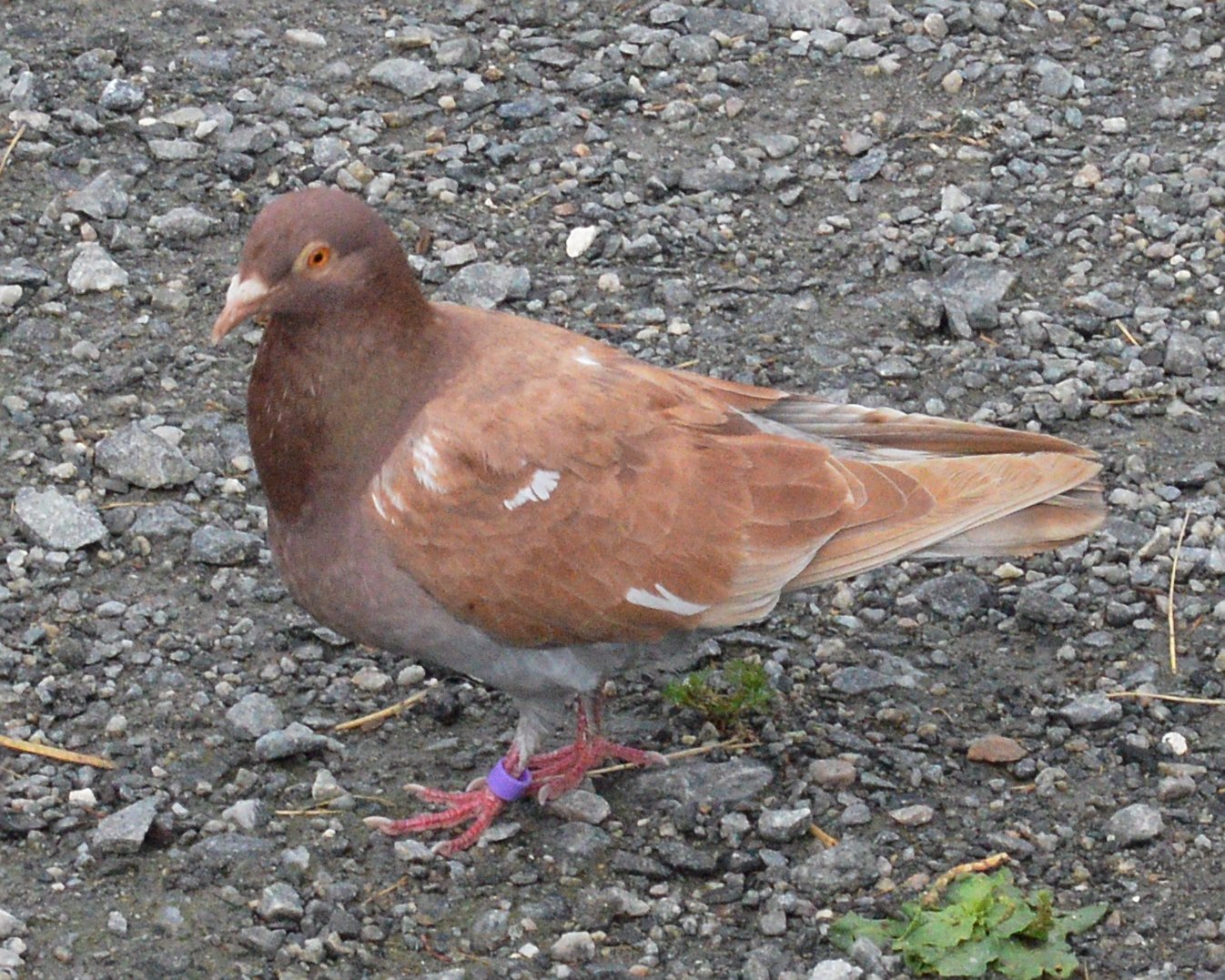
Not every missing bird is dead. Some rest and then fly on. Some enter another loft. Some are picked up by members of the public. Some become feral.
The RPRA runs a stray-reporting service (opens in new tab) for birds with GB rings, and the other UK and Irish unions have their own contacts. In the UK, RSPCA advice (opens in new tab) is to give a healthy-looking racing pigeon time, food and water, and to report it if it does not move on, or to take an injured bird to a vet.
What happens after a report is a different question. Racing rules treat recovery of a stray as the owner’s responsibility.
We could not find published official figures for how often owners collect a reported bird, refuse it, or ask for it to be put down. Rescue groups say refusals and killings happen. That is plausible, given how the sport selects birds, but we have not seen a systematic published count, so we do not treat a particular rate as fact.
Stress in birds that finish
The birds that do come home late are not necessarily unharmed. A 2021 study of 96 racing pigeons from four flocks, published in Animals (opens in new tab), found that serum corticosterone, a stress hormone in birds, was almost twice as high in pigeons that had raced medium and long distances through the season as in birds from the same lofts that were not racing.
The average level was 59.4 nmol/L within five hours of a race finish, and was still 37.5 nmol/L a month after the last race.
Culling and breeding
A competitive loft does not keep every bird it breeds. Space is limited, and fanciers select for speed and homing. Birds that are too slow, that fail to home reliably, or that are simply surplus are often killed.
In the 2013 BBC report, this was the first category of accusation: PETA footage that appeared to show owners snapping the necks of slower birds, plus a second-hand account of a bird being shot on a roof so that its race ring could be read. Wardrop’s response was that any proven maltreatment should be punished, and that in a large membership some people will “do silly and stupid things”, but that the vast majority look after their animals.
A 2023 paper in Sport, Ethics and Philosophy (opens in new tab) by Jan Deckers and Silvina Pezzetta goes further, arguing that the competitive pressure itself creates a strong incentive to kill birds that are not in their interest to keep, and that an ethical form of the sport is not possible.
That is a moral conclusion, not a survey of lofts. The narrower factual point is harder to dodge: killing of underperforming birds is a documented part of racing practice, not only an abuse found in a single film.
There is a difference between a quick, competent killing and a slow or panicked one, and animal-welfare law in the UK requires animals to be protected from unnecessary suffering. The RPRA does not publicly defend wanton cruelty.
The welfare problem is that the logic of the race, season after season, produces birds for which the fancier no longer has a use.
Transport and long-distance races
Before a race, birds may spend many hours in baskets on a lorry. In 1995, Jos Gorssen, then at Wageningen Agricultural University, told New Scientist that the main problem he found was the lack of drinking water during transport, combined with crowding and poor ventilation.
Dehydrated birds overheated more easily. “Ten pigeons produce as much heat as a 50-watt light bulb,” he said. He also said transporters had spoken privately of finding hundreds of birds dead in crates on arrival.
Jim Hooper, then secretary of the British Barcelona Club, agreed that some local transporters packed birds tightly into poorly ventilated lorries, and described his own practice of using a modified vehicle, fewer birds per basket, and watering at the ferry and in Barcelona.
Those findings are 30 years old, and they should not be read as a description of every convoy today. The RPRA’s 2026 code of conduct for convoyers and liberators (opens in new tab) requires food and water to be available, inspections at least every eight hours, no bulk stacking of crates, and compliance with the Welfare of Animals (Transport) Order 2006. Any bird that dies in transit must be recorded.
The underlying risks have not disappeared. Long journeys, hot weather, delays and overcrowding can still exhaust birds before they have flown a mile.
RSPCA Australia and SPCA New Zealand both argue that races should not be held over excessive distances, in bad weather, or over unsuitable terrain. One-loft races, in which young birds from many owners are sent to a single loft and then raced back to it, raise the same questions of distance, weather and what happens to birds that do not make the cut; our explainer on one-loft races covers how the format works.
Drugs and cheating
Doping is a documented problem, especially where prize money is high. A 2022 review in Veterinary Sciences (opens in new tab) by Didier Marlier, of the University of Liège, describes Belgium as a leading country both in racing and in doping control.
Corticosteroids, often given as eye drops or in drinking water, have been used to delay the natural moult of flight feathers so that young birds keep a full wing for longer. The review also discusses anabolic steroids, painkillers, bronchodilators and other drugs, and sets out the Belgian federation’s testing rules.
Corticosteroids, anabolic steroids, bronchodilators, beta-agonists and amphetamines, it concludes, should remain banned, at least during the racing season.
This is not only a paper concern. In 2001, The Guardian (opens in new tab) reported Belgian police raids on lofts and feed suppliers after traces of illegal substances were found in random post-race tests.
In Taiwan, The Guardian’s 2025 investigation (opens in new tab) described the use of drugs to improve performance among a wider set of cheating methods, including cloned tracking chips, and a legal grey area around unofficial betting. The existence of testing and raids shows that governing bodies have tried to police the problem, and that the incentive to cheat has been strong enough to persist.
How the rules differ
Pigeon racing is not banned in the UK, Australia, New Zealand, Belgium or Taiwan. The tightness of the rules, and the official view of the welfare risks, varies.
| Country | Legal status | What official or welfare bodies have said |
|---|---|---|
| United Kingdom | Legal. The Animal Welfare Act 2006 applies to kept birds. Several unions govern racing, of which the RPRA is the largest | The RPRA runs stray reporting and convoyer rules, and in 2013 said proven maltreatment should be punished and that it did not consider the sport cruel. The UK RSPCA publishes advice on found and injured racing pigeons (opens in new tab). In 2013 it told the BBC that the wider cruelty debate was not really its territory. We have not found a current formal UK RSPCA position as detailed as the Australian one |
| Australia | Legal. Codes of practice exist but, according to RSPCA Australia, are voluntary and not enforceable by government or the RSPCA | RSPCA Australia (updated 2019) (opens in new tab) says racing poses many welfare risks and calls for regulation to prevent races over excessive distances, in bad weather or over unsuitable terrain. It notes that the fate of birds that do not return is unknown, and that birds used to an aviary may struggle to survive in unfamiliar country |
| New Zealand | Legal | SPCA New Zealand (opens in new tab) supports keeping pigeons if their needs are met, but is concerned about fatigue, dehydration, disorientation, predators and the distress that widowhood may cause. It also argues against excessive distance, bad weather and unsuitable terrain |
| Belgium | Legal, and a world centre of the sport. The national federation (KBDB/RFCB) runs anti-doping controls | After the 2022 Narbonne race, the federation called the outcome a catastrophe, blamed the organisers for the release, and said the case would be taken to the Walloon animal-welfare minister |
| Taiwan | A large industry in a legal grey area, with official prize pools and, according to the authorities, a great deal of unofficial betting | Offshore sea races have been the main format since the late 1990s. Authorities have cited loss rates as high as 98% in some races. The national racing body has said about 60% of birds are registered as returning by season’s end, and its chair has said he is willing to discuss a move back to land races |
What racing organisations say
The sport’s defence is consistent, and parts of it are fair.
Fanciers point to the care taken in a well-run loft: regular food and water, veterinary treatment, and birds that are handled throughout their lives. Wardrop told the BBC he would not mind being a pigeon.
Jeremy Davies, the professional trainer in that report, said an unhappy bird would “sit there all glum”, and that if it were not happy it would stay in Barcelona in the sun. The joke has an obvious limit: a bird that is tired, lost, or over water does not get a meaningful choice.
Organisations also stress that a bird which fails to clock in on the day is not necessarily dead, and that tracking has improved. After the June 2021 losses, Ian Evans of the RPRA said tired birds may rest at another loft and be sent on when they are fit.
The Taiwan racing body’s chair, Wu Chung-ming, has made a similar point: late finishers are sometimes counted as losses in headline figures. The GPS recovery rates reported by The Reporter support that caution, at least for birds wearing those rings.
They do not erase the very low in-time finish rates in the sea races, or the birds whose rings are never recovered.
On proven cruelty, official voices have been clear. Wardrop said it should be punished. Wu has said mistreatment and theft are “terrible to us too” and that he wants to work with welfare groups.
After Narbonne, the Belgian federation did not shrug off the losses; it called them a disaster and went after the organisers. None of that answers the harder charge: that sending large numbers of birds out, through weather or over the sea, in a season when more than half may leave the loft and not return, is itself the welfare problem.
Are roller and tumbler pigeons having seizures?
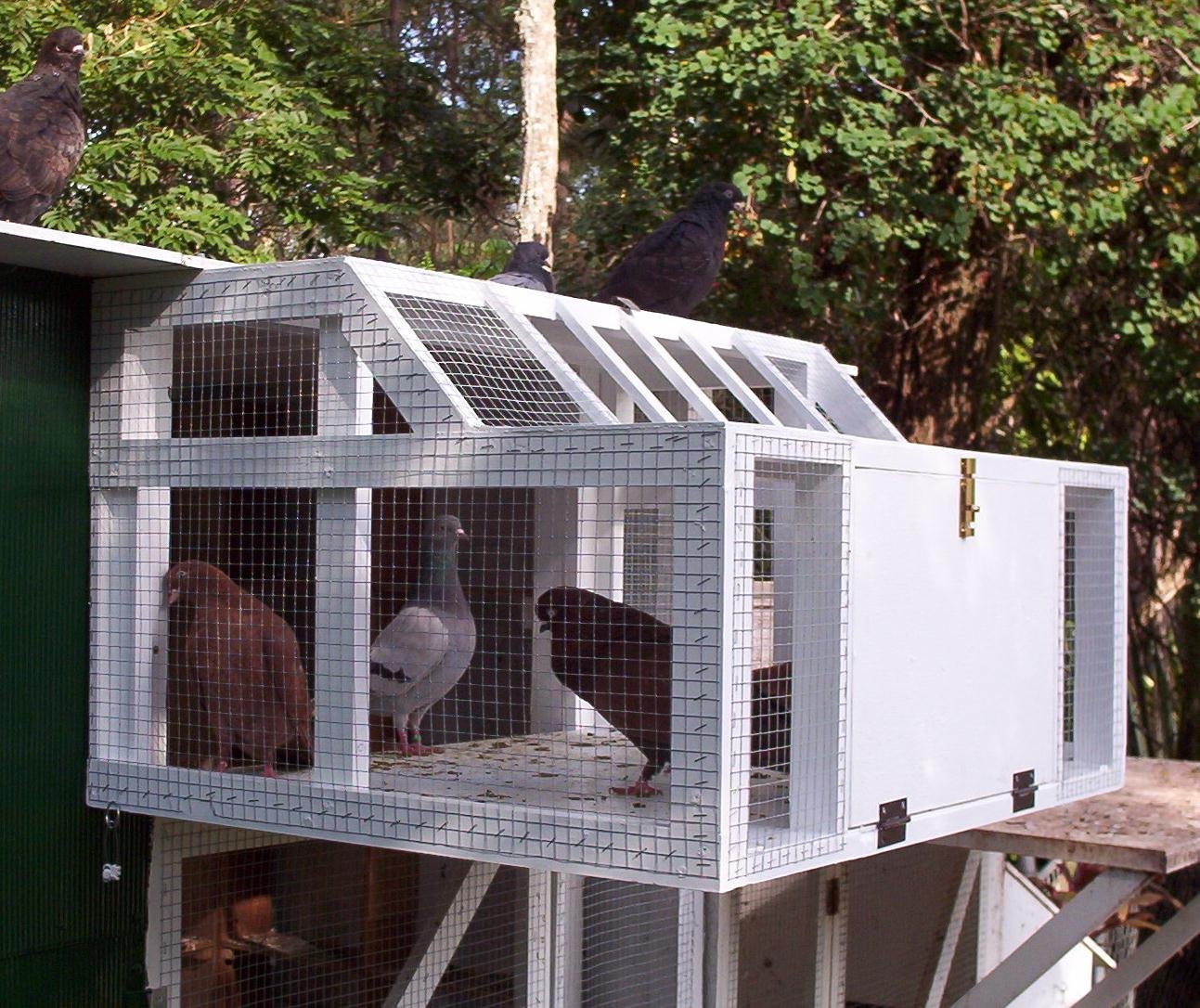
Racing is not the only pigeon pastime with a welfare argument attached. Rollers and tumblers have been bred to somersault in the air, or, in the case of parlour rollers, along the ground.
Critics sometimes call this a seizure disorder that has been deliberately bred into the birds. The scientific literature treats it as a heritable movement disorder rather than proven epilepsy.
A 2024 genetics report in Science News (opens in new tab), covering work by Atoosa Samani and colleagues at the University of Utah, describes parlour rolling as a progressive condition that appears after hatching and can leave the birds unable to fly. Samani said it is “definitely a movement disorder, and it does not have any good aspects to it.”
The team found at least five stretches of DNA involved, but not yet a single causative gene. Flying rollers, such as the Birmingham Roller, can recover in the air after a tumbling run; birds that cannot stop, known as rolldowns, are a recognised risk.
We have not seen a solid published basis for calling the trait an epileptic seizure. Our Birmingham Roller and tumbler guides cover those breeds in more detail.
So, is it cruel?
It depends what you mean by cruel, but the evidence does not give the sport a clean bill of health.
Day-to-day care in a good loft can be conscientious. Many fanciers are attached to their birds, and some of the worst race days are treated as disasters by the people who entered them.
That is not the same as showing that the harm is rare, or that it is only the work of a few bad owners.
What the evidence shows
- In the best-documented seasonal sample, lofts reported losing a mean of 56% of their starting birds, mostly in races and training.
- Some long, storm and sea races have had very low in-time returns, sometimes only a small minority.
- Slow or surplus birds are often killed. This is a documented part of racing practice, not only an isolated film.
- Stress hormone levels were almost twice as high in medium and long-distance racers, and were still raised a month after the last race.
- Raptors kill some birds but accounted for only a small share of the Scottish seasonal losses.
What is disputed or unknown
- How many “lost” birds later return, live as ferals, or die is not known from official totals.
- The cause of the British losses on 19 June 2021 has not been settled. The RPRA suggested solar-wind activity; the Met Office said space weather that week was not unusual.
- There is no published official rate for owners refusing reported strays.
- Transport problems recorded in 1995 should not be read as a description of every convoy today, though the underlying risks remain.
- Whether the harm amounts to cruelty is, in the end, a judgement, not a single measured fact.
Whether that amounts to cruelty is, in the end, a judgement about what is acceptable to inflict on a bird for a sport. Racing organisations say the losses are a risk of homing, not a measure of neglect, and that care in the loft counts for a great deal.
Welfare bodies such as RSPCA Australia and SPCA New Zealand stop short of a UK-style legal ban, but they do not treat the risks as trivial: they want tighter limits on distance, weather and terrain. Deckers and Pezzetta argue that the competitive incentive makes serious harm unavoidable.
A narrower conclusion is enough here. Pigeon racing, as it is often practised, causes serious welfare harm. The losses are not a rare accident, and they are not explained away by hawks or by a single bad storm.
Changes that would reduce that harm include:
- Shorter races
- Tighter weather limits
- An end to sea racing
- Better transport
- An end to killing birds simply because they are slow
Whether those changes would leave a sport that is still worth defending is a question the evidence now presses on the people who run it.
A similar argument has already been had over ceremonial dove releases, where the birds look beautiful in the moment and then have to get home.
Is pigeon racing cruel? FAQs
Is pigeon racing illegal in the UK?
No. It is legal, and several unions govern it. Keepers still have to comply with animal-welfare law, including the duty to protect animals from unnecessary suffering.
Why do so many racing pigeons go missing?
Weather, exhaustion, disorientation, collisions, inexperience and, in some races, open water are all documented factors. Birds of prey kill some birds, but studies in Scotland found they accounted for only a small share of seasonal losses. A bird that fails to clock in on the day may still return later, or be found far off course.
What happens to racing pigeons that do not win?
Birds that are too slow, unreliable or surplus to the loft are often culled. Others are kept for breeding. A bird that fails to return may die, become feral, rest at another loft, or be picked up and reported as a stray.
Did a solar storm cause the British losses on 19 June 2021?
It has not been shown to have done so. The RPRA suggested solar-wind activity at the time. The Met Office later said space weather in those weeks was not unusual. Some birds were later found a long way off course, and a complete official total of returns was never published.
What should I do if I find a racing pigeon?
Offer seed and water, keep pets away, and give a healthy bird a chance to rest and leave. If it stays, or if it is injured, note the full ring number and report it to the relevant union, or take an injured bird to a vet. The details are in our guide to found racing pigeons.
Is the tumbling of roller pigeons a seizure?
Research describes parlour rolling as a heritable, progressive movement disorder, not as proven epilepsy. Flying rollers can recover after a tumbling run, but birds that cannot stop are at risk. The trait has been deliberately selected for.
Are sea races and very long races worse for the birds?
The published finish rates say so. Taiwanese sea races have produced in-time returns of a few per cent in some events, and authorities have cited loss rates as high as 98%. Channel and other long international races have also produced very heavy losses when weather or distance turns against the birds.
Last updated 10 November 2026 · Racing