
The only sure way to keep pigeons off your plants is to cover them: taut netting, a fruit cage, a cloche or wire mesh over the plant, according to the RHS (opens in new tab). Scarers and sprays give short-term help at best. Act as soon as you see torn leaves, because pigeons can do serious damage quickly (Which? (opens in new tab)).
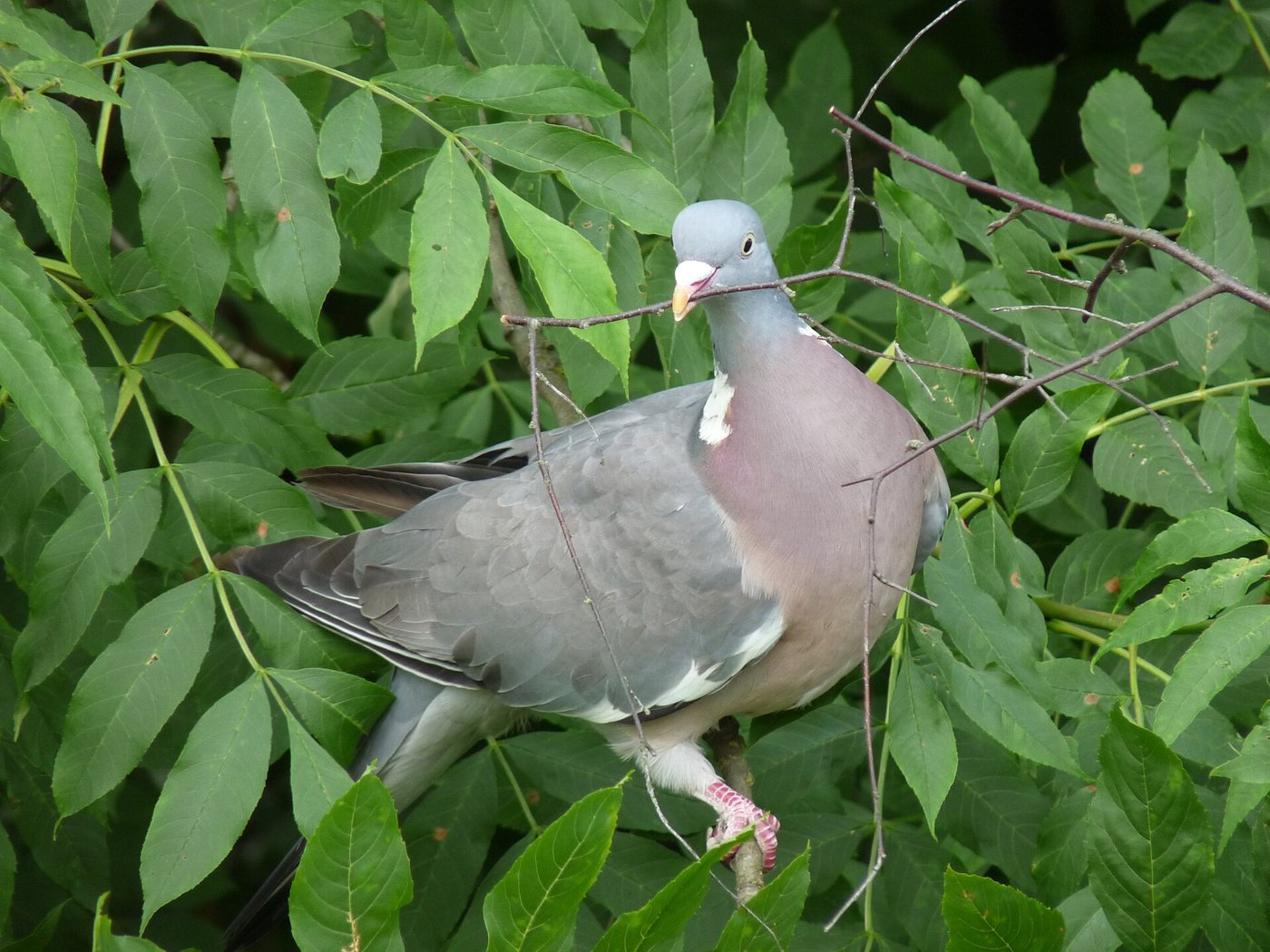
Is it pigeons? How to tell
You may never catch them at it, because pigeons often feed in the early morning. The RHS (opens in new tab) lists these signs:
- Torn leaves, with pieces ripped off rather than neat holes
- In bad cases, only the leaf stalks and larger veins left
- Buds, leaves and fruit stripped from blackcurrants and other fruit bushes
- Brassicas and peas that stop growing and give no crop after heavy grazing
Other birds leave different damage. Which? (opens in new tab) notes that sparrows shred spring flowers such as sweet peas, violets and crocus without eating them, bullfinches take fruit buds, and jays take peas, beans and sweetcorn. Seeds dug out neatly usually point to mice.
Which plants pigeons go for, and when
Pigeons eat many plants, but brassicas (broccoli, sprouts, cabbage and cauliflower), peas, cherries, lilac and blackcurrants are favourites. They are most active in gardens in early summer, when peas and brassicas are growing. In winter they turn to winter brassicas, especially when snow or frost covers other food, and flocks of up to 50 can land on an allotment (RHS (opens in new tab)).
| Plants | When pigeons do most damage | Source |
|---|---|---|
| Brassicas: cabbage, sprouts, broccoli, cauliflower | Early summer, and winter when snow or frost covers other food | RHS, Which? |
| Peas | Early summer, while the crop develops | RHS |
| Cherries and currants | When fruit ripens; buds and leaves too | RHS, Which? |
| Lilac | Leaves; established shrubs usually recover | RHS |
| Leafy vegetables in general | Winter, when clover and other favourite food is scarce | Which? |
Cover the plants: nets, cages and cloches
The RHS (opens in new tab) says a fruit cage or netting is the only certain way to protect vulnerable plants. Keep the netting taut and check it often for holes, so birds and other animals do not get trapped.
Which? goes further: leave no gaps, check the netting at least twice a day, and use brightly coloured netting, because birds cannot see dark netting and are more likely to get caught in it. Wire chicken netting costs more but lasts longer and does not tangle birds. Which? suggests 6.5 cm mesh to keep out pigeons and other large birds, or 2 cm if you also want to keep out small birds (Which? (opens in new tab)).
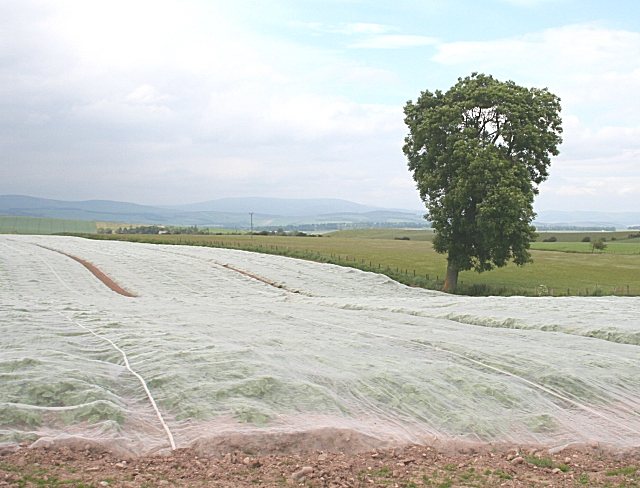
For single plants and short rows, cloches (opens in new tab) are an easy option. The RHS says they are less effective than fleece or insect mesh against insects, but they do stop bird damage. Bell cloches cover one plant, and tunnel cloches made from wire hoops with netting or mesh can cover a whole row.
Plants in pots, window boxes and on balconies
Which? says netting works well if the plants are small enough, so pots and window boxes are among the easiest things to protect. A bell cloche over one pot, or a small frame of wire netting over a trough, works the same way as on a bed.
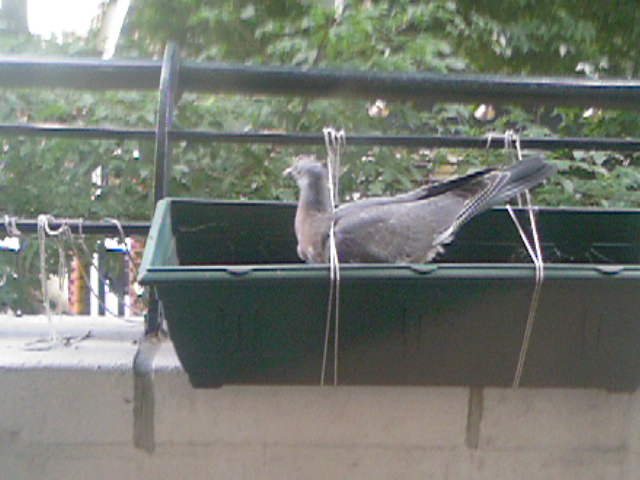
Balconies are also a common place for pigeons to roost and nest (RSPCA (opens in new tab)). If one has nested in a planter, do not move the nest or the eggs. Wait until the chicks have left, then clear the planter and cover it. Town pigeons can breed all year round, so check before you start any work (RSPCA (opens in new tab)). Our balcony guide covers netting and proofing the rest of the balcony.
Scarers, sprays and repellents
The RHS says scaring devices and repellents give, at best, only temporary protection. Which? found that birds soon get used to flapping and reflective scarers, toy cats, hawk shapes and scarecrows. Kites shaped like birds of prey did best in its tests. If you use them, buy several and swap and move them often.
The liquid repellent Which? tried worked for about a week before the damage started again. The RHS says calcium chloride products such as Grazers G1 may give some protection. For wider use around the house and garden, see our pigeon deterrents guide.
Give them something else to eat
Wood pigeons and collared doves like leafy vegetables most in winter, when their favourite foods such as clover are hard to find. Which? suggests growing clover between winter brassicas, so the birds eat that instead of the crop. The clover usually recovers and can be dug in later in the year.
Cutting off easy food helps too. The RSPCA says reducing food is the most humane and effective way to deter pigeons from a garden, so clear up spilt seed under any bird feeder.
When to put up with it
Established trees and shrubs usually recover from pigeon damage, so big plants such as an old lilac can be left alone (RHS (opens in new tab)). Save the netting and cages for seedlings, brassicas, peas and soft fruit.
What not to do
Do not thread black cotton over plants. Which? no longer recommends it, because birds get tangled. Never use glue, poison or traps without a licence. The RSPCA lists poisoning, destroying nests, glue traps, trapping without a licence and badly fitted netting as illegal ways of removing pigeons.
Wood pigeons are protected like other wild birds and can only be controlled under licence (see wood pigeon protection). For the rest of the garden, see our garden guide, and for roofs, ledges and other places, the general guide to keeping pigeons away.
Frequently asked questions
How do I stop pigeons eating my plants?
Cover the plants. The RHS says netting or a fruit cage is the only certain way. Keep netting taut, check it at least twice a day, and use cloches or wire netting over small plants.
What plants do pigeons eat most?
Brassicas such as cabbage, sprouts, broccoli and cauliflower, plus peas, cherries, lilac and blackcurrants, according to the RHS.
What size netting keeps pigeons out?
Which? suggests wire netting with 6.5 cm mesh to keep out pigeons and other large birds, and 2 cm mesh if you also want to keep out small birds.
Do scarecrows or fake hawks keep pigeons off plants?
Only for a while. Birds get used to them. In Which? tests, kites shaped like birds of prey worked best, but you need to move and swap them often.
Will pigeons eat plants in pots?
Yes, if the plants are ones they like. Small pots are easy to protect with a cloche or a wire frame. Check balcony planters for nests before you cover them.
Do pigeons damage plants in winter?
Yes. They feed on winter brassicas, especially when snow or frost covers other food, and flocks of up to 50 can visit allotments, says the RHS.
Sources
We used these sources for this page:
- RHS: pigeons (opens in new tab)
- RHS: cloches (opens in new tab)
- Which? Gardening: protecting your garden from birds (opens in new tab)
- RSPCA: pigeons nesting in gardens and balconies (opens in new tab)
- RSPCA: pigeons in the UK (opens in new tab)
- RSPB: the Wildlife and Countryside Act (opens in new tab)